Is Consciousness Produced by the Brain? Why Science is Starting to Doubt the “Standard Model”
Note from the Author: This article explores theoretical neuroscience and philosophical concepts regarding the nature of consciousness. It summarizes peer-reviewed research but is not a substitute for medical advice or established scientific consensus.
Introduction: The Question That Changed My Perspective
For most of my life, I accepted the standard scientific view without question: The brain creates the mind. It seemed obvious. If you damage the hardware (the brain), the software (consciousness) glitches. If you destroy the hardware, the software vanishes.
But recently, while researching the “Hard Problem” of consciousness, I realized this “obvious” fact might not be a fact at all. It is an assumption.
The question that fascinates me—and is now being asked by serious scientists, not just mystics—is this:
What if the brain is not a generator of consciousness, but a receiver?
I decided to dig into the papers, from Quantum Biology to Near-Death Studies, to see if the materialist consensus is cracking. Here is what I found.
The Standard Model: The “Generator” Theory
Let’s start with what we know. The prevailing view in neuroscience is that you are your neurons. Your subjective experience—the taste of coffee, the feeling of love—is an emergent property of 86 billion neurons firing in complex patterns.
The evidence for this is strong. As I looked through the literature, the correlation is undeniable:
Anesthetics turn off consciousness by damping neural pathways.
Brain injuries alter personality and awareness.
If the brain is a machine, consciousness is the steam coming out of the engine. It feels real, but it’s just a byproduct of the gears turning.
The “Hard Problem”: Where Physics Hits a Wall
But here is where I hit the stumbling block that philosopher David Chalmers calls the “Hard Problem.”
We can explain how the brain processes light (visual cortex activity). That is the “Easy Problem.” But we cannot explain why that processing feels like the color red.
Even if we mapped every single atom in the brain, there is nothing in the laws of physics that explains why “matter” should suddenly “feel” like something. Why isn’t the brain just a zombie computer, processing data in the dark?
This gap has pushed some brilliant minds to suggest radical alternatives.
Theory 1: Panpsychism (Is Consciousness Fundamental?)
I used to think Panpsychism meant “rocks have thoughts,” which sounds absurd. But after reading philosophers like Philip Goff, I realized I misunderstood it.
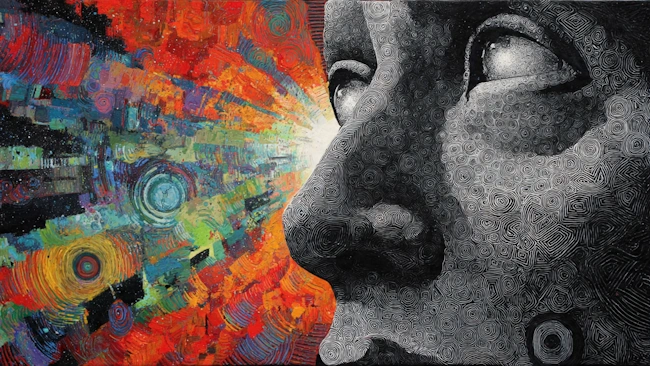
The modern theory suggests that consciousness is a fundamental property of matter, like mass or electrical charge. An electron doesn’t have “thoughts,” but it might have a tiny, primitive form of experience. When you stack trillions of them together in a human brain, those tiny experiences combine to form human consciousness.
My Take: It sounds strange, but it solves the Hard Problem. Consciousness doesn’t magically “poof” into existence from dead matter; it was there all along, just in a simpler form.
Theory 2: The Quantum Brain (Orch-OR)
This is the most controversial theory I found, proposed by Nobel Laureate Sir Roger Penrose and Dr. Stuart Hameroff.
They argue that the brain is not a biological computer, but a Quantum Computer.
The Hypothesis: Consciousness arises from quantum vibrations inside tiny structures in our neurons called microtubules.
The Controversy: Critics have long argued that the brain is too “warm and wet” for quantum states to survive.
However, recent studies in quantum biology (like bird navigation and photosynthesis) show that life does use quantum effects. If Penrose is right, our minds might be connected to the fundamental geometry of the universe—meaning consciousness is not just biological, but physical.
Theory 3: The “Filter” Theory & Near-Death Experiences
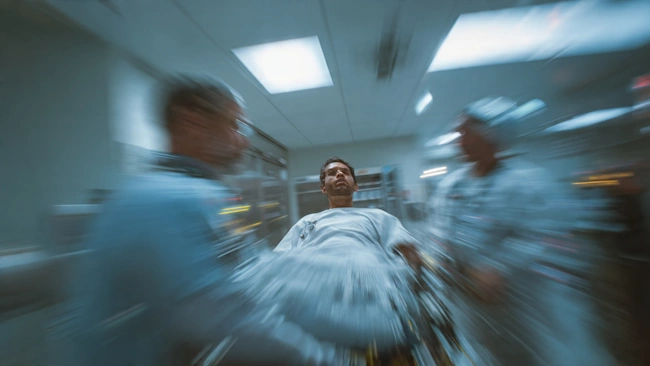
This is the part that I found most compelling. If the brain isn’t generating consciousness, what is it doing?
Some researchers suggest the brain acts as a Filter or a Radio Receiver.
The Analogy: If you smash a radio, the music stops. But the radio didn’t create the music; it was just receiving the signal.
I looked at the data on Near-Death Experiences (NDEs) to test this. The AWARE studies by Dr. Sam Parnia are particularly striking. They found that some patients report lucid, verified awareness (seeing events in the room) during cardiac arrest—after the brain has flatlined.
If the “generator” (brain) was broken, how was the “music” (consciousness) still playing?
Skeptics argue these are hallucinations caused by oxygen deprivation (hypoxia). But Dr. Bruce Greyson’s research suggests these experiences are often hyper-real and structured, unlike the chaotic confusion of hallucinations.
My Conclusion: The Mystery Remains
After reviewing the papers—from Tononi’s Integrated Information Theory to Penrose’s Quantum Mechanics—I am left with more questions than answers. And I think that is a good thing.
The claim that “science has solved consciousness” is premature.
While the correlation between brain and mind is unbreakable in our daily lives, the nature of that link is still a mystery.
Are we biological machines generating a ghost in the shell? Or are we biological antennas tuning into a frequency we don’t yet understand?
What do you think? Does the “Radio Theory” make sense to you, or is it just wishful thinking? Let me know in the comments.
References & Further Reading
-
- Chalmers, D. J. (1995). Facing up to the problem of consciousness. Journal of Consciousness Studies, 2(3), 200-219. https://consc.net/papers/facing.pdf
- Tononi, G. (2004). An information integration theory of consciousness. BMC Neuroscience, 5, 42. https://doi.org/10.1186/1471-2202-5-42
- Oizumi, M., Albantakis, L., & Tononi, G. (2014). From the phenomenology to the mechanisms of consciousness: Integrated information theory 3.0. PLOS Computational Biology, 10(5), e1003588. https://doi.org/10.1371/journal.pcbi.1003588
- Tononi, G., Boly, M., Massimini, M., & Koch, C. (2016). Integrated information theory: from consciousness to its physical substrate. Nature Reviews Neuroscience, 17(7), 450-461. https://doi.org/10.1038/nrn.2016.44
- Hameroff, S. R. (1998). Quantum computation in brain microtubules? The Penrose-Hameroff ‘Orch OR’ model of consciousness. Series A: Mathematical, Physical and Engineering Sciences, 356(1743), 1869-1896. https://doi.org/10.1098/rsta.1998.0254
- Goff, P. (2017). Consciousness and Fundamental Reality. Oxford University Press. https://doi.org/10.1093/oso/9780190677015.001.0001
- Strawson, G. (2006). Realistic monism: Why physicalism entails panpsychism. Journal of Consciousness Studies, 13(10-11), 3-31. https://consc.net/event/reef/strawsonmonism.pdf
- Greyson, B. (2010). Seeing deceased persons not known to have died: “Peak in Darien” experiences. Anthropology and Humanism, 35(2), 159-171. https://med.virginia.edu/perceptual-studies/wp-content/uploads/sites/360/2017/01/OTH23_Peak-in-Darien-A-H.pdf
- Clark, A., & Chalmers, D. (1998). The extended mind. Analysis, 58(1), 7-19. https://doi.org/10.1093/analys/58.1.7
- Koch, C. (2024). Then I Am Myself the World: What Consciousness Is and How to Expand It. Basic Books.
- Greyson, B. (2003). Incidence and correlates of near-death experiences in a cardiac care unit. General Hospital Psychiatry, 25(4), 269-276. https://doi.org/10.1016/S0163-8343(03)00042-2
- van Lommel, P., van Wees, R., Meyers, V., & Elfferich, I. (2001). NDE study. The Lancet, 358(9298), 2039-2045. https://doi.org/10.1016/S0140-6736(01)07100-8

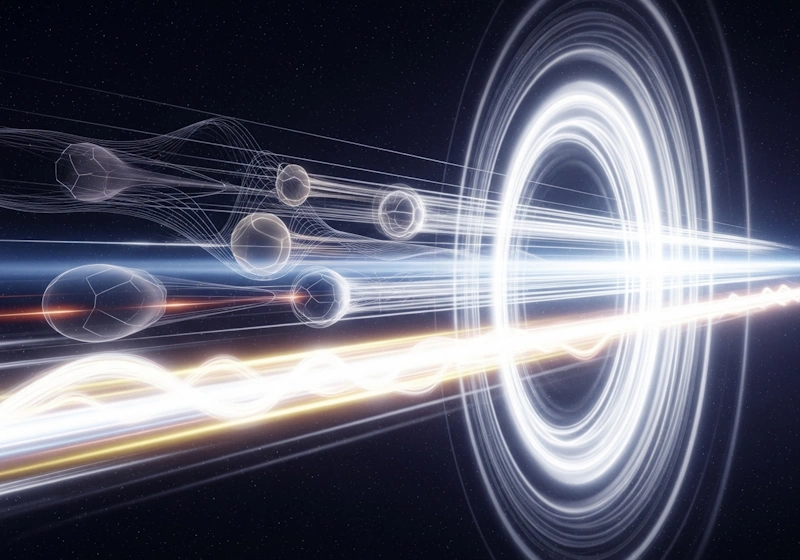
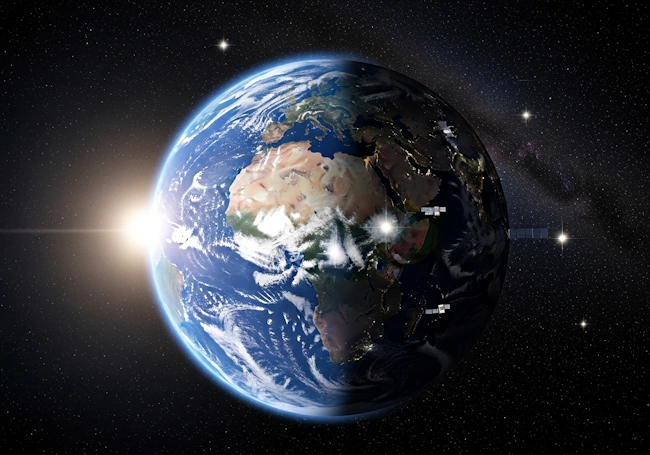





I think there will be more discoveries in the future. It SHOULD be something outside our brain that make us who we are. we are not ai or robots.