Astronomy Tests
Explore free astronomy tests on About Science: planets, orbits, stars, and the Solar System explained for curious learners. Online science quizzes build real sky literacy with clear questions and feedback—no jargon walls, just solid cosmic science you can practice anytime.
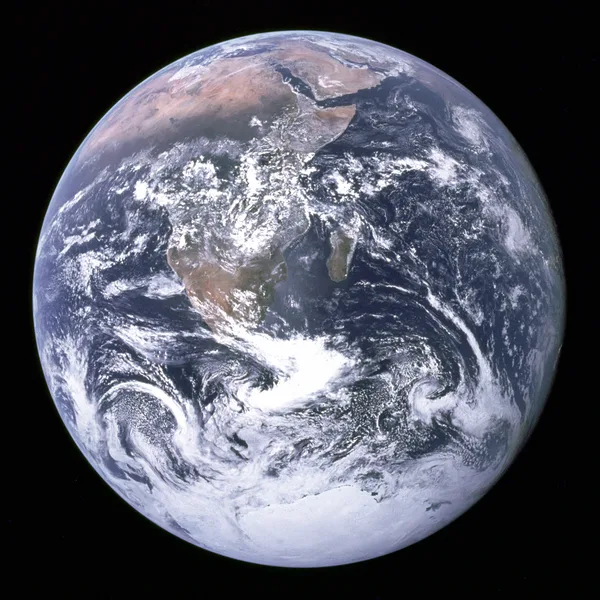 Test
Test
Planet Earth Online Test
Take the test →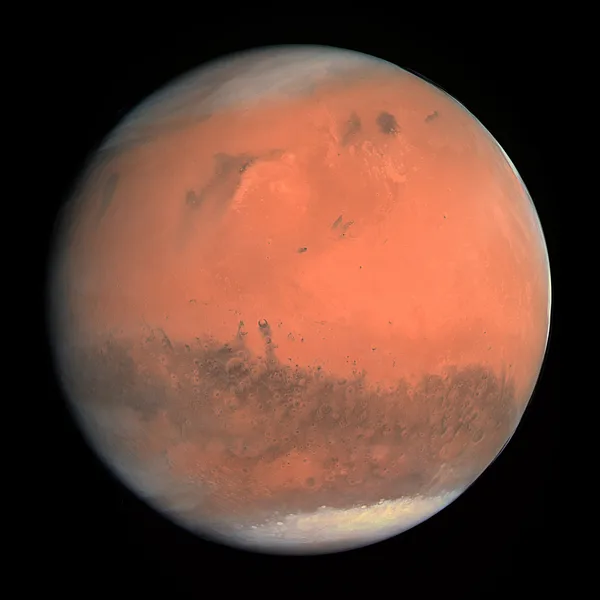 Test
Test
Planet Mars Online Test
Take the test →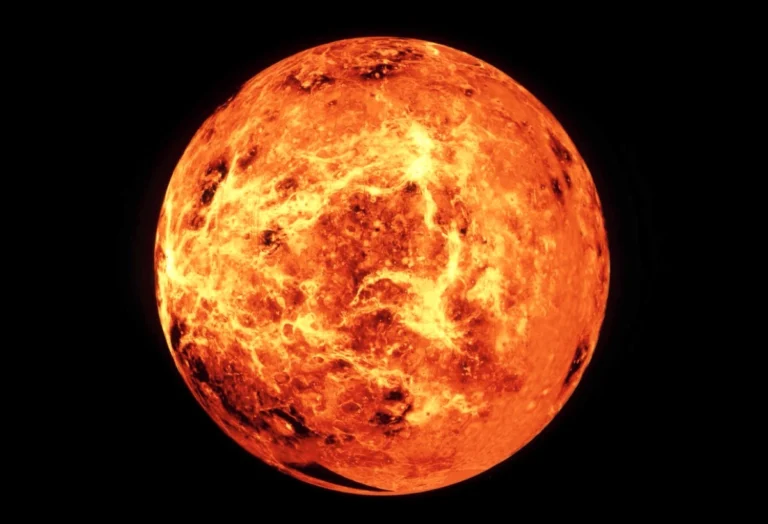 Test
Test
Planet Venus Online Test
Take the test →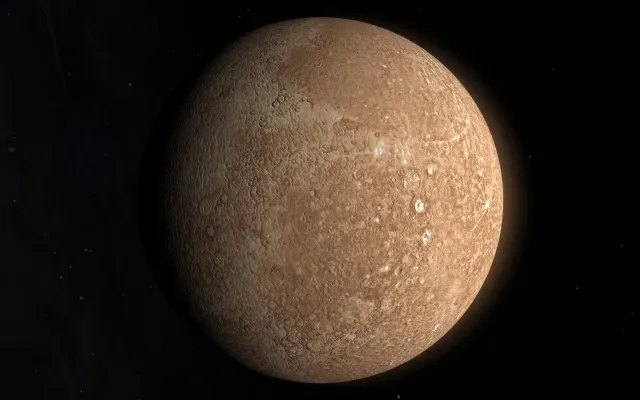 Test
Test
Planet Mercury Online Test
Take the test → Test
Test
Solar System Online Test
Take the test →What Is Astronomy?
Astronomy is the scientific study of everything beyond Earth’s atmosphere: the Sun and Moon, the planets and their moons, asteroids and comets, stars and the galaxies that hold them, and the large-scale structure of the universe itself. It asks how celestial objects form, how they change over time, and how the laws of physics play out on scales that dwarf any laboratory. Unlike pure philosophy or myth, astronomy is an observational and theoretical science. It measures light, motion, and other signals; builds models; and tests those models against new data from telescopes, spacecraft, and computer simulations.
For most of human history, people watched the sky to mark seasons, navigate, and invent stories. Modern astronomy keeps the wonder but replaces guesswork with measurement. We know that the Sun is a star, that Earth is one of several planets orbiting it, that the Milky Way is a galaxy among billions, and that the universe has been expanding since a hot, dense early state often called the Big Bang. Those conclusions rest on evidence: spectra, parallax, orbital dynamics, cosmic microwave background radiation, and the chemical fingerprints of distant gas clouds. Astronomy tests and online science quizzes help learners practice the language and core ideas that make those discoveries intelligible.
Astronomy sits at a crossroads of physics, chemistry, geology, and even biology when the question turns to life beyond Earth. Gravity shapes orbits and star formation. Nuclear physics powers stellar cores. Chemistry explains planetary atmospheres and the signatures of molecules in space. Planetary science treats other worlds as natural experiments in climate, tectonics, and surface processes. Because the sky is shared by everyone, astronomy also remains one of the most accessible sciences: a dark night, a clear horizon, and patience still reveal patterns that textbooks only describe.
Why Astronomy Matters
Astronomy matters because it situates Earth in a real cosmic context. Knowing that our planet is a small rocky world in a modest planetary system does not diminish daily life; it clarifies the physical stage on which weather, evolution, and civilization unfold. Solar radiation drives climate and photosynthesis. The Moon stabilizes Earth’s axial tilt over long timescales and raises tides. Impact events have altered the history of life. Understanding these connections is not optional background—it is part of understanding our home planet as a system.
Practical benefits follow as well. Satellite navigation, weather forecasting, and global communications depend on space technology rooted in orbital mechanics and electromagnetic science. Solar activity can disturb power grids and radio links; monitoring the Sun is a form of applied astronomy. Asteroid surveys reduce impact risk. Imaging and detector technologies developed for telescopes often migrate into medicine, industry, and consumer devices. More deeply, astronomy trains a habit of thinking carefully about evidence that is distant, incomplete, and sometimes counterintuitive—skills that transfer far beyond the night sky.
Culturally, astronomy remains a shared human inheritance. Calendar systems, navigation traditions, and sky myths appear across civilizations. Today’s public images from space telescopes and planetary probes continue that tradition with data rather than legend. Free online science quizzes in astronomy help curious learners of many ages build a scaffold of accurate concepts so that news about exoplanets, black holes, or Mars missions makes sense instead of sounding like science fiction jargon.
Major Branches of Astronomy
Astronomy is broad enough that specialists often focus on particular objects, wavelengths, or methods. The branches overlap, but naming them helps map the field.
Planetary science and solar system studies
Planetary science examines planets, moons, rings, asteroids, and comets—beginning with our own Solar System and extending to exoplanets. It asks how worlds form from dusty disks around young stars, why some planets are rocky and others are gas giants, how atmospheres evolve, and what surfaces reveal about internal heat, impacts, and past liquid water. Comparing Earth, Mars, Venus, and icy moons such as Europa or Enceladus turns comparative planetology into a powerful method: the same physics and chemistry produce different outcomes under different conditions.
Solar system astronomy also includes the Sun as a star we can study in exquisite detail. Solar physics tracks magnetic fields, sunspots, flares, and the solar wind. That research links star behavior to space weather and to the long-term stability of Earth’s environment. Online astronomy tests often begin here because planetary and solar topics connect directly to images and news people already recognize.
Stellar astronomy
Stars are the engines of the visible universe. Stellar astronomy studies how stars form from collapsing clouds of gas and dust, how they fuse lighter nuclei into heavier ones, how they age, and how they die as white dwarfs, neutron stars, or black holes. The Hertzsprung–Russell diagram—plotting luminosity against temperature or color—organizes stellar types into a coherent story of mass, age, and evolutionary stage. Massive stars live fast and die in supernovae; lower-mass stars like the Sun burn more slowly and end more quietly.
Because stars produce the chemical elements heavier than hydrogen and helium, stellar life cycles are also cosmic chemistry. The oxygen you breathe and the iron in your blood were forged in earlier generations of stars. Understanding that chain of events is one of astronomy’s most profound contributions to a scientific worldview.
Galactic and extragalactic astronomy
Our Sun is one of hundreds of billions of stars in the Milky Way. Galactic astronomy maps the structure of our galaxy—disk, bulge, halo, spiral arms—and the dark matter that helps hold it together. Extragalactic astronomy looks outward to other galaxies: spirals, ellipticals, irregulars, and the vast clusters and filaments they form. Distances here are measured in millions or billions of light-years, so looking farther is also looking earlier in cosmic time.
Cosmology addresses the universe as a whole: its expansion, composition, and history. Evidence for expansion, the cosmic microwave background, and the relative amounts of ordinary matter, dark matter, and dark energy form a standard model of cosmology that continues to be tested and refined. Learners do not need advanced mathematics to grasp the main narrative, but they do need clear definitions of redshift, light-year, galaxy, and the difference between an expanding universe and objects merely flying through a static space.
Observational methods and multiwavelength astronomy
Astronomy is limited by what signals we can collect. Optical telescopes capture visible light; radio telescopes detect longer wavelengths; infrared, ultraviolet, X-ray, and gamma-ray observatories reveal processes invisible to the eye. Each band tells a different story: cool dust in the infrared, hot gas in X-rays, magnetic activity in radio waves. Spectroscopy splits light into wavelengths and reads composition, temperature, and motion through Doppler shifts. Photometry measures brightness; astrometry measures precise positions and motions.
Space-based observatories escape Earth’s atmosphere; ground-based arrays use adaptive optics and interferometry to sharpen images. Planetary probes and landers turn remote sensing into close-up geology and atmospheric science. Modern astronomy is therefore as much about instruments and data as about the objects themselves—an important theme for anyone taking structured online science quizzes in the subject.
Core Ideas Every Learner Should Know
A few ideas organize almost every introductory astronomy path. Gravity governs orbits; Kepler’s laws describe planetary motion as ellipses with the Sun at one focus, with orbital period related to average distance. Newton’s law of universal gravitation unifies falling apples and orbiting moons under one force. Light has a finite speed, so astronomical observation is always a view into the past. The electromagnetic spectrum carries most of our information. Spectra reveal chemical composition and radial velocity. Scale is hierarchical: planet systems, stars, star clusters, galaxies, clusters of galaxies.
Another essential idea is scientific uncertainty handled with care. Distances to remote objects are estimated through a distance ladder of methods—parallax nearby, standard candles farther out—each with limits. Models of exoplanet atmospheres or dark matter are constrained by data and revised when better data arrive. Good astronomy education teaches not only facts but also how those facts were earned.
- Orbit — a path under gravity; planets orbit stars; moons orbit planets.
- Light-year — the distance light travels in one year; a unit of distance, not time.
- Spectrum — light sorted by wavelength; a fingerprint of temperature and composition.
- Galaxy — a vast system of stars, gas, dust, and dark matter bound by gravity.
- Solar System — the Sun and the bodies gravitationally bound to it.
How Online Astronomy Tests Support Learning
Reading about the cosmos is inspiring; testing your understanding makes the inspiration durable. Free astronomy tests on About Science are designed as focused practice: short sets of multiple-choice questions that reward precise definitions and cause-and-effect thinking rather than trivia for its own sake. Online science quizzes work especially well in astronomy because the field is rich in named objects and easy-to-confuse terms—meteor versus meteorite, astronomy versus astrology, weight versus mass in different gravity fields, planet versus dwarf planet, star versus planet versus moon.
A good quiz forces active recall. Instead of passively rereading a paragraph about Mars or orbital motion, you must retrieve the idea, discriminate among plausible distractors, and commit to an answer. That effort strengthens memory and exposes gaps quickly. Instant feedback turns mistakes into lessons: if you confuse rotation with revolution, or absolute brightness with apparent brightness, the correction sticks better than another skim of the same page.
About Science astronomy tests sit alongside encyclopedia-style planet pages and other science categories, so learners can move between reading and practice. Topics typically align with accessible solar system science—planets, moons, orbits, basic stellar ideas, and the physical context of space—rather than requiring calculus or graduate astrophysics. That makes the quizzes useful for curious adults refreshing school knowledge, for younger learners building vocabulary with adult guidance, and for anyone who wants a structured way to check comprehension after reading science news.
What learners can expect from these quizzes
Expect clear language, one best answer per question, and themes drawn from mainstream introductory astronomy: structure of the Solar System, comparative properties of planets, gravity and orbits, light and observation at a conceptual level, and why space science matters for understanding Earth. You should not expect trick questions built on obscure catalog numbers, nor should you expect content that promotes pseudoscience. The goal is rigorous popular science assessment—challenging enough to be useful, fair enough to teach.
Work through questions slowly at first. Picture the geometry of an orbit. Ask whether a claim is about size, mass, distance, temperature, or composition. Notice units and scales: kilometers on a planet’s surface are not the same kind of “large” as light-years between stars. When you miss an item, reread the related concept and try a similar quiz later. Spaced practice beats one long cramming session for long-term understanding.
- Read each question fully before looking at options.
- Eliminate choices that mix up related but distinct terms.
- Prefer answers that match physical mechanisms, not catchy slogans.
- Review explanations and return to the topic in reading form.
- Retake or try related online science quizzes to reinforce weak spots.
Connecting Astronomy to Everyday Scientific Literacy
Astronomy literacy helps people interpret headlines about climate, technology, and exploration. Reports of exoplanets in “habitable zones” require knowing what liquid water stability roughly means—and what it does not prove about life. Stories about asteroid flybys require a sense of orbital paths and detection surveys. Coverage of the James Webb Space Telescope or planetary landers becomes richer when you know why infrared light matters or why a thin atmosphere changes landing design.
Astronomy also combats common misconceptions. Seasons are not caused by Earth’s distance from the Sun in a simple way; axial tilt is the main driver for a given hemisphere. The North Star is not the brightest star; it is useful because of its nearly fixed direction in the northern sky. Black holes do not “suck everything in” like cosmic vacuum cleaners from arbitrary distances; gravity still follows inverse-square behavior outside the event horizon in the classical picture, and orbits can be stable far from a black hole just as planets orbit the Sun. Online astronomy tests are a gentle way to confront these myths with better models.
Building a Personal Path Through the Sky
There is no single correct order for learning astronomy, but a practical path works well for most people. Start with Earth’s place in the Solar System: day and night, seasons, Moon phases, and the difference between stars and planets in the night sky. Move to the planets as individual worlds—rocky inner planets, gas and ice giants, and small bodies. Then step out to the Sun as a star, stellar life cycles in outline, and finally galaxies and cosmic expansion. At each stage, use free online science quizzes to check that vocabulary and mechanisms are secure before adding more scale.
Observation deepens book learning. Even without a telescope, tracking the Moon’s phases, noticing that planets do not twinkle the way stars often do, and learning a few constellations as sky maps (not as physical groupings of related stars) builds intuition. Binoculars reveal craters on the Moon and the moons of Jupiter. Community star parties and reputable planetarium programs extend that experience. Pairing direct looking with About Science astronomy tests creates a loop of curiosity, structure, and self-check that pure browsing rarely provides.
Astronomy rewards patience. The universe is large, the data are rich, and the best questions remain open: How common is life? What is dark matter? How do the first stars and galaxies form? A solid foundation does not close those questions; it equips you to understand why they are hard and why the evidence matters. Use these category pages and quizzes as a doorway—not a final exam of the cosmos, but a clear, honest start.
Sources and note: Concepts summarized from standard introductory astronomy and planetary science curricula, public materials from space agencies and observatories, and widely taught frameworks for solar system science, stellar evolution, and observational methods. Quiz topics on About Science emphasize accessible solar system and general astronomy ideas suitable for general learners.