Chemistry Tests
Free chemistry tests on About Science explore atoms, the periodic table, reactions, acids and bases, and states of matter. Online science quizzes turn molecular ideas into clear practice you can use in everyday scientific literacy.
 Test
Test
Chemical Reactions Online Test
Take the test →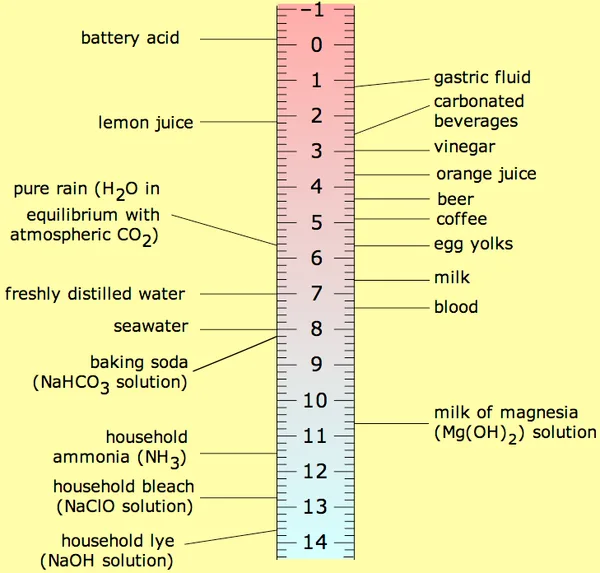 Test
Test
Acids Bases and pH Online Test
Take the test → Test
Test
States of Matter Online Test
Take the test →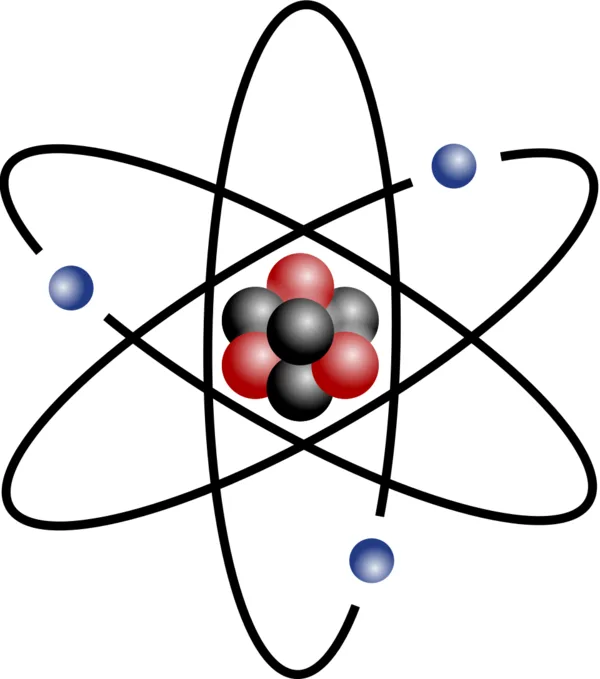 Test
Test
Atoms and Elements Online Test
Take the test →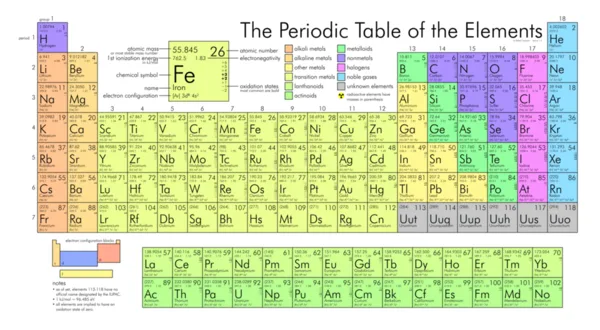 Test
Test
Periodic Table Online Test
Take the test →What Is Chemistry?
Chemistry is the science of matter and the changes it undergoes. It studies atoms and molecules, how they bond, how they rearrange in reactions, how energy flows during those rearrangements, and how bulk properties—color, boiling point, acidity, conductivity—emerge from structure at the nanoscale. If physics often seeks the most general laws of nature, chemistry specializes in the particular architecture of substances: why water is liquid at room temperature, why metals conduct, why some mixtures explode and others barely react, why the same elements can form both diamond and graphite.
Everything you can touch is chemistry in action. Air is a mixture of gases; blood is an aqueous solution of extraordinary complexity; plastics, medicines, fuels, fertilizers, and food flavors are products of molecular design or natural biosynthesis. Chemistry links the invisible world of electrons and bonds to the tangible world of materials and living cells. That dual scale is why the subject can feel abstract at first and indispensable once the core language clicks. Free chemistry tests and online science quizzes exist to accelerate that click—from recognition of terms to confident use of ideas.
Chemistry is experimental at heart. Observation, measurement, controlled comparison, and reproducibility matter as much as theory. Models of the atom have evolved from simple solid spheres to quantum mechanical descriptions, yet introductory chemistry still begins with useful working models: protons, neutrons, and electrons; shells or energy levels; and the periodic table as an organizing map. Those models are not childish; they are tools with defined ranges of validity, refined as questions become more sophisticated.
Why Chemistry Matters
Chemistry matters because modern life is a chemical enterprise. Pharmaceuticals are molecular interventions in biological pathways. Agriculture depends on fertilizers, soil chemistry, and understanding of nutrients and toxins. Energy systems convert chemical energy in fuels or batteries into heat and work. Environmental challenges—ozone chemistry, acid rain, ocean acidification, pollutant transport—are chemical problems with physical and biological consequences. Without chemical literacy, public debates about these topics become contests of slogans.
Chemistry also underwrites personal judgment. Reading a nutrition label, understanding why bleach and ammonia should not be mixed, interpreting “pH balanced” claims, or evaluating whether a “natural” substance is automatically safe all require basic chemical reasoning. Natural is not a synonym for harmless; dose and structure matter. Synthetic is not a synonym for dangerous; many life-saving compounds are made in laboratories. Online science quizzes that rehearse atoms, reactions, acids and bases, and states of matter build the habits behind that reasoning.
Historically, chemistry transformed civilization through metallurgy, dyes, fertilizers, polymers, and semiconductors. It continues to drive materials science, green process design, and molecular medicine. Learning chemistry is not only about passing a unit; it is about joining a conversation humanity has been having with matter for centuries, now equipped with better instruments and clearer theories.
Major Branches of Chemistry
Chemistry divides into overlapping branches that differ by the kinds of substances and questions they emphasize.
Physical chemistry and the behavior of matter
Physical chemistry applies physics principles to chemical systems: thermodynamics of reactions, kinetics (how fast reactions proceed), equilibrium, quantum descriptions of bonding, and spectroscopy. Even at an introductory level, learners meet energy changes in reactions, the idea that temperature measures average kinetic energy of particles, and the distinction between heat and temperature. States of matter—solid, liquid, gas, and plasma under specialized conditions—belong here, along with phase changes and particle models that explain pressure and diffusion.
Inorganic chemistry
Inorganic chemistry focuses on the broad sweep of the periodic table beyond the carbon-rich molecules of organic chemistry: metals, minerals, coordination compounds, and main-group chemistry. The periodic table itself is a triumph of pattern recognition later explained by electron configuration. Groups and periods encode trends in atomic size, ionization energy, electronegativity, and metallic character. Understanding why alkali metals are reactive or why noble gases are largely inert is inorganic thinking at its most useful for beginners.
Organic chemistry
Organic chemistry studies carbon-based compounds, which form the backbone of fuels, plastics, pharmaceuticals, and biomolecules. Carbon’s ability to form four bonds and long chains creates vast structural diversity. Functional groups—alcohols, acids, amines, and others—predict reactivity patterns. While full organic mechanisms belong to specialized courses, introductory learners benefit from knowing that life’s molecules and many industrial materials are organized carbon frameworks with predictable bonding rules.
Analytical chemistry
Analytical chemistry asks what is present and how much. Titration, spectroscopy, chromatography, and mass spectrometry are classic tools. Conceptually, beginners practice quantitative thinking: concentration, dilution, conservation of atoms in balanced equations, and the difference between qualitative observation and measurement. Accuracy, precision, and calibration are professional habits that start with simple laboratory and thought experiments.
Biochemistry and environmental chemistry
Biochemistry explores the chemistry of living systems: proteins, nucleic acids, lipids, carbohydrates, enzymes, and metabolic pathways. Environmental chemistry tracks pollutants, nutrient cycles, atmospheric reactions, and aquatic chemistry including acids, bases, and dissolved gases. These applied fields show why classroom topics—pH, redox, equilibrium—appear in news about climate, water quality, and health.
Core Ideas Every Chemistry Learner Needs
A few ideas organize nearly all introductory chemistry. Matter is made of atoms. Elements are defined by proton number. Compounds combine elements in fixed ratios with properties different from their elements. Mixtures can be separated by physical means; compounds require chemical change to break into elements. Chemical reactions rearrange atoms; atoms are conserved (in ordinary chemistry), which is why equations must balance. Electrons, especially valence electrons, drive bonding: ionic, covalent, and metallic models explain different classes of materials.
- Atomic structure — nucleus of protons and neutrons; electrons in energy levels; isotopes differ in neutrons.
- Periodic table — organized map of elements; groups share similar valence patterns and chemistry.
- Bonding and structure — how atoms stick together shapes melting points, hardness, and reactivity.
- Reactions — reactants form products; energy may be absorbed or released; rates depend on conditions.
- Acids, bases, and pH — related to hydrogen ions in water; neutralization and indicators are classic tools.
- States of matter — particle motion and arrangement explain solid, liquid, and gas behavior.
Misconceptions are common. Atoms are not tiny solar systems with electrons on fixed planetary rails in the modern quantum picture, though shell models remain useful. Mass is conserved in chemical reactions even when gases seem to “disappear.” Heat is not a fluid stored inside objects; thermal energy relates to particle motion. “Chemicals” are not a special class of artificial poisons; water and oxygen are chemicals. pH is logarithmic: a change of one unit is a tenfold change in hydrogen ion activity, not a small step. Well-written chemistry tests confront these errors directly.
How Free Chemistry Tests Support Learning
Chemistry tests on About Science are built for active practice. Multiple-choice questions force you to choose among statements that sound similar until you apply a definition carefully. Is atomic number protons or mass number? Does a neutral atom have equal protons and electrons? Is pH 3 more acidic than pH 5? Does a chemical change produce a new substance while a physical change typically does not? Those discriminations are the difference between vague familiarity and usable knowledge.
Online science quizzes work especially well for chemistry because the subject is dense with named quantities and paired concepts. Immediate feedback shortens the time between error and correction. Spaced repetition across atoms, the periodic table, reactions, acids and bases, and states of matter builds a coherent map instead of isolated flashcards. You can study a short conceptual page, take a quiz, note weak spots, and return later without needing a full laboratory setup.
About Science chemistry quizzes emphasize foundational topics: atoms and elements, the periodic table, chemical reactions, acids and bases with pH, and states of matter. These themes appear throughout secondary curricula and in practical science literacy. They prepare the ground for later organic chemistry or quantitative analysis without demanding advanced mathematics on day one.
What learners can expect
Expect clear wording, one best answer, and scenarios that test understanding of structure and change. You may be asked about particles in the nucleus, trends across the periodic table, signs of chemical reactions, the meaning of neutralization, or how particle motion differs in solids, liquids, and gases. Expect distractors that reflect popular mix-ups rather than obscure trivia. Do not expect industrial certification content or graduate physical chemistry; do expect honest introductory rigor.
Effective strategy is concrete. Sketch a simple atom when questions involve subatomic particles. Visualize particles vibrating, sliding, or flying freely when questions involve states of matter. For reactions, check whether atoms could be conserved in a claimed equation story. For pH, remember that lower pH means more acidic in water-based systems as usually taught at this level. Review explanations after mistakes; chemistry rewards repaired misconceptions more than raw speed.
- Master vocabulary pairs: atom/element/compound/mixture; physical/chemical change.
- Use the periodic table as a thinking tool, not a poster to glance at once.
- Track atoms and energy through every reaction story.
- Connect microscopic particle models to macroscopic observations.
- Practice with multiple free online chemistry tests over days, not only in one sitting.
Chemistry in Everyday Experience
Cooking is applied chemistry: denaturing proteins with heat, emulsifying dressings, caramelizing sugars, leavening dough with gas-producing reactions. Cleaning products rely on surfactants, acids, bases, and solvents matched to the soil they remove. Batteries store chemical energy and release it as electrical work through redox reactions. Breathing and cellular respiration are chemical processes that power life. Rusting, tarnishing, and combustion are oxidation stories written on metal and fuel.
Environmental awareness also depends on chemistry. Carbon dioxide’s role as a greenhouse gas, the chemistry of ozone formation and destruction, the behavior of plastics in the environment, and the treatment of drinking water all require molecular thinking. Online science quizzes will not replace specialized environmental science, but they secure the atomic and reaction literacy those topics assume.
A Clear Path Into the Subject
A sensible learning sequence starts with atoms and elements, because identity and structure come first. The periodic table then becomes meaningful as a map of behavior. States of matter and particle models explain everyday materials before chemical change is introduced in depth. Reactions and conservation ideas follow, then acids, bases, and pH as a focused application with huge practical reach. At each stage, About Science chemistry tests provide feedback loops that reading alone rarely matches.
Laboratory experience, when available, makes abstract models visceral: precipitates form, indicators change color, gases evolve, temperatures shift. When a full lab is not available, careful demonstrations, reputable videos, and thought experiments still help—especially if paired with quizzes that demand precise interpretation of what those changes mean.
Chemistry can intimidate because it introduces a new symbolic language quickly. The remedy is steady practice with core ideas rather than attempted memorization of every named reaction. Use this category as a home base for free online science quizzes and conceptual review. Matter will not become simpler, but it will become legible—and once matter is legible, the rest of science becomes easier to read.
Sources and note: Ideas drawn from standard introductory chemistry curricula on atomic structure, the periodic table, chemical reactions, acids and bases, and states of matter, as taught in secondary and early college courses and open educational resources. About Science chemistry quizzes emphasize these foundational themes for general learners.