Earth Science Tests
Explore free Earth science tests on About Science: plate tectonics, weather, rocks, oceans, and climate systems. Online science quizzes build real planet literacy—how Earth’s spheres interact and why that knowledge matters.
 Test
Test
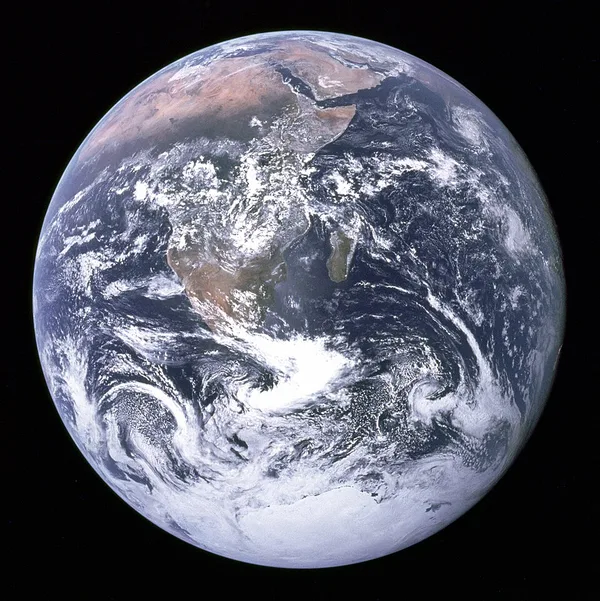
Climate and Earth Systems Online Test
Take the test →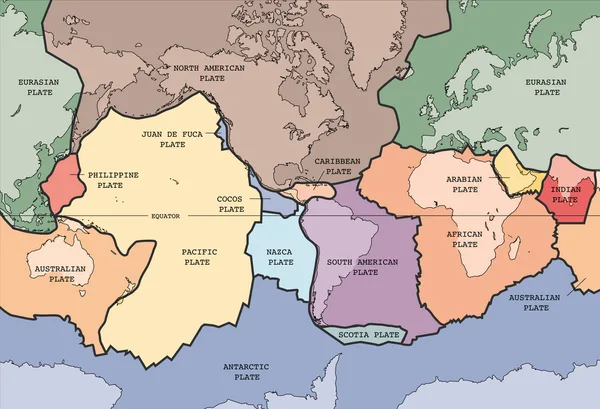 Test
Test
Plate Tectonics Online Test
Take the test →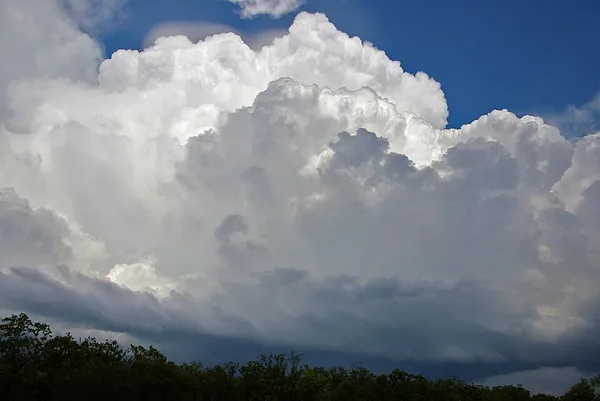 Test
Test
Atmosphere and Weather Online Test
Take the test →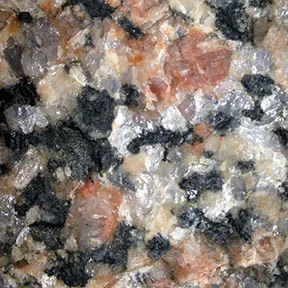 Test
Test
Rocks and Minerals Online Test
Take the test → Test
Test
Water Cycle and Oceans Online Test
Take the test →What Is Earth Science?
Earth science is the integrated study of our planet as a system—its rocks and interior, its oceans and fresh water, its atmosphere and weather, its climate over long timescales, and the living surface that interacts with all of these. It draws on geology, oceanography, meteorology, and environmental science, and it constantly borrows tools from physics, chemistry, and biology. The central habit of Earth science is to see Earth not as a static stage, but as a set of interacting spheres exchanging energy and matter: geosphere, hydrosphere, atmosphere, and biosphere.
Unlike sciences that can isolate a sample on a bench and reset the experiment, Earth science often works with incomplete archives: rock layers, ice cores, tree rings, sediment, fossils, and instrumental records that cover only a thin slice of deep time. Interpreting those archives requires careful inference. A sandstone bed, a glacial moraine, a magnetic stripe on the seafloor, or a shift in isotopic ratios can each be a clue if you know how such features form. Earth science tests and free online science quizzes help learners practice that clue-reading: linking process to product, cause to pattern, and local observation to planetary scale.
Earth science is also urgently practical. Natural hazards—earthquakes, volcanoes, floods, storms, landslides—are geological and atmospheric processes intersecting human settlements. Resources such as water, soil, minerals, and energy are unevenly distributed products of Earth systems. Climate change is an Earth-system problem involving radiation balance, carbon cycling, oceans, ice, and ecosystems. Understanding the planet is therefore part of citizenship as well as curiosity.
Why Earth Science Matters
Earth science matters because this is the only planetary home we have, and its behavior sets the boundary conditions for civilization. Agriculture depends on soil, climate, and water. Cities depend on knowing flood plains, seismic risk, and coastal dynamics. Freshwater management depends on the water cycle and groundwater geology. Energy choices interact with carbon stored in rocks and released to the atmosphere. Ignoring Earth systems does not make them gentler; it only makes surprises costlier.
The field also expands our sense of time. Human history is a blink against the age of Earth, roughly 4.5 billion years. Mountain ranges rise and erode; continents assemble and rift; ice ages come and go; life transforms atmosphere and surface chemistry. That deep-time perspective prevents two opposite errors: assuming the planet never changes, and assuming every change humans notice is unprecedented in kind (even when the current rate and human driver of change are extraordinary). Online Earth science quizzes that revisit plate tectonics, climate systems, and the water cycle keep those timescales mentally available.
Finally, Earth science trains systems thinking. A volcanic eruption is not only molten rock; it can alter air travel, fertilize soils, inject aerosols that briefly cool climate, and create new land. An El Niño pattern is not only warmer Pacific water; it rearranges rainfall and storm tracks across continents. Learning to follow connections is a transferable intellectual skill.
Major Branches of Earth Science
The branches of Earth science specialize by sphere and method, yet the best questions cross boundaries.
Geology: the solid Earth
Geology studies Earth’s materials, structures, and history. Minerals are naturally occurring solid substances with defined chemistry and crystal structure; rocks are aggregates of minerals (or mineraloids) formed by igneous, sedimentary, or metamorphic processes. The rock cycle links those paths through melting, cooling, weathering, erosion, deposition, burial, heat, and pressure. Plate tectonics provides the grand motion engine: rigid lithospheric plates move over the weaker asthenosphere, driven by mantle convection and related forces, creating earthquakes, volcanoes, mountain belts, and ocean basins.
Structural geology reads folds and faults; stratigraphy reads layered archives; paleontology reads the history of life in rocks; economic geology locates resources. For learners, the essential story is that Earth’s surface is dynamic. Continents are not fixed decorations; seafloor spreads; subduction recycles crust; hotspots punch volcanic chains through plates. Earth science tests on plate tectonics and rocks and minerals secure this foundation.
Oceanography: the world ocean
Oceans cover most of Earth’s surface and store vast heat and carbon. Physical oceanography studies currents, waves, tides, and the layering of water by temperature and salinity. Chemical oceanography tracks dissolved gases, nutrients, and acidification. Marine geology examines seafloor spreading, sediments, and coastal processes. Biological oceanography connects plankton to fisheries and global oxygen and carbon cycles.
Surface currents are largely wind-driven; deeper circulation involves density differences—the so-called thermohaline circulation. Coasts are battlegrounds of wave energy, sediment supply, sea-level change, and human engineering. The water cycle ties oceans to atmosphere and land: evaporation, condensation, precipitation, runoff, and infiltration move water and energy continuously. Online science quizzes on oceans and the water cycle help keep that global plumbing visible.
Meteorology and atmospheric science
The atmosphere is a thin envelope of gases held by gravity, structured in layers with the weather-making troposphere nearest the surface. Weather is the short-term state of the atmosphere—temperature, pressure, humidity, wind, clouds, precipitation. Meteorology explains how pressure gradients drive wind, how moisture and lift produce clouds and storms, how fronts separate air masses, and how Earth’s rotation influences large-scale flow through the Coriolis effect.
Atmosphere composition matters: nitrogen and oxygen dominate; trace gases such as water vapor, carbon dioxide, and ozone punch above their weight in radiation and chemistry. Severe weather—thunderstorms, tornadoes, hurricanes, blizzards—follows from organized energy release. Forecasting combines observations, physical models, and statistics. Earth science tests on atmosphere and weather train the vocabulary needed to understand forecasts as more than icons on a phone.
Climatology and Earth system science
Climate is the long-term statistics of weather, including variability and extremes. Climatology studies controls on climate: latitude, altitude, ocean proximity, atmospheric circulation, greenhouse gases, ice cover, and vegetation. Paleoclimate reconstructions extend the record beyond thermometers using proxies. Modern climate science integrates atmosphere, ocean, ice, land surface, and human emissions into coupled models tested against observations.
Earth system science emphasizes feedbacks. Ice–albedo feedback can amplify warming or cooling. Water vapor feedback amplifies greenhouse warming because warmer air holds more moisture. Carbon sinks in oceans and ecosystems respond to climate even as they help regulate it. Distinguishing weather noise from climate trends, and natural variability from forced change, is central scientific literacy for the twenty-first century. Free online science quizzes on climate and Earth systems provide structured practice with these ideas.
Environmental and surface processes
Weathering, erosion, rivers, glaciers, groundwater, soils, and landscapes form another major cluster. Physical and chemical weathering break rocks; gravity, water, ice, and wind transport sediment. Rivers shape valleys and deposit floodplains; glaciers carve and dump distinctive landforms; aquifers store and transmit groundwater with residence times from days to millennia. Human land use alters runoff, erosion rates, and hazard exposure. These surface processes link geology to ecology and to civil planning.
Core Ideas That Organize Earth Science
Several principles appear again and again. Uniformitarianism in its modern, careful form holds that understanding present processes helps interpret the past—without denying that rates and conditions can differ. Conservation of matter and energy still applies: water and carbon cycle; they do not vanish. Gradients drive flows: pressure gradients move air; elevation and slope move water; temperature contrasts drive convection. Thresholds matter: a slope may fail suddenly; a storm may intensify rapidly when conditions align.
- Plate tectonics — mobile lithosphere explains most large-scale geology and many hazards.
- Rock cycle — igneous, sedimentary, and metamorphic rocks transform through Earth processes.
- Water cycle — continuous movement of water among reservoirs powers weather and shapes land.
- Energy balance — sunlight in, radiation out, and greenhouse gases shape climate.
- Systems and feedbacks — changes in one sphere cascade into others.
Misconceptions deserve correction. Weather is not climate; a cold week does not refute a long-term warming trend any more than a hot day proves one by itself. Continents do not plow through static ocean floor like ships in mud in the modern plate model; plates include oceanic and continental lithosphere with different behaviors. The greenhouse effect is not the same as the hole in the ozone layer; both involve atmosphere but different gases and mechanisms. Groundwater is not endless underground lakes everywhere; it occupies pore spaces and fractures in geologic materials. Earth science tests that use precise language help replace these errors.
How Online Earth Science Tests Help Learning
Earth science tests on About Science turn a visually rich subject into active recall practice. It is easy to enjoy diagrams of the water cycle or tectonic boundaries and still mix up divergent and convergent plates, weather and climate, or weathering and erosion. Multiple-choice quizzes force discrimination. Immediate feedback converts a miss into a sharpened definition. Because Earth science vocabulary is large, spaced online science quizzes outperform one-time reading for long-term retention.
Free quizzes also support systems thinking. A good question may ask not only what a process is called, but what it causes next: how seafloor spreading relates to mid-ocean ridges, how warm ocean water fuels tropical cyclones, how deforestation can affect runoff and local climate, how volcanic ash differs from climate-relevant greenhouse gases. That chain-of-effects reasoning is the heart of the discipline.
About Science Earth science quizzes focus on accessible, high-value themes: plate tectonics, atmosphere and weather, rocks and minerals, the water cycle and oceans, and climate and Earth systems. These topics appear across secondary curricula and in public communication about hazards and environment. They form a coherent starter kit for understanding the planet without requiring specialized field equipment—though field observation remains the gold standard when available.
What learners can expect
Expect questions that link observation to process: why earthquakes cluster near plate boundaries, what drives prevailing winds at a conceptual level, how sedimentary rocks record past environments, how evaporation and condensation move energy, and why climate is a system property rather than a single thermometer reading. Expect fair distractors based on common confusions. Do not expect professional forecasting licenses or engineering certification; do expect rigorous general education content suitable for teens through adults.
Study with maps and mental movies. Picture plates pulling apart, colliding, or sliding past each other. Follow a water molecule from ocean to cloud to river to ground. Track sunlight hitting ice versus dark ocean. When a quiz item mentions a hazard, ask which Earth system energy is being released—elastic strain, latent heat, gravitational potential. After mistakes, reread the related concept and try another set later.
- Separate look-alike terms deliberately (weather/climate, magma/lava, weathering/erosion).
- Always ask which sphere is involved and what energy or matter is moving.
- Use deep time: which processes take seconds, years, or millions of years?
- Connect local examples—your regional rocks, rivers, or storms—to global patterns.
- Return to free online Earth science tests periodically to keep systems thinking sharp.
Earth Science in Daily Life and the News
Hazard alerts, drought maps, flood forecasts, air-quality indexes, and climate reports are Earth science in public form. Coastal residents need to understand sea-level components and storm surge. Inland communities need river floods and heat waves. Mountain regions need slope stability and snowpack hydrology. Everyone benefits from knowing that “100-year flood” is a statistical language about probability, not a calendar promise of safety for ninety-nine years.
Resource issues are equally grounded in the subject. Groundwater depletion, soil erosion, mineral supply chains, and renewable energy siting all depend on Earth-system constraints. Personal choices about water use, land stewardship, and support for science-based policy become more coherent when the underlying processes are clear. Online science quizzes will not solve policy debates, but they equip participants with shared, accurate vocabulary.
A Practical Path Into Earth Science
Many learners start with the solid Earth: minerals, rocks, and plate tectonics, because structure and motion make the planet’s architecture legible. Next comes the fluid Earth: atmosphere, weather, oceans, and the water cycle, where energy and phase changes dominate. Climate and Earth systems then integrate the pieces, adding feedbacks and long-term change. Surface processes and hazards can be woven throughout with local examples. At each stage, About Science Earth science tests act as checkpoints.
Pair quizzes with looking. Notice cloud types and wind shifts. Read the grain size of a river deposit or the layering in a road cut. Follow a weather map’s fronts for a week. Compare a topographic map with real hills. Earth science is a field science even when practiced from a city sidewalk; the planet is always demonstrating something.
Our world is beautiful because it is restless. Mountains, storms, tides, and living landscapes are temporary arrangements in a long planetary story. Learning Earth science is learning to read that story with respect for evidence and scale. Use this category page as a guide to the discipline and as a doorway to free online science quizzes that keep your understanding active, precise, and ready for the next question the planet asks.
Sources and note: Concepts summarized from standard introductory Earth science and geoscience curricula covering geology, meteorology, oceanography, and climate systems, including widely taught models of plate tectonics, the rock and water cycles, and Earth as an interacting system. About Science Earth science quizzes emphasize these foundational themes for general learners.