Water Cycle and Oceans Online Test
Here is the test for you with 10 questions and 4 variants of answers for each question, where only one is correct.
Water is Earth’s signature liquid. It fills oceans, carves canyons, rises as vapor, falls as rain and snow, soaks into soils, and flows through living tissues. The water cycle (hydrologic cycle) is the continuous movement of water among reservoirs—oceans, atmosphere, ice, groundwater, rivers, lakes, soil, and the biosphere—powered primarily by energy from the Sun. Oceans dominate the inventory of liquid surface water and act as a planetary heat engine, storing and transporting energy that shapes climate and weather. This quiz checks whether you can name the phase changes, track water’s paths, and explain why oceans matter far beyond the shoreline.
Earth’s Water Budget in Plain Numbers
About 97% of Earth’s water is saline ocean water. Most of the remaining freshwater is locked in ice sheets and glaciers. Rivers and the atmosphere hold only tiny fractions of the global total at any moment—yet those small, fast-moving reservoirs are the ones people experience daily as rain, floods, and drinking-water sources. That contrast is crucial: abundance in the ocean does not automatically mean abundance in the cup. The cycle’s job is to distill, transport, and redistribute water unevenly across the planet.
- Oceans: vast majority of liquid surface water; salty.
- Ice: largest freshwater reservoir (polar ice and glaciers).
- Groundwater: major accessible freshwater store in many regions.
- Surface freshwater: lakes and rivers—small volume, huge human importance.
- Atmosphere: tiny volume of vapor and clouds, but extremely active.
Core Processes of the Water Cycle
Think of the cycle as a set of transformations and transports rather than a single circular arrow on a poster—though the poster’s arrows are still useful memory hooks.
Evaporation
Evaporation is the change of water from liquid to gas. Sunlight supplies the energy that lets molecules escape the liquid surface into the air. Oceans are the primary evaporation engine because of their enormous area, but lakes, soils, and wet surfaces contribute too. When quizzes ask what evaporation is, choose liquid → gas.
Transpiration and evapotranspiration
Transpiration is water vapor released mainly by plants through stomata as they exchange gases for photosynthesis. Combined plant and surface evaporation is often called evapotranspiration. Forests and crops can return large amounts of water to the atmosphere, linking ecology to regional rainfall patterns.
Condensation and clouds
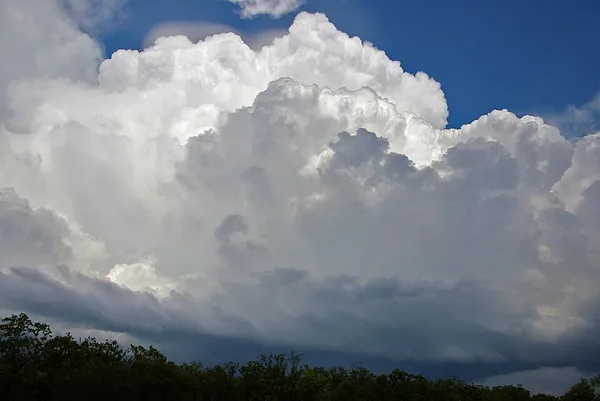
When moist air cools to its dew point, water vapor condenses into liquid droplets (or deposits as ice crystals). That is the heart of cloud formation: vapor becomes visible liquid or solid particles suspended in air. Condensation releases latent heat, which can invigorate storms—an energy detail that connects water cycle physics to meteorology.
Precipitation
Precipitation is water falling from clouds to Earth’s surface as rain, snow, sleet, or hail. It is the delivery step that fills rivers, recharges soils, and builds snowpack. Precipitation is not the same as condensation; condensation builds cloud droplets, while precipitation requires growth and fallout.
Runoff, infiltration, and groundwater
Water that hits the ground can flow overland as runoff into streams and eventually oceans, or it can soak into the ground by infiltration. Infiltrated water may be held in soil or percolate downward to become groundwater in aquifers. Groundwater can later discharge to springs and rivers, completing slower loops of the cycle. Human pavement reduces infiltration and increases flashy runoff—an applied twist on the same vocabulary.
- Solar energy drives evaporation from oceans and land.
- Plants add vapor through transpiration.
- Cooling air causes condensation and cloud formation.
- Precipitation returns water to the surface.
- Runoff and infiltration route water through rivers, soils, and aquifers back toward oceans or back to the air.
Phase Changes You Must Not Mix Up
Multiple-choice questions often swap phase-change terms. Keep a clean mental table:
- Evaporation: liquid → gas
- Condensation: gas → liquid
- Melting: solid → liquid
- Freezing: liquid → solid
- Sublimation: solid → gas (important for snow and ice under dry windy conditions)
- Deposition: gas → solid (frost, some snow crystal growth pathways)
If a question says “change of water from liquid to gas,” the answer is evaporation (or vaporization more broadly). If it links vapor becoming liquid droplets in air, think condensation and clouds.
Oceans: The Great Reservoir and Climate Partner
Oceans cover about 71% of Earth’s surface. They store most liquid water, absorb huge amounts of heat, and exchange moisture and energy with the atmosphere. Because water has a high heat capacity, oceans warm and cool more slowly than land. Coastal climates are often milder than continental interiors at the same latitude for that reason. Oceans also transport heat through currents, helping redistribute energy from the tropics toward higher latitudes.
Salinity
Salinity measures the salt content of water. Average open-ocean salinity is about 35 parts per thousand, though it varies. Evaporation increases salinity by removing freshwater; precipitation, river input, and ice melt decrease it. Salinity plus temperature control seawater density, and density differences help drive deep ocean circulation.
Currents: wind and density
Surface ocean currents are largely driven by winds, with important steering from continents and Earth’s rotation (Coriolis effect). The Gulf Stream and other western boundary currents are famous examples of wind-influenced circulation that moves warm water poleward. Deeper circulation involves sinking of cold, dense water at high latitudes and slow return flows—sometimes called the global conveyor in simplified teaching models. For this quiz, remember: surface currents → largely winds; broader circulation → winds plus density (thermohaline) effects and planetary rotation.
- Wind-driven surface currents shape regional climate and navigation routes.
- Density-driven deep flows connect ocean basins over long timescales.
- Upwelling can bring nutrient-rich deep water to the surface, supporting fisheries.
- Waves and tides matter for coasts; tides are mainly gravitational (Moon and Sun), distinct from wind-driven currents.
Oceans, Heat, and the Atmosphere
Tropical cyclones strengthen over warm ocean water because evaporation feeds latent heat into the storm. El Niño and La Niña events show how shifts in tropical Pacific temperatures reorganize rainfall and storm tracks worldwide. Even without naming every oscillation, you should retain the principle: oceans store and transport heat, so ocean conditions and atmospheric weather are coupled. That is why “oceans help regulate climate because water stores and transports huge amounts of heat” is a correct conceptual answer on Earth-system quizzes.
Freshwater Connections People Depend On
Snowpack in mountains is a seasonal reservoir that melts into rivers used for irrigation and cities. Wetlands filter water and buffer floods. Aquifers supply wells but can be depleted if pumping exceeds recharge. Pollution can hitch a ride through the same pathways that clean water uses: runoff carries fertilizers into coastal dead zones; infiltration can carry contaminants into groundwater. Understanding the cycle is environmental literacy as much as exam content.
Coastlines, Estuaries, and Human Links
Where rivers meet the sea, freshwater and saltwater mix in estuaries that support rich ecosystems and busy ports. Coastal communities depend on understanding tides, storm surge, erosion, and saltwater intrusion into aquifers. Over-pumping groundwater near coasts can let seawater invade wells. Dam building and water diversions change how much sediment and freshwater reach deltas, which can starve wetlands that once buffered storms. None of those applied stories change the basic cycle vocabulary, but they show why evaporation, precipitation, runoff, infiltration, salinity, and ocean heat are not abstract exam words—they are the operating manual of a water planet that hosts human civilization.
Scientists and engineers monitor stream gauges, snowpack, soil moisture, and sea surface temperature because those measurements forecast floods, droughts, and hurricane fuel. When you connect a satellite image of a swirling storm to warm ocean water and latent heat, you are using the same chain of ideas this quiz expects in multiple-choice form.
How to Reason Through the Ten Questions
Match verbs to processes. Evaporation? Liquid to gas. Condensation in the cycle? Cloud formation as vapor becomes liquid droplets. Precipitation? Rain, snow, sleet, hail. Most liquid surface water? Oceans. Salinity? Salt content. Surface currents? Largely winds (with other influences acknowledged). Infiltration? Water soaking into the ground. Transpiration? Plants. Climate regulation by oceans? Heat storage and transport. Energy source of the cycle? The Sun.
Avoid “only” traps that claim oceans do nothing but hold salt, or that rivers hold most water, or that groundwater never connects to streams. Nature is networked. A molecule evaporated from the subtropical Atlantic might fall as rain on a continent, infiltrate to an aquifer, discharge to a river, and return to the sea years later—or freeze into a glacier for centuries. The cycle’s timescales span hours to millennia; the vocabulary stays the same.
If you can narrate one complete trip of a water molecule from ocean to cloud to rain to river and back, you understand the backbone of this test. Add salinity, currents, and heat capacity, and you understand why oceans are not blue backgrounds on a map but active machinery in Earth’s operating system.
Sources: NOAA and NASA Earth science education; standard secondary hydrology and oceanography units in Earth science curricula.