Pluto: The Dwarf Planet That Redefined the Solar System
Few celestial objects have sparked as much public passion, scientific debate, and outright controversy as Pluto. Discovered in 1930 and celebrated for 76 years as the solar system’s ninth planet, it was demoted in 2006 to a newly defined category called dwarf planets, a decision that provoked genuine outrage among segments of the public and continues to generate spirited disagreement among astronomers themselves. Yet stripped of the political and emotional weight surrounding its classification, Pluto remains a genuinely fascinating world in its own right: a small, icy body orbiting far beyond Neptune, accompanied by an oversized moon that orbits so closely the two effectively dance around a shared point in space between them, and possessing a surface far more geologically active and visually varied than anyone expected before a spacecraft finally arrived to look closely in 2015.
Pluto’s story is really two stories intertwined: one about a small, distant world whose true nature took nearly a century to properly understand, and another about how the definition of the word “planet” itself became a matter of formal scientific debate, revealing that even basic astronomical categories are not always as fixed or obvious as they might first appear.
A Discovery Built on a Mistaken Premise
The Search for Planet X
Pluto’s discovery traces back to a search that, ironically, was based on a calculation error. In the early twentieth century, astronomer Percival Lowell became convinced that unexplained irregularities in the orbits of Uranus and Neptune indicated the gravitational influence of a large, undiscovered planet he called “Planet X.” Lowell spent years searching for this hypothetical world without success before his death in 1916, and the search at his namesake observatory continued for over a decade afterward.
Clyde Tombaugh’s Patient Search
In 1930, a young astronomer named Clyde Tombaugh, working at Lowell Observatory in Arizona, systematically compared photographic plates of the night sky taken several nights apart, searching for any point of light that appeared to shift position relative to the fixed background stars, a telltale sign of an object within the solar system rather than a distant, stationary star. After months of painstaking comparison work using a device called a blink comparator, Tombaugh identified a faint, moving object in February 1930, later confirmed and announced as the discovery of a new planet.
An Ironic Twist
Decades later, more precise mass measurements of Neptune revealed that the orbital irregularities Lowell had originally used to predict Planet X’s existence were actually the result of a slightly inaccurate estimate of Neptune’s mass, not the gravitational influence of an undiscovered massive planet at all. Pluto, as it turned out, is far too small and low in mass to have caused the discrepancies Lowell was chasing. Tombaugh’s discovery was genuine, but the theoretical prediction that motivated the search that found it was, in an odd twist of scientific history, based on a mistake.
Orbital Characteristics: A World on the Edge
An Eccentric, Tilted Path
Pluto orbits the Sun at an average distance of about 5.9 billion kilometers, though its orbit is notably eccentric and tilted, carrying it as close as 4.4 billion kilometers at perihelion and as far as 7.4 billion kilometers at aphelion. This eccentricity is pronounced enough that, for roughly 20 years out of every 248-year orbit, Pluto actually travels closer to the Sun than Neptune does, though a stable orbital resonance between the two bodies ensures they never come close enough to collide.
Pluto’s orbital plane is also tilted about 17 degrees relative to the plane in which most of the solar system’s planets orbit, a significantly steeper tilt than any of the eight recognized planets, one of several characteristics that ultimately contributed to its reclassification.
A Very Long Year
A single orbit around the Sun takes Pluto approximately 248 Earth years to complete, meaning it has not yet finished even one full orbit since its discovery in 1930. Its rotation period, by contrast, is 6.4 Earth days, and unusually, Pluto rotates on its side to a significant degree, tilted at roughly 120 degrees, giving it seasonal extremes somewhat reminiscent of Uranus, though considerably less severe.
Physical Characteristics
| Property | Value |
|---|---|
| Diameter | 2,377 km (about 18.5% of Earth’s diameter) |
| Mass | 1.31 × 10²² kg (about 0.2% of Earth’s mass) |
| Average density | 1.85 g/cm³ |
| Surface gravity | 0.62 m/s² (about 6% of Earth’s gravity) |
| Average distance from Sun | 5.9 billion km (39.5 AU) |
| Orbital period (year) | 248 Earth years |
| Rotation period (day) | 6.4 Earth days |
| Axial tilt | 119.6° |
| Known moons | 5 |
| Average surface temperature | -232°C |
Why Pluto Stopped Being a Planet
A Definition Written in 2006
For most of the twentieth century, no formal, universally agreed-upon scientific definition of the word “planet” actually existed; the term was applied based largely on convention and tradition rather than any strict criteria. This became an increasingly urgent problem as astronomers, beginning in the 1990s, started discovering numerous other icy bodies in the outer solar system similar in size and composition to Pluto, part of a vast region now known as the Kuiper Belt.
The situation reached a turning point in 2005 with the discovery of Eris, a Kuiper Belt object initially estimated to be slightly larger than Pluto and comparable in mass, raising an uncomfortable question: if Pluto counted as a planet, shouldn’t Eris, and potentially numerous other similar objects, also receive the same designation? In 2006, the International Astronomical Union addressed this problem by formally defining a planet according to three specific criteria.
The Three Criteria
- The object must orbit the Sun.
- The object must have sufficient mass for its own gravity to pull it into a roughly spherical shape.
- The object must have gravitationally cleared its orbital neighborhood of other significant debris.
Pluto satisfies the first two criteria without dispute, but fails the third: its orbit lies within the densely populated Kuiper Belt, sharing its orbital neighborhood with countless other icy bodies rather than having gravitationally dominated and cleared that region, unlike the eight recognized planets, each of which has become by far the dominant gravitational body within its respective orbital zone. As a result, Pluto was reclassified into the newly created category of dwarf planet, a designation it now shares with several other bodies including Eris, Ceres, Haumea, and Makemake.
A Decision That Remains Contested
The 2006 reclassification has never achieved universal acceptance within the planetary science community. Some researchers, including several scientists directly involved with the New Horizons mission that later studied Pluto up close, have argued that the “clearing the neighborhood” criterion is poorly defined and arguably inconsistent, noting that even Earth and Jupiter share their orbital regions with various asteroids and other small bodies, and have proposed alternative planetary definitions based primarily on whether an object is large enough to have achieved a rounded shape through its own gravity, a standard that would restore planetary status not only to Pluto but to several other dwarf planets as well. This disagreement remains unresolved, illustrating that even seemingly settled scientific classifications can remain genuinely contested among experts.
A Surprisingly Complex, Active World
Sputnik Planitia: A Vast Frozen Plain
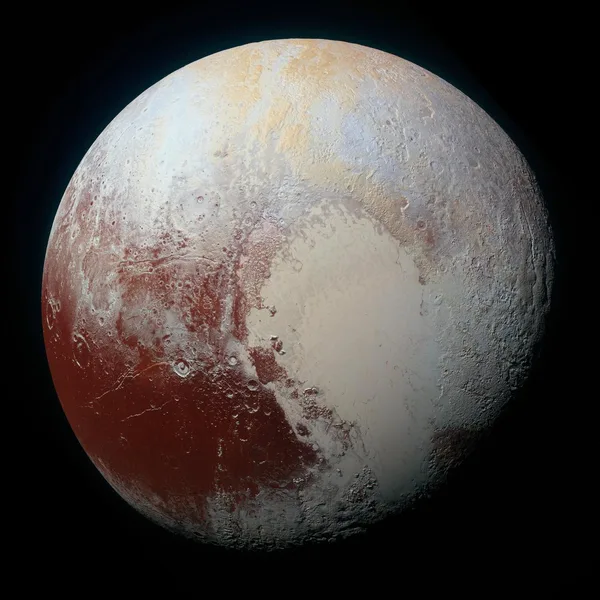
When NASA’s New Horizons spacecraft finally provided detailed, close-up images of Pluto’s surface in 2015, it revealed a landscape far more varied and dynamic than most scientists had anticipated for such a small, distant, and presumably geologically dead world. The most striking feature discovered was Sputnik Planitia, a massive, smooth, heart-shaped plain roughly 1,000 kilometers across, composed primarily of nitrogen, carbon monoxide, and methane ices. The plain’s surface is divided into a pattern of irregular polygonal cells, evidence of active convection, in which warmer ice slowly rises from below, cools at the surface, and sinks again, a process that continually resurfaces the plain and explains its striking lack of impact craters despite the solar system’s ancient age.
Mountains of Water Ice
Bordering Sputnik Planitia, New Horizons detected mountain ranges reaching several kilometers in height, composed not of the more common nitrogen or methane ices that dominate much of Pluto’s surface, but of water ice, which at Pluto’s extreme surface temperatures behaves as a rigid, rock-like material strong enough to support substantial mountainous terrain, a finding that helped confirm scientists’ expectations about Pluto’s underlying icy-rock composition.
Evidence of a Hidden Ocean
Detailed analysis of Sputnik Planitia’s exact position and Pluto’s overall rotational behavior has led several research teams to propose that Pluto may harbor a subsurface liquid water ocean beneath its icy crust, potentially kept from freezing solid over billions of years by a combination of residual internal heat, antifreeze compounds such as ammonia, and an insulating layer of gas hydrates positioned between the ocean and the surface ice above it. If confirmed, this would place Pluto alongside several icy moons of the outer solar system, including Europa and Enceladus, as another small, cold world potentially harboring a liquid water environment far from the Sun’s warmth.
A Thin, Escaping Atmosphere
Pluto possesses an extremely thin atmosphere, composed primarily of nitrogen with smaller amounts of methane and carbon monoxide, believed to expand and contract significantly as Pluto’s distance from the Sun varies across its eccentric, 248-year orbit. Because Pluto’s gravity is so weak, its thin atmosphere is gradually escaping into space over time, though at a rate considerably slower than earlier models had predicted before New Horizons directly measured the process, suggesting Pluto’s atmosphere may persist for a considerably longer timescale than previously assumed.
Charon and Pluto’s Unusual Family of Moons
A Double Dwarf Planet System
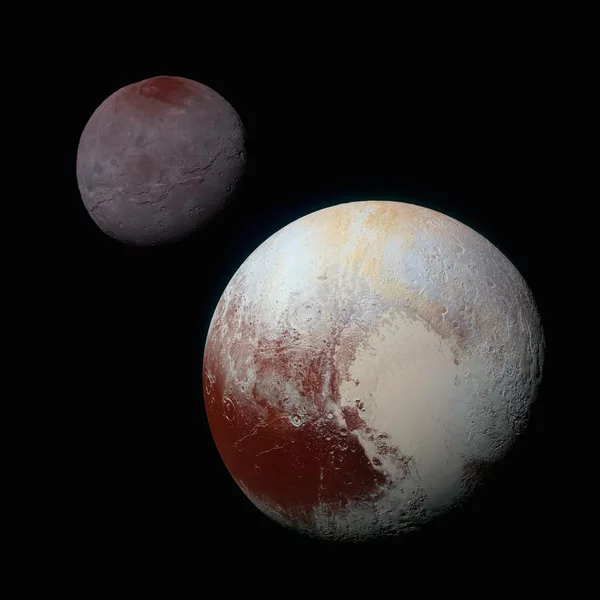
Pluto’s largest moon, Charon, is unusually massive relative to its parent body, measuring roughly half of Pluto’s diameter, a size ratio unmatched by any other moon-planet pairing in the solar system. Because Charon is so large relative to Pluto, the two bodies do not orbit in the conventional sense of a small moon circling a much larger, relatively stationary planet; instead, both Pluto and Charon orbit a shared center of mass, called a barycenter, that lies outside of Pluto’s own surface, causing both bodies to visibly wobble around this shared point in space, a configuration sometimes informally described as a double dwarf planet system.
Mutual Tidal Locking
Pluto and Charon are mutually tidally locked to one another, meaning each body always presents the same face to the other, a considerably more extreme version of the tidal locking relationship between Earth and its own Moon, which is locked only in one direction. An observer standing on the correct hemisphere of Pluto would see Charon hanging permanently fixed in the sky, neither rising nor setting, while an observer on the opposite hemisphere would never see Charon at all.
Four Small Additional Moons
Beyond Charon, Pluto hosts four considerably smaller moons: Styx, Nix, Kerberos, and Hydra, all discovered through telescopic observation well after Charon’s initial 1978 discovery, with the smallest and most recently found only identified through detailed analysis of Hubble Space Telescope imagery. These smaller moons exhibit notably chaotic, unpredictable rotation patterns, likely caused by the complex, competing gravitational influences of the closely orbiting Pluto-Charon pair, making their rotational behavior considerably more erratic than typically observed among other moons in the solar system.
New Horizons: A Decade-Long Journey to a Single Flyby
Reaching the Edge of the Charted Solar System
NASA’s New Horizons spacecraft launched in January 2006, only months before Pluto’s reclassification as a dwarf planet, and spent over nine years traveling roughly 5 billion kilometers to reach its target, achieving the fastest launch speed of any spacecraft in history in order to make the journey within a human timescale. On July 14, 2015, New Horizons conducted its historic flyby of the Pluto system, capturing detailed images and scientific measurements during a brief, close encounter lasting only a matter of hours, since the spacecraft’s trajectory did not allow for orbital insertion around such a small, distant target.
A Wealth of Data From a Single Pass
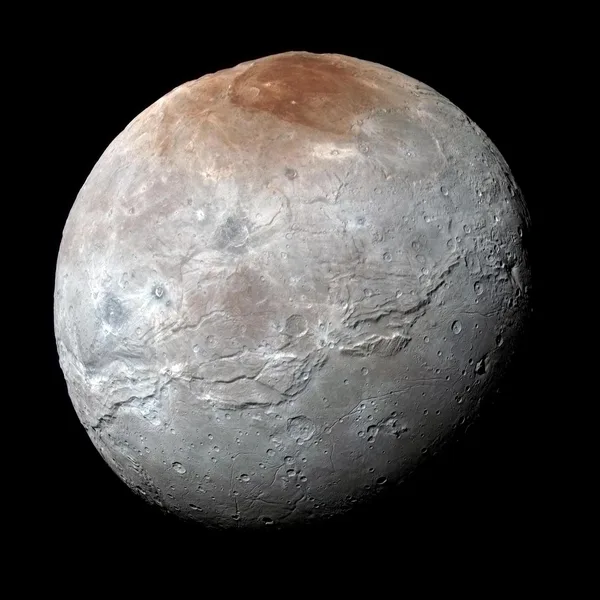
Despite the brevity of its encounter, New Horizons transmitted an enormous volume of scientific data back to Earth, a process that took over a year to complete given the vast communication distances involved and the spacecraft’s limited transmission power. This data revealed Pluto’s surprisingly active geology, confirmed the presence of Sputnik Planitia’s convecting ice plain, provided detailed measurements of its atmosphere, and delivered the first clear images of Charon’s own surface, revealing a landscape marked by extensive canyon systems and a mysterious dark reddish region at its north pole, nicknamed Mordor Macula, thought to result from methane gas escaping Pluto’s atmosphere and becoming chemically altered after settling onto Charon’s colder surface.
Continuing Into the Kuiper Belt
Following its historic Pluto flyby, New Horizons continued deeper into the Kuiper Belt, achieving a second, more distant flyby in January 2019 of a small, elongated object named Arrokoth, providing the most detailed close-up study yet conducted of a pristine, unaltered Kuiper Belt object, believed to preserve material largely unchanged since the solar system’s earliest formation billions of years ago.
Pluto in Context: Comparing Notable Dwarf Planets
| Feature | Pluto | Eris | Ceres | Makemake |
|---|---|---|---|---|
| Location | Kuiper Belt | Scattered disc | Asteroid belt | Kuiper Belt |
| Diameter | 2,377 km | 2,326 km | 940 km | 1,430 km |
| Known moons | 5 | 1 | 0 | 1 |
| Average distance from Sun | 39.5 AU | 68 AU | 2.8 AU | 45.8 AU |
| Spacecraft visited | Yes (New Horizons) | No | Yes (Dawn) | No |
A Small World With Outsized Influence on Astronomy
Pluto’s scientific legacy extends well beyond the specific details of its surface geology or its unusual double-planet relationship with Charon. Its reclassification forced the entire astronomical community to formally confront and define a term that had, remarkably, gone undefined for centuries of scientific practice, a process that continues to shape how newly discovered objects throughout the solar system and beyond are categorized and understood. Its geologically active surface, discovered only through a single, brief spacecraft flyby, demonstrated that meaningful internal heat and geological activity can persist even in small, distant, icy worlds long assumed to be inert and unchanging, a lesson with direct relevance to how scientists now evaluate other small bodies throughout the outer solar system and the wider Kuiper Belt.
Whether formally counted among the solar system’s planets or not, Pluto remains a legitimately compelling world: a small, icy body that traveled billions of kilometers from human understanding to become, however briefly, one of the most closely studied and passionately debated objects in the entire solar system, offering direct evidence that even the most distant and seemingly simple corners of our cosmic neighborhood can still surprise the scientists patient enough to go looking.

References
- NASA Science (n.d.) Pluto overview. Available at: https://science.nasa.gov/dwarf-planets/pluto/ (Accessed: 3 August 2026).
- NASA Science (n.d.) New Horizons mission. Available at: https://science.nasa.gov/mission/new-horizons/ (Accessed: 3 August 2026).
- NASA Solar System Exploration (n.d.) Pluto: in depth. Available at: https://solarsystem.nasa.gov/planets/dwarf-planets/pluto/in-depth/ (Accessed: 3 August 2026).
- IAU (2006) Definition of a planet in the Solar System. Available at: https://www.iau.org/news/pressreleases/detail/iau0603/ (Accessed: 3 August 2026).
- NASA Science (n.d.) Kuiper Belt. Available at: https://science.nasa.gov/solar-system/kuiper-belt/ (Accessed: 3 August 2026).
- NASA Photojournal (n.d.) Pluto images. Available at: https://photojournal.jpl.nasa.gov/target/Pluto (Accessed: 3 August 2026).