Biology Tests
Free biology tests on About Science cover cells, genetics, body systems, photosynthesis, and ecosystems. Practice with clear online science quizzes that strengthen real understanding of how life works—from molecules to food webs.
 Test
Test
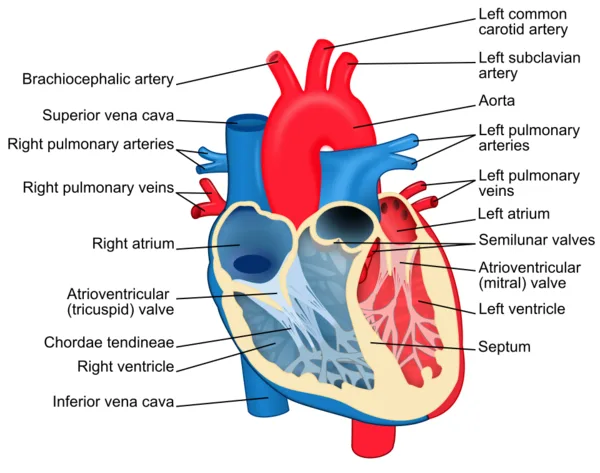
Human Body Systems Online Test
Take the test →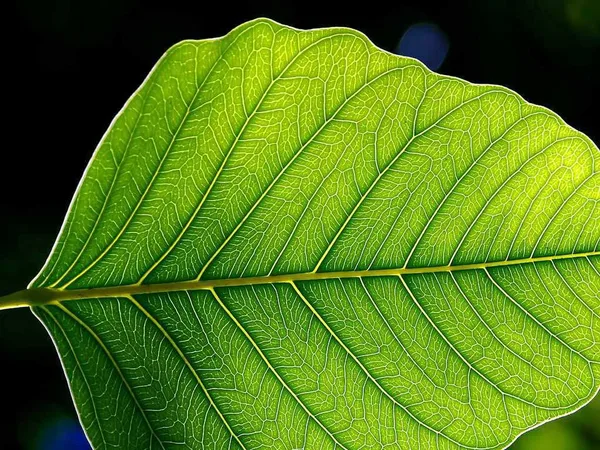 Test
Test
Ecology and Ecosystems Online Test
Take the test →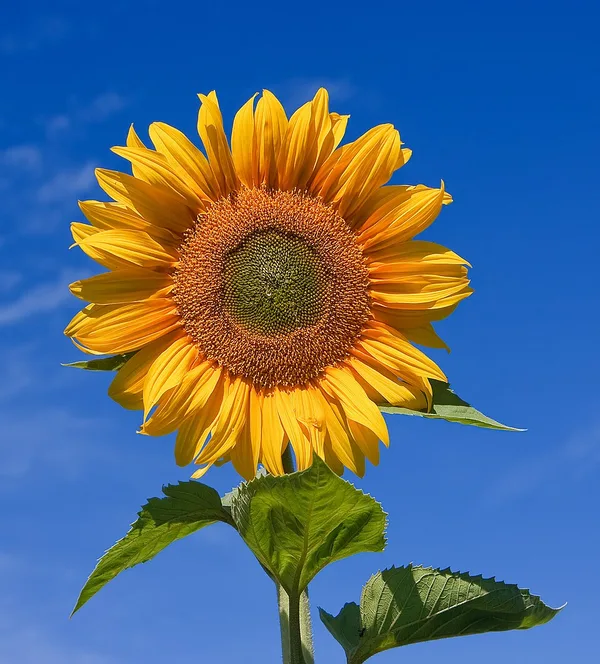 Test
Test
Photosynthesis Online Test
Take the test →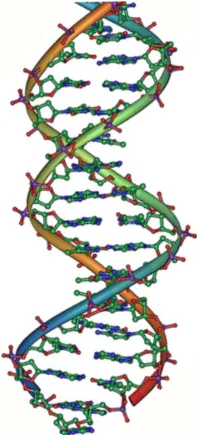 Test
Test
Genetics and DNA Online Test
Take the test →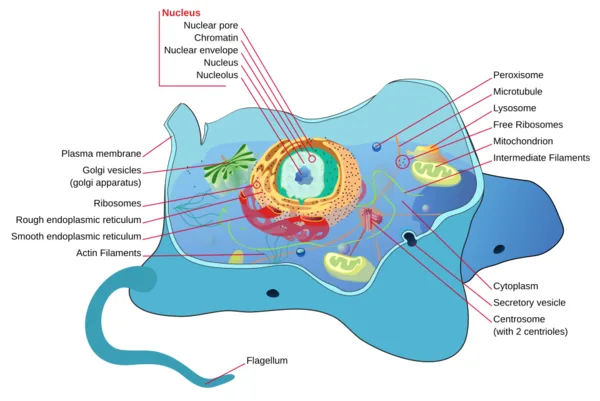 Test
Test
Cell Biology Online Test
Take the test →What Is Biology?
Biology is the science of life—how living systems are organized, how they obtain energy, how they grow and reproduce, how they interact with one another and with their environments, and how they change over generations. It ranges from molecules inside a single cell to the dynamics of entire ecosystems and the deep history of evolution on Earth. Wherever there is metabolism, heredity, and the capacity to respond to surroundings in organized ways, biology has questions to ask and methods to test answers.
Life is not defined by a single magic ingredient. Instead, biologists recognize a cluster of properties: cellular organization, use of energy, homeostasis, growth, reproduction, response to stimuli, and evolutionary adaptation across populations. Viruses sit in an interesting border zone because they replicate only inside host cells; debates about their status sharpen, rather than blur, the need for clear definitions. What unites the field is a commitment to evidence: microscopy, genetics, field surveys, experiments, and models that must survive contact with data.
Biology connects chemistry and physics to the living world without reducing life to “just chemistry.” Chemical reactions power cells, but organization, information, and history matter. DNA sequences carry instructions; natural selection filters traits over time; ecosystems channel energy and recycle matter. Biology tests and free online science quizzes help learners practice that layered thinking—moving fluently from molecule to organism to environment instead of memorizing isolated labels.
Why Biology Matters
Biology matters because human health, food systems, and environmental stability all rest on living processes. Medicine is applied cell biology, genetics, physiology, and microbiology. Agriculture depends on plant physiology, soil ecology, and breeding. Conservation and climate adaptation require ecological literacy: how species interact, how habitats fragment, how carbon and water cycle through biosphere and atmosphere. Personal decisions about vaccines, antibiotics, nutrition, and biodiversity make more sense when core biological mechanisms are clear.
On a deeper level, biology explains why we share a genetic code with other organisms, why ecosystems collapse when key links break, and why diversity of life is both a product of deep time and a resource for the future. Understanding evolution is not optional ornamentation; it is the framework that unifies fossils, genomes, antibiotic resistance, and the geographic distribution of species. Online biology quizzes that revisit these themes strengthen scientific literacy for school, work, and civic life without turning curiosity into dry drill.
Biology also trains careful observation. Distinguishing correlation from causation, sample from population, and anecdote from experiment is essential when evaluating health claims or environmental news. Structured practice through online science quizzes builds the habit of reading a claim, asking what mechanism would make it true, and checking whether the language matches real biology.
Major Branches of Biology
The living world is too large for one specialty. Branches of biology differ by scale, method, and the kinds of organisms they emphasize, yet they constantly borrow from one another.
Cell biology and molecular biology
Cells are the fundamental units of life. Cell biology studies membranes, organelles, transport, signaling, and division. Molecular biology focuses on DNA, RNA, proteins, and the regulatory networks that turn genes on and off. Together they explain how a fertilized egg becomes many specialized tissues, how mitochondria supply ATP, and how errors in the cell cycle can contribute to cancer. Modern medicine’s targeted drugs and genetic tests rest on this microscopic foundation.
Key contrasts appear early: prokaryotic cells versus eukaryotic cells, plant cells with walls and chloroplasts versus animal cells without them, passive transport versus active transport, mitosis versus meiosis. Mastering those contrasts pays dividends in almost every later topic, which is why cell-focused biology tests are a natural entry point for many learners.
Genetics and heredity
Genetics asks how traits are encoded, inherited, and expressed. Classical genetics began with patterns of inheritance; molecular genetics revealed DNA structure and the processes of replication, transcription, and translation. Population genetics links gene frequencies to evolution. Human genetics connects pedigree patterns, chromosomal conditions, and the promise and limits of genomic medicine.
Important ideas include dominant and recessive alleles, genotype versus phenotype, mutation as a source of variation, and the fact that most complex traits involve many genes plus environment. DNA is not a simple “blueprint” that builds a body without context; expression depends on regulation, development, and conditions. Good online science quizzes push learners past slogans toward that nuance.
Physiology and organismal biology
Physiology studies how organs and systems function in living organisms. In humans and other animals, that includes circulatory, respiratory, digestive, nervous, endocrine, immune, and musculoskeletal systems—and how they maintain homeostasis. Plant physiology covers water transport, gas exchange, and responses to light and gravity. Comparative physiology reveals both shared solutions and remarkable specializations across species.
Understanding the human body as an integrated set of systems helps interpret everyday experiences: why heart rate rises with exercise, how lungs exchange gases, why the nervous system’s speed matters for coordination. Biology tests on body systems reward functional thinking—what each system does and how it cooperates with others—rather than pure memorization of Latin names.
Ecology and environmental biology
Ecology examines interactions among organisms and between organisms and their physical surroundings. Energy flows from producers through consumers and decomposers; matter cycles through air, water, soil, and biomass. Populations grow, compete, and may crash; communities assemble into ecosystems with characteristic food webs and nutrient pathways. Human activity now shapes nearly every ecosystem on Earth, so ecological literacy is inseparable from environmental decision-making.
Concepts such as carrying capacity, keystone species, invasive species, and trophic levels help explain news about fisheries, forests, and climate-related shifts in range. Ecology also links back to evolution: adaptations make sense in ecological context, and coevolution ties species together over time.
Evolutionary biology
Evolution by natural selection and related processes explains the diversity and unity of life. Descent with modification accounts for shared anatomy, molecular homologies, and the fossil record. Phylogenetic trees are hypotheses about relationships; they are tested and revised as new data arrive. Speciation, extinction, and adaptive radiation shape the tree of life across geological time.
Evolution is not a march toward perfection, nor does it require conscious striving by organisms. It is change in populations driven by variation, heredity, and differential reproductive success, along with drift, migration, and other forces. Clear online biology tests help replace caricatures with workable scientific language.
Microbiology, botany, zoology, and more
Microbiology studies bacteria, archaea, viruses, and microscopic eukaryotes—essential for health, industry, and global nutrient cycles. Botany and zoology organize plant and animal diversity and function. Developmental biology tracks how bodies are built; immunology maps defense systems; biotechnology applies living systems and molecular tools to practical problems. The map is large, but introductory paths usually begin with cells, genetics, energy flow, and ecosystems.
Core Ideas That Organize the Living World
Several themes recur across branches. Structure and function are linked: the shape of an enzyme’s active site, the surface area of a lung, or the beak of a bird makes sense in light of what the structure does. Energy and matter flow continuously; life maintains local order by exporting disorder, powered by sunlight or chemical sources. Information is stored in genomes and used to build proteins that do cellular work. Homeostasis keeps internal conditions within workable ranges. Evolution explains both similarity and diversity.
- Cell theory — living organisms are made of cells; cells arise from existing cells.
- Central dogma (usual flow) — DNA → RNA → protein, with rich regulation at every step.
- Photosynthesis and respiration — complementary processes moving energy and carbon through ecosystems.
- Natural selection — heritable variation plus differential success reshapes populations over time.
- Interdependence — no species lives in true isolation; ecology is relationship science.
Misconceptions are common and worth confronting early. Acquired traits are not simply “written into” genes in Lamarck’s classical sense; epigenetics adds complexity but does not revive naive inheritance of everything an individual experiences. “Survival of the fittest” does not mean “strongest in a gym sense”; fitness means reproductive success in a given environment. Humans did not evolve from modern chimpanzees; humans and chimpanzees share common ancestors. Online science quizzes that use precise wording help lock in better models.
How Free Biology Tests Help You Learn
Biology vocabulary is dense. Words like allele, stomata, homeostasis, and trophic level are easy to recognize and hard to use correctly under pressure. Biology tests on About Science turn passive familiarity into active command. Short multiple-choice sets ask you to choose the best mechanism, match a structure to a function, or interpret a simple ecological relationship. That format mirrors how scientific literacy works in real life: select the explanation that fits the evidence among several that merely sound scientific.
Free online science quizzes also support spaced practice. Completing a cell biology set one day and returning later to genetics or ecology builds a web of connections rather than a single brittle list of facts. Immediate feedback shows whether you confuse chloroplasts with mitochondria, genotype with phenotype, or producers with decomposers—classic mix-ups that block progress until they are fixed.
About Science biology quizzes focus on high-value introductory themes: cells and organelles, photosynthesis, genetics and DNA, human body systems, and ecology and ecosystems. Those topics appear in standard secondary and early college pathways and in public science communication. You will not need advanced laboratory technique to benefit; you will need attention to definitions and willingness to picture processes rather than only names.
What learners can expect
Expect questions that reward understanding of processes: how membranes control traffic, how light energy is captured in photosynthesis, how DNA information becomes protein function, how organ systems maintain balance, and how energy moves through food webs. Expect fair distractors that reflect common errors, not random noise. Do not expect medical diagnosis training or professional certification content; these are educational science quizzes for building and checking foundational knowledge.
A productive approach is simple. Read a short conceptual overview, take a quiz, note weak spots, reread those ideas, and try again after a break. Draw a quick sketch of a cell, a food web, or the path of blood through the heart when a question involves structure. Biology is visual and dynamic; static word lists underperform compared with mental movies of processes.
- Define key terms in your own words before starting a set.
- Ask “what does this do?” for every structure you meet.
- Track matter and energy: where do they come from, and where do they go?
- Separate similar pairs deliberately (mitosis/meiosis, gene/allele, biotic/abiotic).
- Use multiple online biology tests over time instead of one marathon session.
Biology in Daily Life and Public Issues
News about pandemics, gene editing, cancer therapies, pollinator decline, or “superbugs” is biology in public. Antibiotic resistance is evolution in real time inside microbial populations. Vaccines train adaptive immune memory. Photosynthesis and respiration sit behind discussions of carbon dioxide and climate. Ecology explains why monocultures can be productive yet fragile, and why habitat corridors matter for wildlife.
Personal health literacy benefits from the same foundations. Understanding that viruses are not bacteria clarifies why antibiotics do not treat viral colds. Knowing that correlation is not causation helps evaluate diet fads. Grasping homeostasis makes fever, thirst, and hormone regulation less mysterious. Free online science quizzes will not replace professional care, but they strengthen the conceptual map that makes trustworthy health information usable.
A Practical Learning Path
Many learners do well starting with the cell: membrane, nucleus, energy organelles, and transport. Next, connect cells to energy: photosynthesis in producers and cellular respiration more broadly. Then open the information chapter—DNA, genes, inheritance patterns—before scaling up to human body systems and finally to ecology, where individual organisms become parts of larger networks. At each stage, About Science biology tests provide checkpoints.
Supplement quizzes with observation. A walk outside becomes ecology practice: who is producing, who is consuming, what abiotic factors shape the scene. Cooking and food labels become crude biochemistry. News features about conservation become case studies in populations and habitats. Biology is not confined to laboratories; the living world is the original classroom.
Life’s complexity can feel overwhelming. The remedy is not to memorize everything at once, but to secure the major themes—cells, information, energy, evolution, interdependence—and hang new details on those hooks. Use this category as a home base: return when you need structured practice, and let each quiz sharpen the next round of reading and looking. Biology rewards that patient loop with a clearer view of every living thing, including ourselves.
Sources and note: Themes drawn from standard introductory biology frameworks (cell theory, genetics, physiology, ecology, and evolution) as presented in widely used secondary and college curricula and open educational resources. About Science biology quizzes emphasize foundational topics such as cells, photosynthesis, genetics, human systems, and ecosystems.