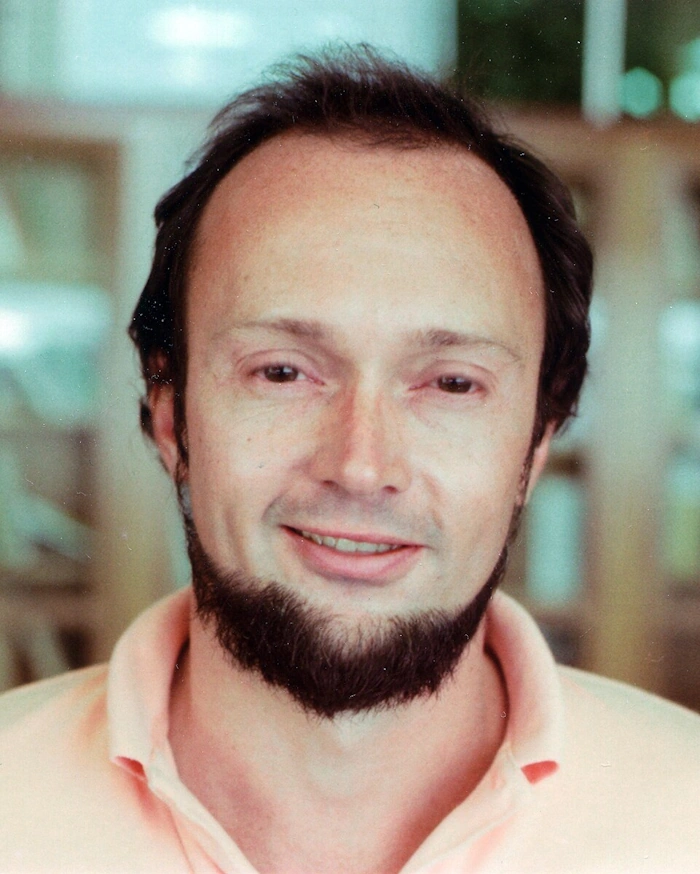
Grigory Perelman
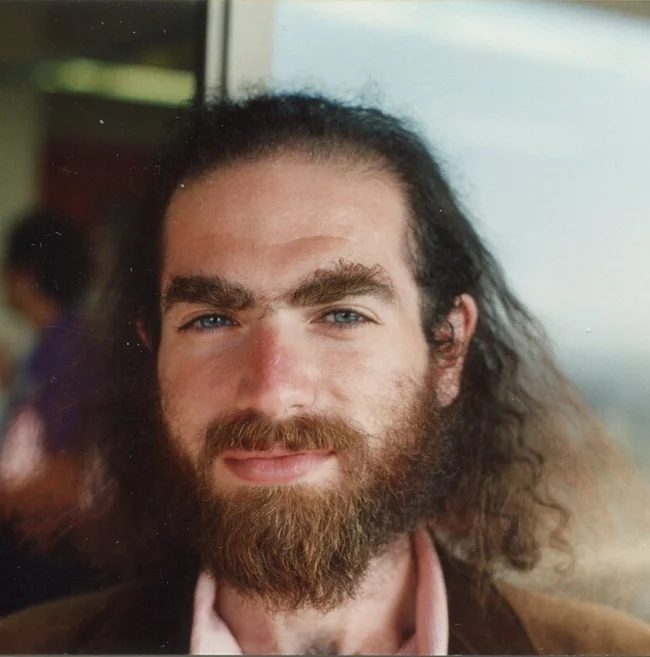
In the early 2000s, one mathematical problem was considered the Holy Grail. The Poincaré conjecture. It couldn’t be proven for 100 years. It was so difficult that its solution meant immortality in the scientific community. And a prize of 1 million dollars.
In 2002, a text suddenly appeared on the internet. Without press releases, without announcements, just a PDF on a mathematical portal. The author — a St. Petersburg mathematician unknown to the general public, Grigory Perelman. A few years later, experts confirmed: the proof was correct. Perelman had done what was considered impossible. He was awarded the Fields Medal — the equivalent of the Nobel Prize, but in mathematics. But he refused the million dollars for solving this problem.
He explained this by saying he disagreed with the organized mathematical community. He considered it unfair. He didn’t go to the ceremonies, didn’t appear in the media, didn’t give a single interview. For some reason, over time, he completely disappeared from public space. Who is Grigory Perelman? Why did he consciously reject everything that some people in science strive for: recognition, money, status? What was going on in his head and what does his decision say about our society? This is a story about a man who solved the greatest mathematical problem and left the game.
Childhood in Leningrad
Leningrad, late 1960s. A city recovering from post-war grayness, living in its own rhythm: queues, another five-year plan, the first color televisions, ushanka hats and construction of new districts. In one of these apartment buildings in a residential area, in the most ordinary kitchen, an eight-year-old boy adds six-digit numbers in his head. Not for a record, but simply because he can. This is little Grigory Yakovlevich Perelman.
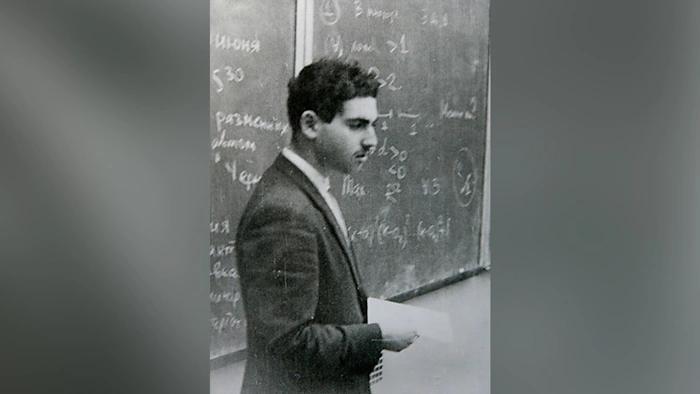
He was born on June 13, 1966, in a family where mathematics and technology were not a profession, but almost a language of communication. His father, Yakov Perelman — an electrical engineer. His mother, Lyubov Leibovna — a mathematics teacher. Later, his mother would become his first and strictest teacher. In their apartment there were few books of fiction. But there were many problem collections. Old Soviet editions on analytical geometry and topology. This was a home where studying wasn’t just encouraged. In it, studying was the only respected form of existence.
He grew up as a withdrawn child. Without conflicts, but also without friends. From an early age he had a tendency toward isolation. Toward independent thinking. He wasn’t interested in yard games, group activities, noise. According to neighbors’ recollections, he spent hours alone: with a book, over a sheet of paper, or simply looking out the window. Not out of anxiety or fear, but as if out of inner necessity. He wasn’t gloomy or strange. He was simply immersed in himself.
When he was 6 years old, the family enrolled him in music school. The cello — a quiet instrument for a quiet child. The teacher later recalled: he played carefully, but not with soul. He knew how it should be done, but didn’t feel why. He studied because that’s what was needed. But he seemed to get no real pleasure from it.
Already then, the main quality that distinguished him from others was manifesting. He wasn’t inclined to do something for pleasure. Or for social approval or victory. He did something only if he saw meaning in it.
The school years
He attended an ordinary school, number 239 in Leningrad. Back then it wasn’t yet elite. But later, when Perelman became famous, it was given the status of a lyceum with a physics-mathematics focus. However, even in that era the school had strong teachers, and most importantly — a circle at the Palace of Pioneers, led by a young teacher and methodologist Sergey Rukshin. This name would appear in the biographies of many outstanding Russian mathematicians. But it was with Grigory that Rukshin formed a special relationship. He wasn’t just his teacher. He became a guide from childhood ability to count to mature adult scientific thinking.
By this time Grigory was already studying textbooks taught in universities. At 10 years old he was operating with concepts of differential geometry. He solved problems in his head, without writing down intermediate steps. But this wasn’t what amazed teachers. What amazed them was the internal logic. He didn’t memorize methods, he derived them anew. This wasn’t phenomenal memory, but phenomenal independence. When he was asked why he didn’t want to go to the city olympiad (the competition among best students in city schools), he answered: “I’m interested in problems, not competitions.”
Nevertheless, by age 16 he became a participant and winner of the International Mathematical Olympiad. This seemed to be the usual path for a gifted schoolchild. But in Perelman’s case, this was rather phenomenal. He received a perfect score. His solutions were so elegant that some jury members doubted whether he had copied them from somewhere. Verification showed — no. Everything was thought through by him.
University and early career
After the olympiad, the stage of invitations began. Leningrad universities, scientific circles, university laboratories. But Perelman didn’t strive to leave his environment. He enrolled in Leningrad State University. One of the strongest universities in the USSR. At the institute of mathematics… By this point it became obvious: we’re talking not about a gifted schoolchild, but about a potential phenomenon.
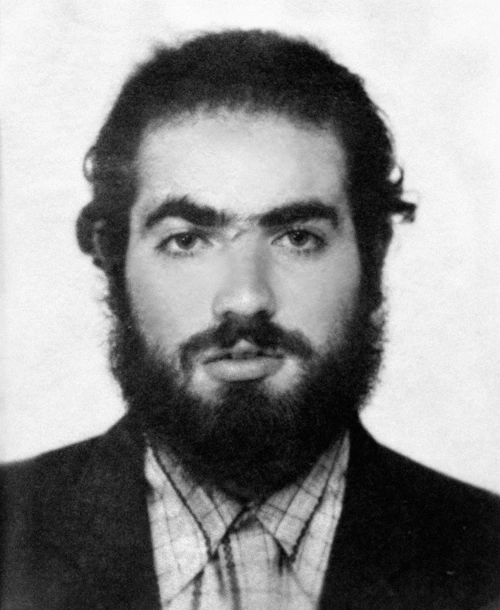
However, Perelman didn’t rush to publications. Didn’t make scientific connections. Wasn’t in a hurry for graduate school. All that interested him was the problem. Specific, difficult, most often abstract. He chose the path of absolute depth, even if it led to solitude.
His childhood ended not with age, but with the acceptance of this path. He didn’t become a rebel, didn’t become a genius-storyteller like Stephen Hawking, or a frontman of the scientific community like Terence Tao. He became a researcher, but one whose inner life turned out to be much more important than any forms of external success. Later, in rare conversations, he would say:
If I can’t control how my ideas are used, I don’t want to be associated with them.
This is already a mature position, but its roots are in that very childhood. Where meaning was valued above result. Where mathematics wasn’t a career, but a way of being. Mathematics in the USSR of those years was, of course, elitist, but alive. Its teachers taught passionately and sternly, giving gifted students complete freedom. Perelman quickly found himself among such students. He was noticed and sent to those who could truly understand what was happening with him.
Meeting Poincaré’s work
There he first heard the name that would haunt him for decades. Henri Poincaré. A French mathematician, one of those rare people who laid the foundations of an entirely new science.
He became the founder of topology. An area where mathematics looks not at angles and distances, but at the skeleton of space. At how it’s arranged from within.
In his famous work Analysis Situs from 1895, such concepts as fundamental group and homologies appeared for the first time. That is, tools that allow distinguishing one space from another, even if they might seem similar externally. It was then that Poincaré formulated the problem that became a classic.
In two dimensions everything is clear. If a surface is closed and simply connected, any loop on it can be contracted to a point, then it’s a sphere.
Poincaré asked: is the same thing true in three dimensions?
That is, if we have a three-dimensional space without holes and breaks, must it necessarily be simply a three-dimensional sphere? The formulation sounds almost trivial. But it was precisely in this simplicity that its depth lay.
Explaining the Poincaré conjecture
To understand the essence of the Poincaré conjecture, consider how we perceive surfaces. We can only directly perceive two-dimensional surfaces—those with just two independent directions of movement. On a ball, for instance, we can move left, right, forward, and backward, but there’s no additional direction like “into depth” available on the surface itself. That would require entering a third dimension beyond the surface.
The two-dimensional observer
Imagine a two-dimensional creature—something like a bug—living on the surface of a donut (mathematically called a torus). This creature can only move up-down and left-right along the surface. It has no concept of depth or the third dimension. From its perspective, the surface feels flat, much like how we might walk on what seems like flat ground. The creature doesn’t perceive the curves and bends of the donut it inhabits—it experiences its world as essentially flat, like living on a “flat Earth.”
This creates an interesting problem: how can this two-dimensional being determine whether it lives on the surface of a sphere or on the surface of a donut? After all, in both cases, if it travels far enough in one direction, it will eventually return to its starting point. From the creature’s limited perspective, these two surfaces might seem identical.
The rope test
There is, however, a method to distinguish between these surfaces—a test using a rope to create a loop. The Poincaré conjecture formally states that every three-dimensional compact manifold without boundary that is simply connected must be topologically equivalent to a sphere.
For the two-dimensional creature, here’s how the test works: Take a rope and lay it out to form a closed loop on the surface. Then attempt to gradually shrink this loop down to a single point by sliding it along the surface, without ever lifting it off or breaking it.
On a sphere’s surface, any loop can always be contracted to a point. No matter where the loop is placed or how large it is initially, it can always be smoothly shrunk down until it becomes just a single point.
On a donut’s surface, however, certain loops cannot be contracted. If a loop goes around the hole of the donut—either through the center hole or around the tube—it will get “stuck.” The creature would find that no matter how hard it tries, the loop cannot shrink past a certain point because it’s wrapped around a topological feature. In topology, this is only valid if the process is done without tearing the rope or forcing it through the surface—such violations don’t count as legitimate mathematical operations.
Mathematicians call these legitimate transformations “homeomorphisms”: deformations that don’t involve cutting or gluing.
Extending to three dimensions
The two-dimensional case described above is relatively easy to visualize and was well understood. The profound difficulty of the Poincaré conjecture lies in extending this principle to three-dimensional spaces (not three-dimensional objects in our space, but spaces that themselves have three dimensions of freedom—which would actually exist in a four-dimensional ambient space).
We cannot visualize three-dimensional surfaces directly because we live in three-dimensional space ourselves. We lack the ability to “step outside” and see such a surface the way we can observe a two-dimensional surface like a sphere or donut.
The conjecture asks: If we have a three-dimensional space that is compact (finite in extent), has no boundary, and is simply connected (meaning every loop can be contracted to a point), must it be topologically equivalent to a three-dimensional sphere?
To understand “simply connected,” consider the difference: A sphere is simply connected—it has no holes. A donut is not simply connected—it has one hole. A figure-eight surface would be doubly connected—two holes. A pretzel shape with three holes would be triply connected. The Poincaré conjecture states that if a three-dimensional space has no such holes, is finite, and has these specific properties, then it must fundamentally be the three-dimensional equivalent of a sphere—not some higher-dimensional analog of a donut or any other shape.
This seemingly simple statement resisted proof for over a century, until Grigory Perelman finally solved it.
The mathematical significance
In the mathematical community of the twentieth century, this conjecture was very important and complex. First, simpler cases were solved. In dimensions higher than three, proof appeared in the 1960s. The works of Smale and others. And in four dimensions a bit later, thanks to Michael Freedman. For these results mathematicians received the highest awards, including Fields Medals.
But the three-dimensional case remained stubborn and special. It didn’t yield to the same methods. And it was precisely three-dimensional manifolds that turned out to be much more complex than higher ones. Thus the Poincaré conjecture turned into the main open question of geometric topology. It forced entire directions to develop. Such as Thurston’s theory of three-dimensional manifolds, Hamilton’s Ricci flow, research on topological invariants. Throughout an entire century, mathematicians lived with this conjecture as with a center of attraction. It determined the landmarks and directions of movement of the entire field.
The main thing in Poincaré’s legacy — not only the formulation of the problem itself, but also the fact that he was the first to teach mathematicians to ask questions of this type. What exactly makes space simple or complex? How to capture its essence using invariants? His conjecture became a model of how one clear idea can set the tone for all mathematics for many decades.
Perelman’s mathematical world
The mathematical world of the late twentieth century lived as if in two dimensions. One — traditional: applied mathematics, calculations, programming, economics, cryptography. The second — deep, philosophical, almost religious: topology, set theory, axiomatics, proofs. Perelman was interested only in the second. It was in topology that he felt his native element. Geometry. But not the familiar school geometry with angles and rectangles, but flexible and paradoxical. Where space can be infinitely bent, cut and sewn. Where familiar intuitions no longer work.
When an ordinary person hears the word “sphere,” they imagine a ball. When a topologist hears “three-dimensional sphere,” they imagine the impossible. And Perelman didn’t just imagine. He intuitively felt how it was arranged. He immersed himself in multidimensional space as into his own memory.
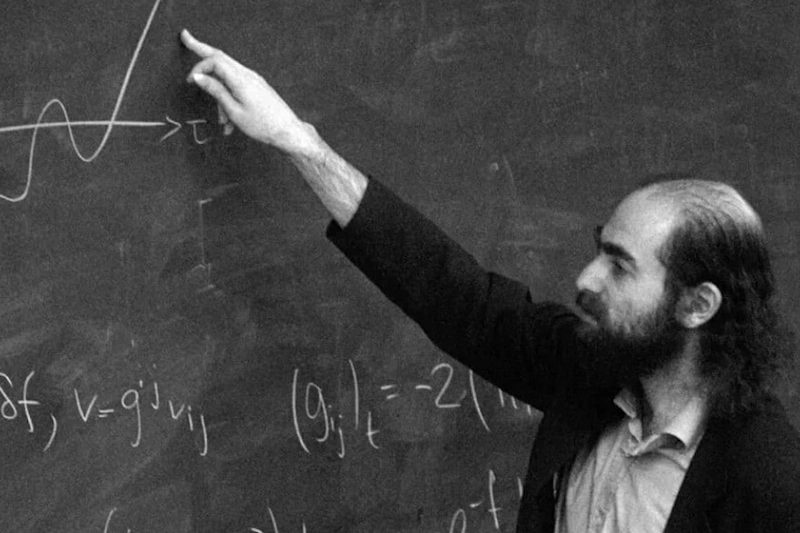
In 1987, Perelman defended his diploma and immediately entered graduate school at Steklov. He was accepted without exams. He didn’t even submit documents to other universities. Steklov became his abode. Work at the institute fell during a difficult time in the country. Perestroika. Scientific institutions lost funding. Salaries were miserable. The country’s best minds were leaving abroad. But Perelman stayed. Because all he needed was paper, pen and silence. He didn’t have to leave.
In those years he continued to work with Ricci geometry and Riemannian spaces. Complex areas at the intersection of topology and differential geometry. This is something similar to models of the space in which we live.
The same principle can be extended to three-dimensional space. Consider an observer confined to this space—they must determine whether they exist on the surface of a three-dimensional sphere or a more complex topology, such as a three-dimensional torus (the higher-dimensional analog of a donut).
To make this determination, we must consider our three-dimensional universe and apply the following thought experiment: imagine taking a loop—a closed curve extending through space—and attempting to contract it continuously to a single point. The critical question is whether this contraction is always possible, or whether there exist obstructions in the structure of space itself.
If at any point the loop cannot be contracted—if it becomes “stuck” around some topological feature—this indicates the presence of a hole in the space’s structure, suggesting we inhabit a more complex manifold like a three-dimensional torus. However, if we accept as an axiom that no such obstructions exist—that every loop in our space can be smoothly contracted to a point—then according to the Poincaré conjecture, our space must be topologically equivalent to a three-dimensional sphere.
And no one could prove this. It would seem, probably it is so, probably the theorem is obvious. But to prove all this, it required more than a hundred pages from Perelman and more than a thousand pages of explanation from Chinese mathematicians.
It’s important to add that Perelman in no way proved that we live on a sphere. He proved that such a possibility exists. Under the condition that there are no holes in our space. If there are no holes and the rope passes everywhere, then yes, then he proved it. Mathematically, formally he proved it. But whether we live on a sphere or on a donut… Well, maybe we still live on a donut after all. This hasn’t been proven.
Approaching the problem
The question that interested him sounded as if simple: can any three-dimensional object be reduced to a sphere if it’s properly deformed? This is the Poincaré conjecture. It tormented minds for almost a century.
In the late 1980s, Perelman published his first works. They appeared in scientific journals, but in a narrow circle. Even then some colleagues said: “He has a phenomenal sense of space. He can see a proof as others see a picture — not linearly, but entirely. As if the solution immediately arises in his head, and all that remains is to carefully transfer it to paper.”
But Perelman refused to participate in conferences. Didn’t give interviews. Didn’t try to advance himself. This caused bewilderment. But his scientific advisor explained: “He doesn’t work for a career. He works for mathematics.”
In 1991, Grigory received an international scholarship and went to the USA. There he encountered a different culture. Here the young scientists were ambitious, sociable, constantly presenting, discussing and moving. Perelman, however, was taciturn, precise and withdrawn. His manner of presenting material — careless, but his thoughts strikingly precise. He made the impression of a person who not only knows more, but as if is ahead of everyone by decades.
The Americans offered him to stay. They promised comfort, grants, resources. But Perelman refused. He returned to Russia. To a poor post-Soviet country. To destroyed laboratories. His return to Petersburg seemed almost insane. He lived with his mother in a small apartment, he didn’t teach, didn’t engage in politics, wasn’t interested in anything except his problems. At the institute he was respected, but almost no one understood what he was doing.
He went into the shadows. It was precisely during this period, the late 90s, that he began approaching the problem that would change his fate. The Poincaré conjecture until now considered unsolved. But Perelman saw a weak point in it. Not in the formulation itself, but in the approaches used by his predecessors.
Hamilton’s Ricci flow
Richard Hamilton — an American mathematician who in the 80s proposed a completely new way to study the shape of spaces. He invented the so-called “Ricci flow.” An equation by which you can gradually smooth the geometry of a manifold, like fabric stretched and leveled over time. The idea was that if you track how the shape changes under the action of this flow, you can understand its internal structure. And possibly classify all possible three-dimensional spaces.
However, the Ricci flow had a weak point. Sometimes in the process, singularities arose. Points where space collapsed. And further calculation became impossible. Grigory Perelman found a way to bypass this obstacle.
He proposed performing “surgery”: carefully cutting out areas with singularities and continuing the process further without disrupting the general structure of space. In addition, he introduced new mathematical tools allowing control of exactly how the flow behaves during such changes.
Thanks to these ideas, Perelman completed Hamilton’s program and proved that any three-dimensional space without holes ultimately reduces to the form of an ordinary three-dimensional sphere. Thereby proving the Poincaré conjecture.
The solution published
The solution to the Poincaré conjecture gradually became more likely in the mind and methodology of Grigory Perelman. In the spring of 2002, without making loud announcements and without notifying the scientific community, Grigory Perelman uploaded to the arxiv.org server an article titled “The entropy formula for the Ricci flow and its geometric applications.” The author — one. Comments — none. The article was written in English. It began not with a preface, not with acknowledgments, but with formulas. Perelman didn’t explain why he was publishing it. Didn’t specify what exactly he intended to prove. And especially didn’t call it a solution to the Poincaré conjecture. He simply provided the text.
A few months later, two more of his works appeared on the same resource. The second — “Ricci flow with surgery on three-manifolds.” The third — “Finite extinction time for the solutions to the Ricci flow on certain three-manifolds.” These articles didn’t have the usual structure of scientific publications. There were almost no explanations, illustrations, examples. Some conclusions were indicated but not detailed. As if the reader was offered to travel part of the way themselves. However, inside these texts was a mathematical mechanism capable of destroying a century-old wall.
The articles fell into the hands of American mathematicians: John Morgan and Bruce Kleiner. They were the first to understand that before them was not just interesting material, but possibly proof of the conjecture. Which for 100 years was considered one of the most difficult in mathematics.
The essence of the Poincaré conjecture, formulated in 1904, seemed simple. Every closed three-dimensional manifold object without boundaries, in which any loop can be contracted to a point, by its topology is a three-dimensional sphere. The statement seemed obvious. But throughout a century, not a single mathematician could prove it rigorously.
In the 20th century, analogous problems in other dimensions were solved. But precisely the three-dimensional one remained unresolved. Richard Hamilton proposed the key to the solution. He developed the “Ricci flow” method, allowing the smoothing of space. However, when using it, singularities arose — areas where the mathematical model exploded, broke, and no one could bypass this problem.
But Perelman found a way. He proposed a procedure that he himself called “surgery” — that is, a mathematical operation. In which singular areas are cut out, and the remaining part of space continues evolution. Along with this, he introduced a new entropy function — a way to measure the degradation of space. This wasn’t just a step forward. It was a reconstruction of the entire approach to the problem.
Verification and recognition
In 2003, his articles began to be actively discussed in scientific circles. Mathematicians around the world began rechecking and commenting on his proof. Meanwhile, Perelman himself didn’t participate in discussions or conferences. He didn’t give interviews, didn’t publish comments. He seemed to disappear.
Meanwhile, a Chinese group led by a scientist named Huai-Dong Cao announced that they had reworked Perelman’s works into an understandable form. However, in their publication, Perelman was not initially even indicated as the full author of the idea. This caused indignation in the professional community. A scandal erupted, but Grigory himself remained on the sidelines.
In 2006, the International Mathematical Union acknowledged: the Poincaré conjecture has been proven. Perelman officially became the first person able to cope with one of the seven millennium problems. He was invited to the International Congress of Mathematicians in Madrid to receive the highest award in this field — the Fields Medal. This is the mathematical equivalent of the Nobel Prize. However, Perelman refused. He didn’t come to Madrid. Later, when one of the commission members came to him in Petersburg, to the question of why he was refusing the award, he answered simply: “I’m not interested in fame. I don’t want to be put on display like an animal in a zoo.”
Four years later, in 2010, they tried to award him again. This time with the Clay Prize with a monetary prize of one million dollars. This is one of the most prestigious awards in the history of mathematics. And again a refusal. He said that if he couldn’t control how his proof would be used, he didn’t want his name to be associated with it. For Perelman it didn’t matter whether they recognized him or not. He didn’t strive for fame, respect or prizes. All that had meaning — was the problem itself and its solution.
Complete disappearance
After this, Perelman finally disappeared from the public field. He left the Steklov Institute. Didn’t give interviews, didn’t answer letters, didn’t go out in public. He became a kind of legend. A man who accomplished the impossible and voluntarily refused everything that could have made him famous and rich.
Some tried to explain his behavior with eccentricity, asceticism or even mental disorder. Someone wrote that he suffered from autism. But his close ones, numerous colleagues and those who nevertheless crossed paths with him, spoke of something else. He was a deeply whole and consistent person. He simply lived by his principles. His coordinate system didn’t presuppose a race for recognition.
When once in a private conversation he was asked: “Don’t you feel that you lost everything by refusing the award, money, status?” He answered: “I didn’t lose. I simply didn’t take what I don’t need.”
At this stage the story ceases to be simply a tale about mathematics. This is a story about an inner choice. About how a person can win by refusing. Create something great and leave without waiting for applause.
Sources
- Clay Mathematics Institute – official page on the Poincaré conjecture and Millennium Prize
https://www.claymath.org/millennium-problems/poincare-conjecture - Notices of the American Mathematical Society – expository article on Perelman’s proof and Ricci flow
https://www.ams.org/notices - Grigori Perelman’s original arXiv preprints (first paper, 2002)
https://arxiv.org/abs/math/0211159 - Second Perelman paper on Ricci flow with surgery
https://arxiv.org/abs/math/0303109 - Third Perelman paper on finite extinction time
https://arxiv.org/abs/math/0307245 - Encyclopaedia Britannica – biography of Grigori Perelman
https://www.britannica.com/biography/Grigori-Perelman - Stanford Encyclopedia of Philosophy – entry on Poincaré (for context on Henri Poincaré and topology)
https://plato.stanford.edu/entries/poincare/