How to extract DNA at home?
Level: Grades 7-12
Time Required: 30-45 Minutes
Safety: Adult Supervision Recommended (Chemicals involved)
Introduction: Touching the “Holy of Holies”
When we talk about Genetic Engineering, we usually imagine billion-dollar laboratories with robotic arms and lasers. We think of DNA as something invisible—a microscopic code hidden inside the cell.
But here is a secret: You don’t need a lab to see DNA.
You can extract it right now, in your kitchen, using stuff you use to wash your hair and clean your counters.
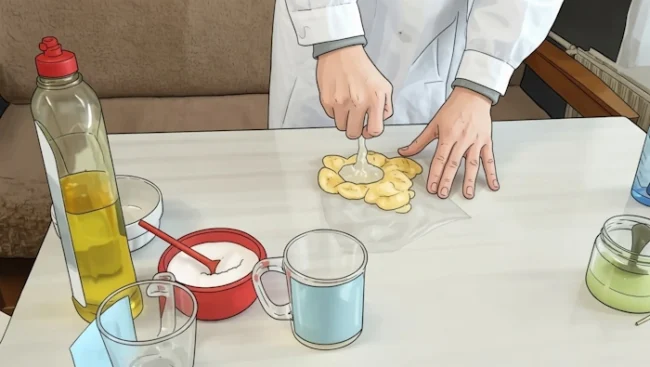
In this experiment, we are going to break open the cells of a fruit (like a banana or onion), strip away the proteins, and force the DNA to become visible to the naked eye. By the end of this lesson, you will be holding the raw code of life in a test tube.
[INTERACTIVE TOOL: THE VIRTUAL LAB]
🧬 Virtual DNA Lab
Step 1: Smash It!
Tap the bag repeatedly to crush the strawberries.
Step 2: The Mixture
Add ingredients to break down the cells.
Step 3: Filtration
Drag the bag to the funnel.
Step 4: Alcohol
Press and HOLD the button to pour cold alcohol.
Success! 🎉
You extracted DNA!
That white cloudy stuff is the DNA clumping together (precipitating) because it can't dissolve in alcohol like it can in water!
Activity: A “Virtual Centrifuge.” Spin the mixture to separate the heavy cell debris from the liquid DNA soup.
Part 1: The Science of the “Buffer” (The Chemistry)
Before we start smashing fruit, we need to understand the chemistry. DNA is a long chain molecule that carries a weak negative charge.
The Problem: In water, DNA strands repel each other (like magnets with the same polarity). They dissolve and become invisible.
The Solution: We need Positive Ions (Salt) to neutralize that charge so the DNA strands stick together.
We are going to make a “Lysis Buffer” (a solution that breaks cells).
🧪 The Recipe (The Buffer)
Mix the following in a glass:
- Water: 120 ml (bottled or filtered is best).
- Salt: 1.5 g (1/4 teaspoon). This provides the positive ions.
- Baking Soda: 5 g (1 teaspoon). This maintains the pH balance.
- Detergent: 5 ml (1 teaspoon) of Shampoo or Dish Soap.
Why? Cell walls and membranes are made of fats (lipids). Detergent breaks down fat (just like washing grease off a pan), popping the cells open.
Pro Tip: Put your Isopropyl Alcohol (Rubbing Alcohol) in the freezer NOW. It needs to be ice cold for the final step!
Part 2: The Procedure (Step-by-Step)
Step 1: Choose a Fruit or a Vegetable
Onions, garlic, bananas, strawberries and tomatoes work best because they have a lot of DNA.
- Cut the fruit/vegetable into small pieces.
- The Smash: Put it in a blender with a little water. Pulse it for 10 seconds. (No blender? Crush it thoroughly with a garlic press or a spoon).
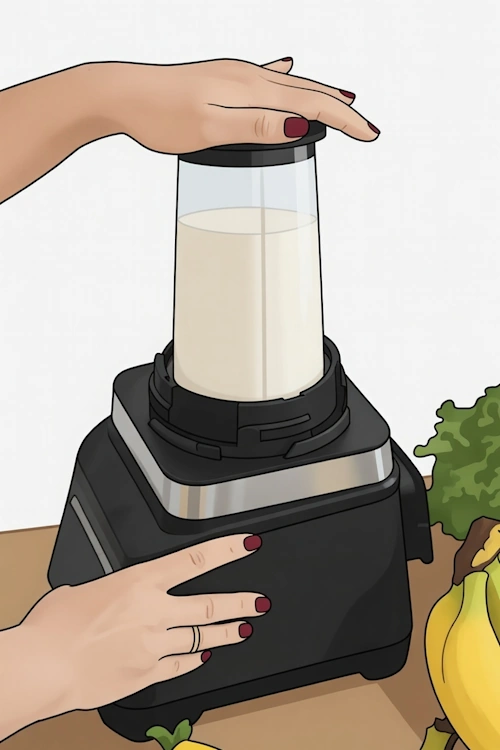
Goal: We want to physically separate the cells from each other.
Step 2: Chemical Warfare
Take 5 ml (1 teaspoon) of your fruit puree and mix it with 10 ml (2 teaspoons) of your Cold Buffer Solution.
- Stir vigorously for 2 minutes.
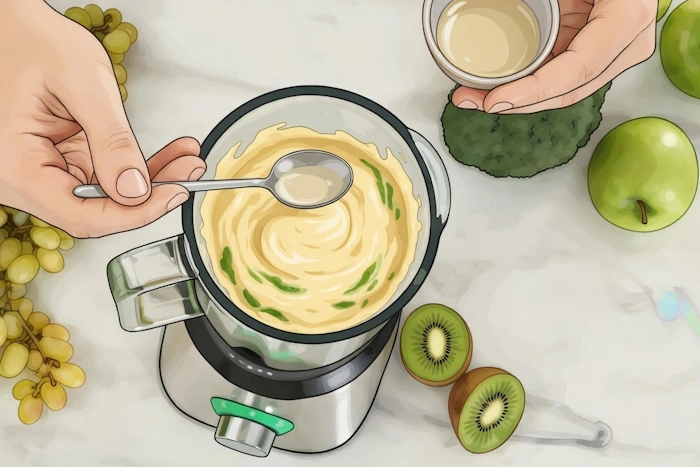
What is happening: The detergent is destroying the cell walls. The “guts” of the cell—including the DNA—are spilling out into the water.
Step 3: Filtration
Now we have a soup of DNA, cell walls, and fruit pulp. We need to get rid of the chunks.
- Method A (Centrifuge): If you have a separator, spin it for 5 minutes. The heavy junk sinks to the bottom.
- Method B (Kitchen Style): Pour the mixture through a coffee filter or a paper towel into a clean glass.
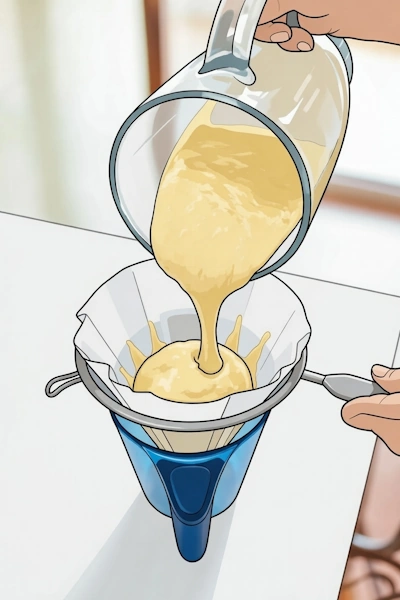
The Goal: You want the clear liquid (the “Supernatant”) that comes through the filter. This liquid contains the invisible DNA.
Part 3: The Reveal (Precipitation)
This is the magic moment.
DNA loves water (it is hydrophilic), which is why you can’t see it yet. But DNA hates Alcohol.
- Take your Ice Cold Isopropyl Alcohol (70% or higher) out of the freezer.
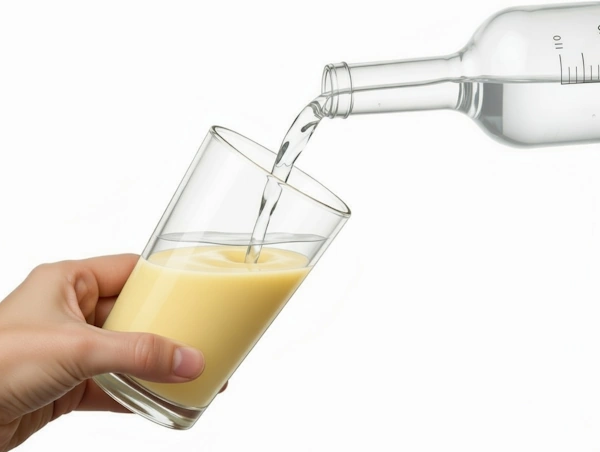
- Tilt the glass containing your DNA liquid.
- Very slowly pour the alcohol down the side of the glass. DO NOT MIX IT.
- You want the alcohol to float on top of the water, creating two separate layers.
The Result:
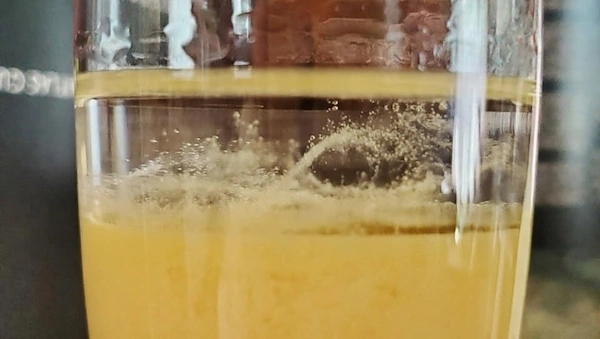
Watch the boundary where the water meets the alcohol.
Since the alcohol is less dense than the water, it stays on top. The DNA will try to flee the alcohol. It will “precipitate” (turn solid) and rise up. You will see white, snot-like threads or a “spider web” floating up into the alcohol layer.
That is pure DNA.
You can take a toothpick or a glass rod and gently twirl it. The DNA will wind around the stick like cotton candy.
Making it Visible
Even after extraction, some DNA remains dissolved. If you want to see all of it, you can add a tiny drop of dye.
Methylene Blue (often found in fish tank cleaners) binds specifically to DNA. A tiny drop will turn those white threads blue, making them pop out against the clear liquid!
Part 4: Why To Extract DNA?
You just performed Genome Isolation. This is the exact first step scientists use for:
- CRISPR: Editing genes to cure diseases.
- Forensics: Catching criminals from a drop of blood.
- Paleontology: Extracting DNA from ancient bones (like mammoths).
By understanding how salt, soap, and alcohol interact with biological molecules, you have unlocked the door to the blueprint of life.
🎓 Quiz: Did You Master the Lab?
1. Why do we add detergent (soap) to the mixture?
- A) To clean the fruit
- B) To destroy the cell membranes (lipids)
- C) To change the color
- D) To kill bacteria
👉 Click to check answer
Membranes are made of fat, and soap breaks down fat to release the DNA inside.
2. Why is salt added to the buffer solution?
- A) To neutralize the negative charge of DNA
- B) To make it taste better
- C) To dissolve the proteins
- D) To freeze the mixture
👉 Click to check answer
Positive ions in salt allow DNA strands to stick together rather than repelling each other.
3. Why must the Isopropyl Alcohol be cold?
- A) To kill the DNA
- B) To make the glass foggy
- C) To slow down enzymes that might damage DNA
- D) To boil the water
👉 Click to check answer
Cold alcohol precipitates DNA faster and prevents it from degrading.
4. What does the DNA look like when it appears in the alcohol?
- A) Little red squares
- B) White, cloudy webs or “snot”
- C) Blue crystals
- D) Black powder
👉 Click to check answer
Millions of DNA strands clump together to form a visible white precipitate.
5. What is the liquid called after you filter out the solid fruit chunks?
- A) The Sediment
- B) The Sludge
- C) The Supernatant
- D) The Plasma
👉 Click to check answer
This is the scientific term for the liquid lying above a solid residue.