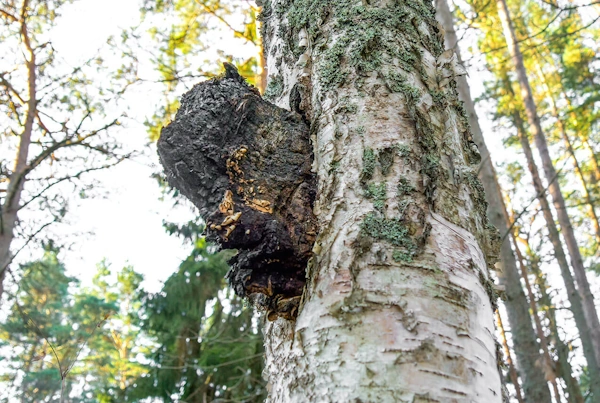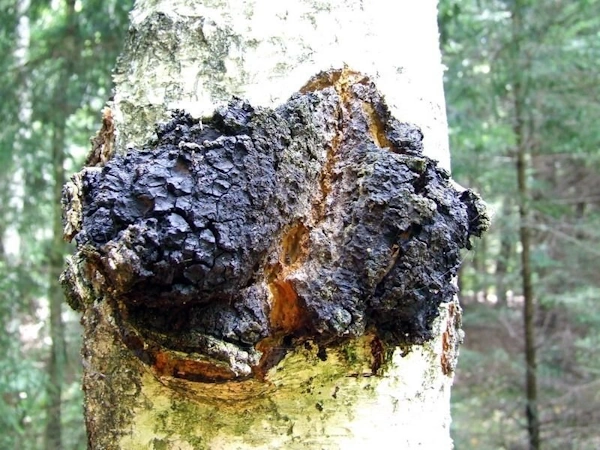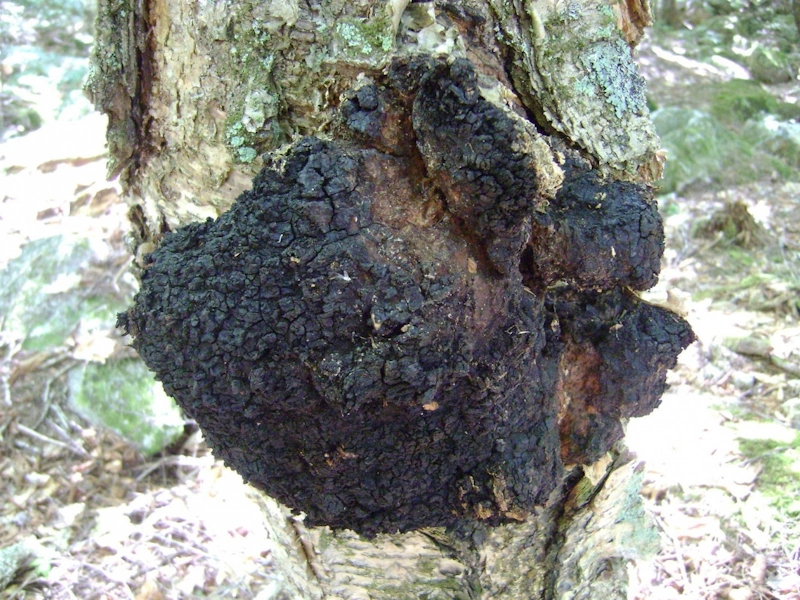
Inonotus obliquus, often called chaga, is a distinctive fungus that thrives as a parasite on birch trees in cold northern climates. While not a typical mushroom with a cap and stem, it forms a hard, black sclerotium that protrudes from the host tree, resembling burnt charcoal on the outside but revealing a vibrant orange-brown interior when cut.
This fungus has gained popularity in modern wellness circles for its purported health benefits, though scientific evidence remains mixed and cautions abound due to its chemical makeup.
Traditionally harvested in regions like Siberia and Scandinavia, it is brewed into teas or processed into supplements, but overharvesting raises conservation concerns in some areas.
Chaga may offer antioxidant and immune-supporting properties, with studies indicating potential roles in reducing inflammation and supporting metabolic health. However, these benefits are not universally proven, and its high oxalate content could pose risks for prolonged use, especially for those with kidney issues.
It seems likely that chaga’s value lies more in traditional practices than as a cure-all, with experts emphasizing sustainable sourcing and moderation. The evidence leans toward viewing it as a functional food rather than a pharmaceutical, acknowledging both its cultural significance and the need for more rigorous clinical trials to substantiate claims.
Key takeaways
- A black, irregular sclerotium on birch trees, not a fruiting body; causes white heart rot in hosts.
- Widespread in northern birch forests, but harvesting pressures may threaten local populations.
- Usage is primarily medicinal teas and supplements; traditional roles in folk medicine for immunity and vitality.
- Potential antioxidant and antitumor effects from polysaccharides, but high oxalates may lead to kidney stones or other issues with overuse.
- Sustainable practices are essential to prevent decline in wild stocks.
Common names and cultural significance
People across various regions refer to this fungus by names that evoke its appearance or utility. In English, it is commonly known as chaga, a term borrowed from Russian “ча́га” (čága), which itself derives from the Komi language word “tšak.” Other descriptive labels include clinker polypore, cinder conk, black mass, birch canker polypore, and sterile conk trunk rot of birch.
These monikers highlight its coal-like texture and its affinity for birch trees. In traditional contexts, indigenous groups like the Potawatomi have used it as “shkitagen,” a fire-keeping tinder that holds embers effectively. Such names underscore its role not just as a biological entity but as a cultural artifact, woven into rituals and daily survival practices in harsh environments.
Geography and habitat
This fungus exhibits a circumboreal distribution, meaning it encircles the northern parts of the globe in a band that spans Europe, Asia, and North America. It thrives in cold, temperate forests where birch trees dominate, such as the taiga of Siberia, the woodlands of Scandinavia, and the boreal zones of Canada and the northern United States.
While primarily associated with birch species like paper birch (Betula papyrifera) and yellow birch (Betula alleghaniensis), it occasionally infects alder, beech, and poplar. As a parasite, it invades living trees through wounds, initiating a white heart rot that weakens the host over years or decades.
The sclerotium appears on standing trees, persisting year-round but growing actively in summer and fall. After the tree dies, the fungus shifts to a saprobic lifestyle, breaking down the dead wood. This ecological niche makes it a key player in forest nutrient cycling, though its increasing commercial harvest has sparked worries about sustainability in heavily foraged areas.
Anatomy and recognition
Recognizing Inonotus obliquus in the wild requires looking beyond conventional mushroom forms, as it lacks a cap, gills, or stem. Instead, it presents as an irregular, sterile conk or sclerotium, typically 10–25 cm wide and up to 30 cm high and across, protruding from the tree trunk like a blackened tumor.
The outer surface is hard, dry, and cracked into cube-like segments, mimicking charcoal due to high melanin content, while the interior flesh is tough, woody, and a striking orange-brown.
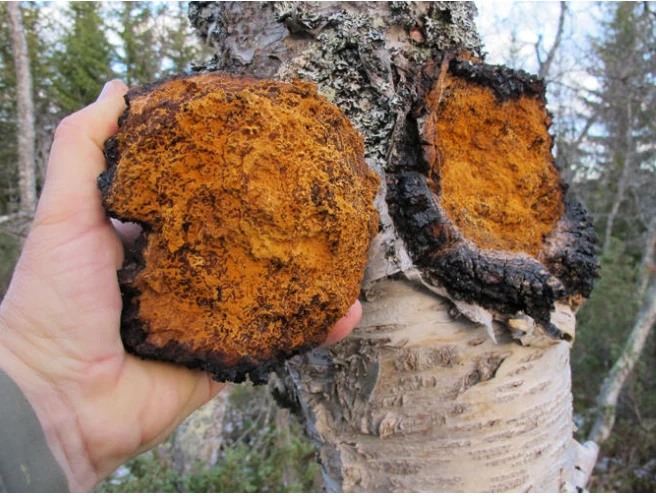
This contrast aids identification: cutting into it reveals the vivid core against the dark exterior.
Microscopically, it features a monomitic hyphal system with smooth, brown hyphae 2.5–5 µm wide, lacking clamp connections. The rarely observed sexual stage emerges post-host death as a poroid, brownish layer under the bark, with ellipsoid spores measuring 8–10 x 5–7.5 µm.
Chemical tests show the flesh blackening instantly with KOH. Foragers should note its exclusive growth on birches in northern woods, distinguishing it from similar polypores by its sterile, non-poroid nature and host specificity.
Uses and edibility
Though classified as edible in some mycological lists, Inonotus obliquus is not consumed as food in the conventional sense due to its tough, woody texture. Instead, it finds its place in traditional and modern applications as a brewed beverage or supplement.
Historically, chaga has been grated into powder and steeped like tea or coffee, often simmered for hours to extract its compounds, yielding a earthy, herbal flavor reminiscent of Chinese medicinals. In folk medicine across China, Russia, Korea, and parts of Europe, it has been employed for centuries to bolster immunity, combat fatigue, and address ailments like inflammation or digestive issues.
Contemporary uses expand this to dietary supplements, where polysaccharides and polyphenols are touted for antioxidant, antitumor, hypoglycemic, and antiviral effects. For instance, in vitro studies show inhibition of cancer cell proliferation, with in vivo models demonstrating tumor reduction rates up to 57% in mice. It also aids in blood sugar regulation and oxidative stress relief, with extracts scavenging free radicals effectively. Beyond health, its ember-holding properties made it a practical tinder for indigenous peoples.
Chemical composition and medicinal potential
The sclerotium harbors a rich array of bioactive compounds, including polysaccharides like β-glucans, which form complex structures with monosaccharides such as rhamnose, xylose, and glucose in varying ratios. These polymers, with molecular weights from 20 kDa to over 150 kDa, feature glycosidic bonds like α-1,4 and β-1,3, often in pyran-type rings.
Polyphenols, betulinic acid, and antioxidants such as oleic acid contribute to its therapeutic profile.
Evidence from animal and cell studies supports anti-inflammatory actions via pathways like NF-κB and JAK-STAT, as well as hepatoprotective effects against oxidative damage. However, human clinical data is limited, and quality control in commercial products varies widely.
| Bioactive compound | Primary monosaccharides/features | Key biological activities | Evidence level |
|---|---|---|---|
| Polysaccharides (IOPS) | Rhamnose, Arabinose, Xylose, Mannose, Glucose, Galactose; MW 20-156 kDa; α/β glycosidic bonds | Antitumor (apoptosis induction), Hypoglycemic (PI3K/Akt pathway), Antioxidant (radical scavenging) | In vitro/in vivo studies; limited human trials |
| Polyphenols | Oleic acid derivatives | Anti-inflammatory (NLRP3 inhibition), Antiviral (HSV-1 blocking) | Preclinical models |
| Betulinic acid | Triterpenoid from birch bark | Anticancer (cell proliferation inhibition), Immunomodulatory | Cell-based assays |
Hazards and toxicity
While generally considered non-toxic in moderate, properly sourced amounts, Inonotus obliquus carries risks tied to its composition. It contains exceptionally high levels of oxalates—ranging from 2,800 to 11,200 mg per 100 g of sclerotium—which can contribute to kidney stone formation or exacerbate conditions like hyperoxaluria if consumed excessively.
Sub-acute toxicity studies in mice at doses up to 1,500 mg/kg show no adverse effects on organs or blood profiles, but long-term human use lacks comprehensive safety data.
Potential side effects include digestive discomfort or interactions with medications, particularly anticoagulants due to its blood-thinning properties. Contamination from environmental pollutants in wild-harvested specimens adds another layer of caution, emphasizing the need for lab-tested products.
Overall, while low-toxicity profiles dominate animal experiments, experts advise consulting healthcare providers, especially for vulnerable groups.
Sources
- Inonotus obliquus – Wikipedia
- Inonotus obliquus (MushroomExpert.Com)
- Recent Developments in Inonotus obliquus (Chaga mushroom) Polysaccharides: Isolation, Structural Characteristics, Biological Activities and Application – PMC
- Inonotus obliquus – The Global Fungal Red List Initiative
- Traditional and ritual uses of Chaga mushroom – ResearchGate