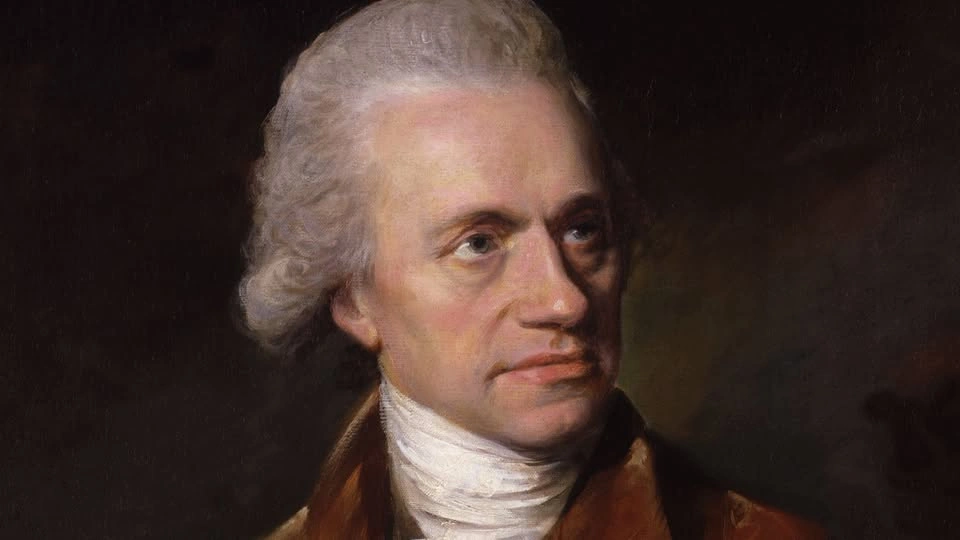
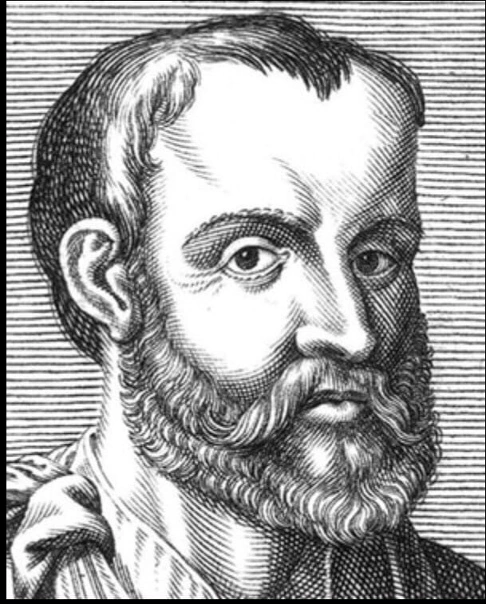
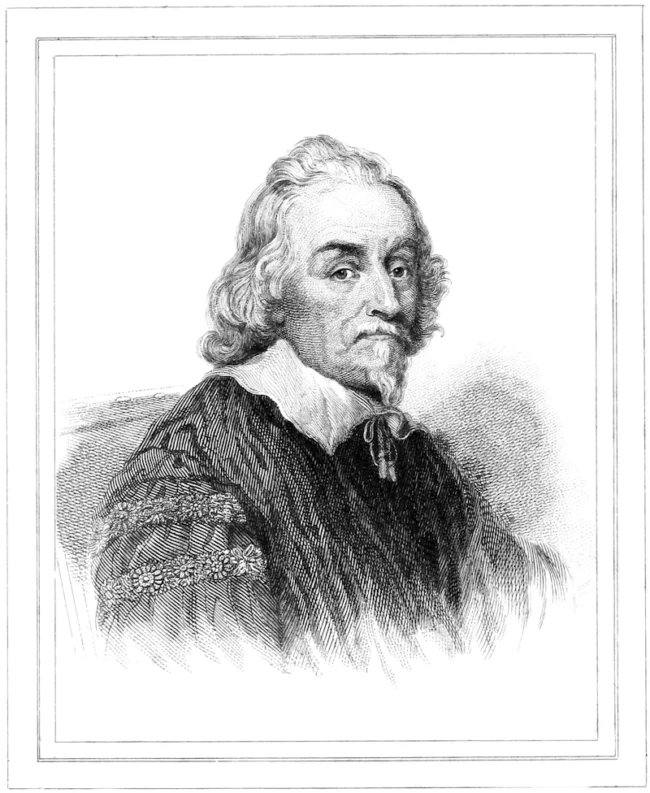
Nicolaus Copernicus. “Who stopped the Sun and moved the Earth”
On the pedestal of the Copernicus monument in Warsaw are carved the words: “Who Stopped the Sun and Moved the Earth.”
In them lies the entire essence of Copernicus’s discovery. He succeeded in convincing people that they live not in a reliable and motionless center of the world, but inhabit one of the planets, revolving around the Sun. It required a titanic intellect and great freedom of thought to take this step—to abolish the distinction between the terrestrial and the celestial.
The Order and Warmia
The life of Copernicus was closely tied to Warmia—a small region in the north of Poland. In the 12th century, not far from these places, on the lands of the Slavic tribe of Prussians, the Teutonic Order, founded during the Crusades, established itself. Over time, the knights of the Order subjugated the entire Baltic coast of Poland.
In 1454, 19 years before the birth of Copernicus, a revolt began in these lands against the Order, which led to a 13-year war between it and Poland. The Order suffered a defeat and was forced to return Gdańsk and some other territories, including Warmia, to the Polish kingdom. This small region was almost entirely surrounded by the lands of the Teutonic Order and only in the west did it have a narrow border with Poland. Warmia was a prince-bishopric, i.e., the bishop held both spiritual and secular power.
There, on the shore of the Vistula Lagoon, stood the town of Frombork—the center of the Warmian episcopate, where Copernicus spent most of his life.
In Poland and Italy
Nicolaus Copernicus was born on February 19, 1473, in Toruń, a trading city on the Vistula River. The future astronomer’s father, also named Nicolaus, was a wealthy merchant; his mother, Barbara, née Watzenrode, was the daughter of the head of the city court. Nicolaus was the fourth, youngest child in the family. When he was ten years old, his father died during a plague epidemic, and his mother’s brother, Lucas Watzenrode, who was elected bishop of Warmia in 1489, took the children into his care.
In 1491, he enrolled Nicolaus and his older brother Andrzej in the University of Krakow, where they studied for four years. Here, Nicolaus became fascinated with astronomy. This interest was fueled by the astronomical events that were abundant during his years of study—three solar eclipses, a comet, and a conjunction (visible approach) of Jupiter and Saturn. At the same time, Europe was stirred by the news of Christopher Columbus’s discovery of lands across the ocean.
After Krakow, the brothers continued their education in Italy, where Lucas sent them to obtain the degree of Doctor of Canon (Church) Law. In Italy, which at that time was the heart of the Renaissance, Nicolaus and Andrzej spent seven years. First, they studied in Bologna, where Nicolaus conducted a series of astronomical observations. In Italy, he became acquainted with a recently published abridged translation into Latin of Ptolemy’s “Almagest,” done by Regiomontanus.
In 1500, Nicolaus visited Rome, and after a trip home, he studied medicine for two years at the University of Padua. In Italy, he easily mastered the ancient Greek language. Knowledge of this language allowed Copernicus to read the works of ancient scholars—Aristotle, Plato, and, most importantly, Ptolemy—in the original.
The Frombork tower
Having received the degree of Doctor of Canon Law, the 30-year-old Copernicus returned to Poland and was elected a canon of Warmia—a member of the highest spiritual and administrative curia of the episcopate. For several years, he lived in the bishop’s castle in Lidzbark and was under the direct authority of the bishop, his uncle Lucas, serving simultaneously as his secretary and physician.
Despite his many duties, Copernicus did not forget astronomy, and those close to him considered him an outstanding expert in this science. In 1512, Lucas Watzenrode passed away, and the Frombork period of the scientist’s life began.
The Cathedral of the Assumption of the Blessed Virgin Mary in Frombork, where Father Nicolaus served, is one of the main sanctuaries of Polish Catholicism. The cathedral was surrounded by a strong wall with defensive towers and could, if necessary, serve as a fortress.
Copernicus chose a not-so-cozy place to live—the northwestern tower of the cathedral wall. On its upper floor, he set up his study. From there, an exit led to a wide fortified wall with a good view. Along it, one could walk to the neighboring tower, which had a suitable platform for observing another part of the sky.
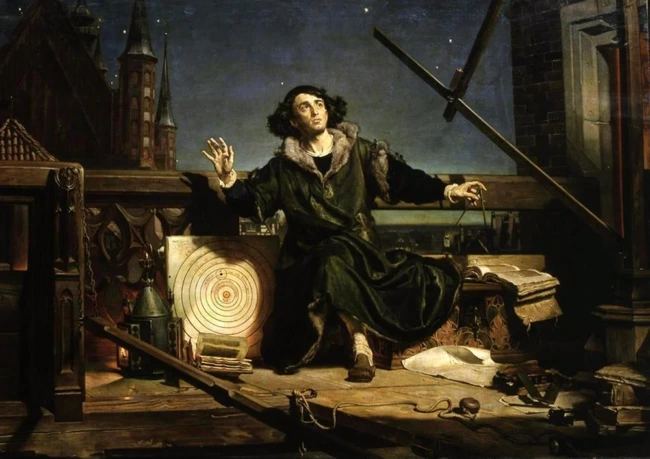
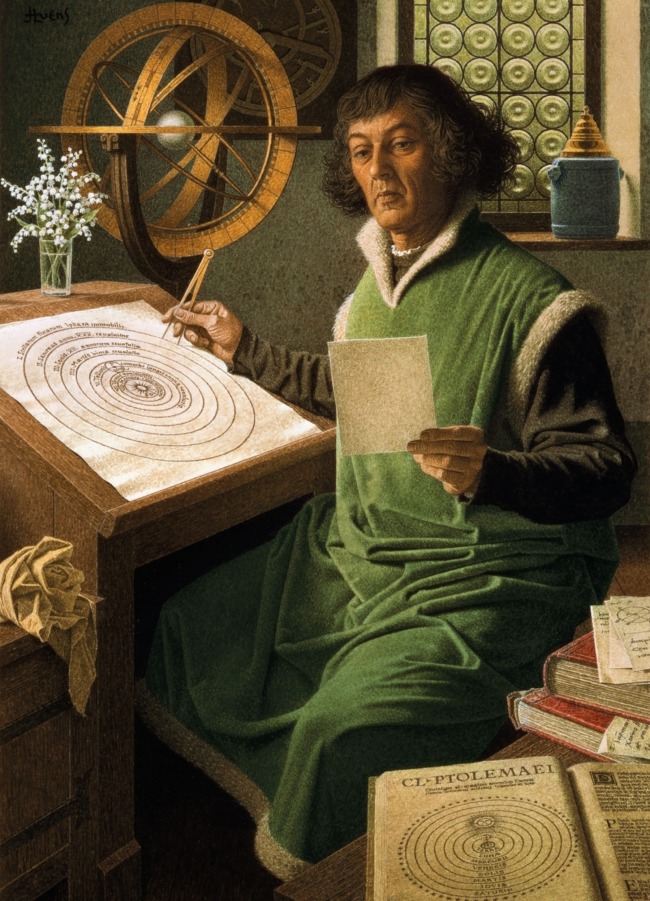
Copernicus personally crafted angular astronomical instruments from wood, similar to those described in the “Almagest.” Among them were the “triquetrum”—a hinged triangle, one of whose arms was aimed at a celestial body, while the reading was taken from the other; the “horoscopium,” or solar quadrant—a vertical plane with a projecting pin at the top. The instrument was set up along the north-south line and allowed one to judge the inclination of the ecliptic to the celestial equator by the direction of the midday shadow during the solstices. No less an important instrument was the armillary sphere—interlocking rotating rings that served as a model of celestial coordinates and made it possible to obtain readings in the required directions.
From the point of view of weather conditions and geographical location, Frombork was not a favorable place for observations, yet Copernicus observed a great deal, as can be judged by the mentions in his main work, “On the Revolutions of the Heavenly Spheres.”
The purpose of Copernicus’s observations was not to discover new celestial phenomena. Medieval astronomers were engaged in measuring the positions of celestial bodies and comparing their data with the results of calculations according to Ptolemy’s models.
Many generations of astronomers adjusted the system of acceptable epicycles to predict the positions of the planets more reliably. As a result, the accuracy of the predictions left much to be desired, and Ptolemy’s Universe became so complicated that it was clear—God could not have created the world in such an absurd way. In Copernicus’s record of his observation of Mars in opposition (in relation to the Sun) on June 5, 1512, it is stated: “Mars exceeds the calculation by more than 2 degrees.” Like other astronomers, he thought about improving the calculation methods.
Initially, Copernicus also sought to make Ptolemy’s model more elegant and simple. In simplicity, he was sure, lies the truth.
The path to simplification was suggested by Ptolemy himself, on the pages of the “Almagest,” where he rejected the rotation and revolution of the Earth around the Sun. But what was absurd one and a half thousand years ago became a subject of reflection for Copernicus.
The motion of the Earth simply explained many phenomena: the annual motion of the Sun along the ecliptic, the precession of the Earth’s axis (if the Earth is likened to a wobbling top), the “tethering” of Mercury and Venus to the Sun, the unusual brightness of Mars during its oppositions, and finally, the retrograde motion of the planets. (We observe the moving planets from a moving Earth.)
Then Copernicus “took upon himself the task of reading the books of all the philosophers he could get his hands on, to see if anyone had ever held the opinion that the movements of the spheres of the world are different from those taught by the teachers of mathematics in the schools…” And he found in Cicero that the Pythagorean philosophers Ecphantus and Hicetas held the opinion that the Earth rotates on its axis. Aristotle reported on its orbital motion according to the views of the Pythagorean Philolaus.
Copernicus, unfortunately, did not know about the heliocentric system of Aristarchus of Samos, as the account of it by Archimedes was published in Europe after his death. The authority of the ancient scholars strengthened Copernicus in his desire to bring the heliocentric theory to its conclusion.
Much later, in the dedication to his main work, addressed to Pope Paul III, Nicolaus Copernicus recalled: “I do not wish to conceal from Your Holiness that I was moved to consider a different way of calculating the motions of the spheres of the world by nothing other than the fact that the mathematicians themselves have nothing firmly established concerning the investigation of these (celestial) motions… And most importantly, they have not been able to determine the form of the world and the exact proportion of its parts.”
The geocentric systems of Eudoxus and Ptolemy did not allow for the measurement of distances to the planets. In Copernicus’s heliocentric system, for the first time, it became possible to calculate the true proportions of the Solar System, using the radius of the Earth’s orbit as an astronomical unit. Copernicus understood that if we look at the planets from a moving Earth, then the planets, in addition to their own orbital motions, receive an additional circular motion. From Earth, it would be seen in the form of an epicycle.
The size of the epicycle is equal to the diameter of our planet’s orbit. Therefore, the farther a planet is from us, the smaller the epicycle will appear, and from its angular size, one can judge its distance. In Copernicus’s system, “…the sequence and magnitudes of the stars and all the spheres in the world will themselves be so interconnected that nothing can be moved in any part without producing confusion in the other parts and in the entire Universe.”
“On the revolutions of heavenly spheres”
It seemed the work was done, a new hypothesis of the world’s structure was ready, all that remained was to publish it. Around 1515, a handwritten work by Copernicus appeared, “A Little Commentary on the Hypotheses Concerning the Celestial Motions” (Commentariolus). True, he does not provide mathematical proofs here, noting that they are intended for a more extensive work. This work—”On the Revolutions of the Heavenly Spheres. Six Books”—took more than 20 years of hard work.
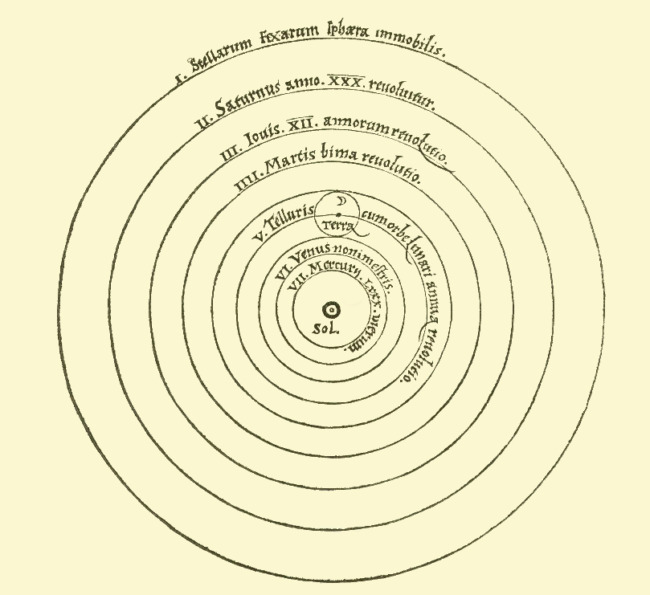
The astronomer believed that the development of a hypothesis must necessarily be brought to numbers, and more than that—to tables, so that the data obtained with its help could be compared with the actual movements of the celestial bodies.
At the beginning of the book, Copernicus, following Ptolemy, lays out the fundamentals of operations with angles on a plane and, most importantly, on a sphere, related to spherical trigonometry. Here the scientist introduced much that was new to this science, acting as an outstanding mathematician and calculator. Among other things, Copernicus provides a table of sines (although this name is not used) with an interval of ten minutes of arc.
But, it turns out, this is just an excerpt from more extensive and precise tables that he calculated for his work. Their step is one minute of arc, and the precision is seven decimal places! For these tables, Copernicus needed to calculate 324,000 values. This part of the work and the detailed tables were later published as a separate book.
The book “On the Revolutions” contains descriptions of astronomical instruments, as well as a new, more accurate catalog of fixed stars than Ptolemy’s. It examines the visible motion of the Sun, Moon, and planets. Since Copernicus used only uniform circular motions, he had to spend a lot of effort searching for such ratios of the system’s dimensions that would describe the observed motions of the celestial bodies. After all his efforts, his heliocentric system turned out to be not much more accurate than Ptolemy’s. It was only Kepler and Newton who succeeded in making it accurate.
Calendar, war…
On December 1, 1514, a council of the Catholic Church was held in Rome, to which Copernicus’s friend, Bernard Sculteti, traveled from Warmia. The council discussed the pressing issue of calendar reform. Since the Church’s adoption of the Julian calendar, the actual time of the universal equinox had shifted from the calendar date by a full ten days. Therefore, a commission for calendar reform was created, not for the first time, which appealed to the emperor, kings, and universities to send their thoughts on this matter. Probably on Sculteti’s recommendation, Copernicus was included among the experts.
From that time, possibly at the request of the commission, the scientist began observations to clarify the length of the year. The value he found became the basis for the calendar reform of 1582. The length of the year determined by Nicolaus Copernicus was 365 days, 5 hours, 49 minutes, and 16 seconds, and exceeded the true value by only 28 seconds.
Meanwhile, the situation in Warmia was escalating. Raids by armed bands from the side of the Order’s Prussia became more frequent. Negotiations and complaints to Rome yielded nothing. In the autumn of 1519, when Copernicus returned to Frombork, Polish troops entered the territory of the Order. A war began, which lasted a year and a half and ended again in its defeat.
In January 1520, Copernicus had to defend the cathedral, behind whose walls the inhabitants of Frombork, burned by the crusaders, took refuge, and in February 1521, he had to take command of the garrison of the besieged Olsztyn Castle. During these dramatic events, Copernicus showed courage and extraordinary organizational talent.
Meanwhile, important changes were taking place in the life of Europe and the Order. In October 1517, a professor of theology at the University of Wittenberg, Martin Luther, spoke out against the official dogmas of Catholicism. Thus began the Reformation. Many German rulers adopted Lutheranism and became the heads of the new Church in their domains. In 1525, the Grand Master of the Teutonic Order, Albert, did the same; he renounced his title and henceforth became the duke of a secular Lutheran state, swearing an oath of allegiance to the Polish king.
The trip of a Protestant to Catholic Warmia to visit a Catholic scholar was risky and could have negatively affected the guest’s future career. But the brave and inquisitive Joachim Rheticus decided to go.
Rheticus arrived in Frombork in May 1539, expecting to stay with Copernicus for a couple of months, but he remained with him for almost two years. Joachim fell under the charm of the sixty-year-old elder, appreciated the scientific feat being accomplished by the Warmian hermit. And Copernicus liked Rheticus’s energy and passion for science. Rheticus, under Copernicus’s guidance, immersed himself in the study of the manuscript “On the Revolutions” and became his constant companion. He gave the aged scholar what Copernicus had been deprived of his whole life—the opportunity to discuss scientific problems with a person who deeply understood the essence of the matter. Rheticus fervently urged Copernicus to publish his work, and the scholar finally decided to release the book “On the Revolutions.”
Without waiting for this publication, Rheticus wrote an extensive exposition of Copernicus’s theory. He called his work “Narratio Prima” (First Account). It was written in such a way that it did not require mathematical training from the reader and was understandable to any educated person. Rheticus’s “First Account” played a huge role in the dissemination of Copernicus’s ideas. It was reprinted several times, and in 1596, Kepler included it as an appendix to his book “Mysterium Cosmographicum” (The Cosmographic Mystery).
The main book
Rheticus hurried, but Copernicus delayed publication. Like Pythagoras, he doubted whether the time had come for people to know “this.” Copernicus was aware of the full explosive power of the book. As a scientist and a priest at the same time, he felt the shock that people would experience tomorrow when they learned they live on a “star,” on a celestial body. The boundary between the terrestrial and the celestial, which had also become part of a single Nature, was blurring. The spiritual heaven of the Christian faith was separating from the visible sky. This was the beginning of a revolution in science, theology, and philosophy.
Thanks to the “Account,” Copernicus’s theory became known. The hierarchs of the Catholic Church initially received it calmly, but the Protestants, who opposed excessive “intellectualizing,” reacted with hostility. Martin Luther himself commented on the new trends: “The fool wants to turn the whole art of astronomy upside down. But as Holy Scripture shows, Joshua commanded the Sun to stand still, and not the Earth.”
Rheticus arranged for the printing of Copernicus’s book in Nuremberg. He asked Andreas Osiander, a well-known theologian and Lutheran preacher, to oversee the publication. After reviewing the book, Osiander sent Copernicus a letter requesting that he write a preface where the new theory would be treated merely as a working hypothesis that simplifies calculations. Instead, the scholar sent a dedication of the book to the head of the Catholic Church, Pope Paul III, to be printed in Protestant Nuremberg. Osiander included the dedication in the book but added his own unsigned text to it. It was titled “To the Reader Concerning the Hypotheses on Which This Book is Based” and contained what Osiander wanted to get from Copernicus.
The book was published in the spring of 1543, when its author was gravely ill. One of his first biographers, Pierre Gassendi, writes: “The time of his last illness almost coincides with the appearance from the printing press of his immortal creation… His mental abilities and memory began to weaken. A few hours before his death, they brought him a copy of his newly printed work… He took the book in his hands and looked at it, but his thoughts were already far away…”
Copernicus died on May 24 and was buried under the flagstones of the Frombork Cathedral.
The book “On the Revolutions” immediately found grateful readers. Rheticus’s friend, the Wittenberg mathematician Erasmus Reinhold, compiled new planetary tables based on Copernicus’s theory. They were named the “Prutenic Tables” because they were published with funds from the former Grand Master of the Order, Duke Albert of Prussia. These tables replaced the previous ones and retained their importance until the appearance in 1627 of the “Rudolphine Tables,” compiled by Kepler.
The unsigned “Address” by Osiander included in Copernicus’s book provoked strong protests from Rheticus, and later from Kepler. However, no preface was capable of neutralizing the power of Copernicus’s thought, which proclaimed a new era in astronomy, and not only in it.
This article is taken from "Astronomy. Encyclopedia for children", 1997. ISBN 5-89501-008-3, ISBN 5-89501-001-6