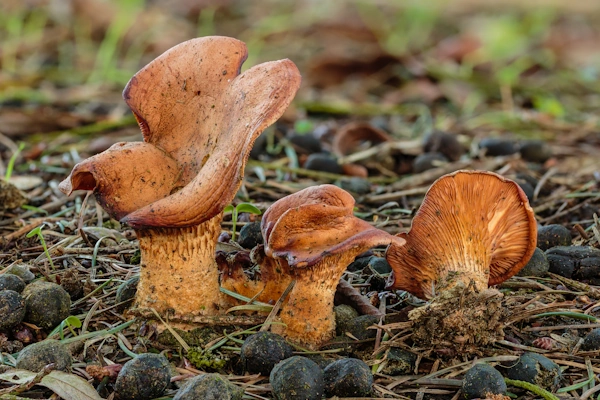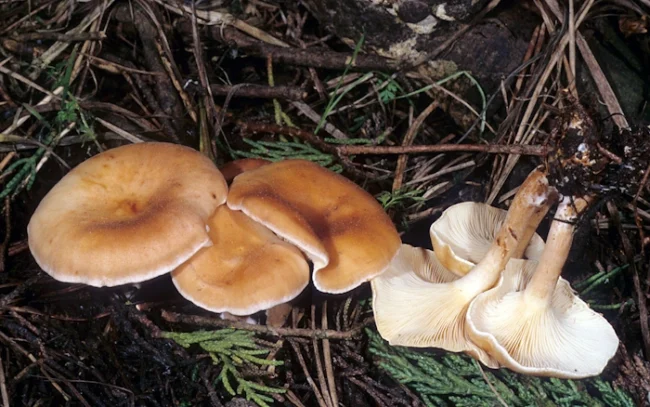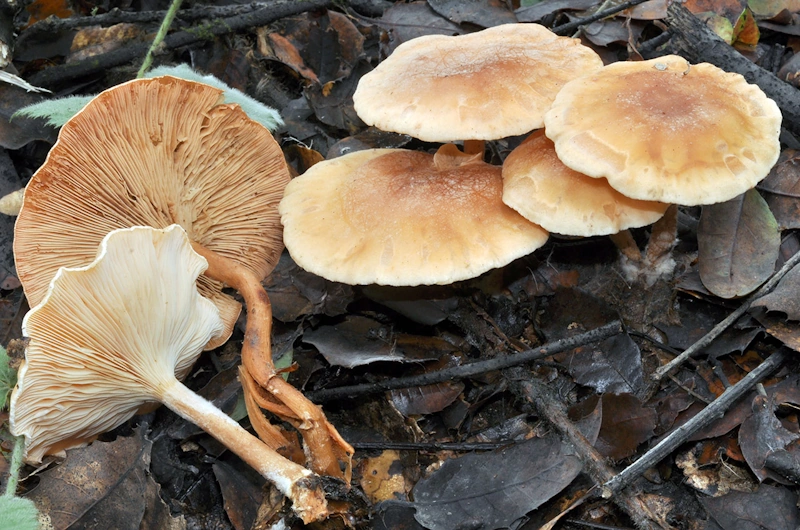
Paralepista flaccida, commonly known as the tawny funnel, is one of those mushrooms you’ll often spot during autumn walks through woodland areas across Europe, North America, and parts of Asia. It’s particularly fond of forming fairy rings—those mysterious circles of mushrooms that have inspired folklore for centuries. While some books will tell you it’s edible, most experts agree it’s simply not worth eating. The flavor is disappointing, it might upset your stomach, and worst of all, it looks alarmingly similar to some genuinely poisonous species.
This mushroom earns its common name from its distinctive shape and warm, earthy coloring. The cap curves downward like a funnel or goblet, displaying shades of tawny orange, reddish-brown, or buff. It’s a common sight in both deciduous woodlands beneath oaks and beeches, and in coniferous forests among pines and spruces.
Despite its abundance and long history of human observation—first formally described in 1799—it remains a species better appreciated from a distance than added to any dinner plate.
A history of changing names
The scientific story of this mushroom reads like a tale of mistaken identities and gradual discovery. English naturalist James Sowerby first described it in 1799, naming it Agaricus flaccidus in his beautifully illustrated work “Coloured Figures of English Fungi or Mushrooms.” The name “flaccidus” comes from Latin, meaning flaccid or slack, referring to the soft, pliable texture of the mushroom’s flesh.
Over the following decades, as scientists developed better ways to classify fungi, this mushroom was shuffled between different genera. In 1871, German mycologist Paul Kummer moved it to Clitocybe flaccida, and in 1887, French mycologist Narcisse Théophile Patouillard transferred it again to Lepista flaccida. For many years, mycologists treated what they called the “flaccida” form and the “inversa” form as separate species. The flaccida form, with its matt, silky cap, seemed to prefer deciduous woods, while the inversa form, sporting a shinier, more rigid cap, appeared more often in coniferous forests.
The confusion persisted until 2012, when Italian mycologist Alfredo Vizzini applied modern DNA sequencing techniques to settle the question once and for all. His research revealed that these weren’t separate species at all—they were simply varieties of the same mushroom, adapted to different forest environments. He established a new genus, Paralepista, to house this species along with its close relatives, separating it from the genera Lepista and Clitocybe based on genetic evidence.
Today, the accepted scientific name is Paralepista flaccida, with var. flaccida and var. inversa recognized as the two main forms. This resolution demonstrates how molecular biology has revolutionized our understanding of fungal relationships, solving puzzles that traditional observation alone couldn’t crack.
What people call it
Beyond its scientific designation, the tawny funnel goes by various common names that reflect both its appearance and the languages of the people who encounter it. In English-speaking countries, you’ll most often hear it called the tawny funnel or tawny funnel cap, straightforward names that describe its warm coloring and distinctive shape. Some regional variations include orange tawny funnel, emphasizing the orange tones that become more pronounced in certain specimens.
Welsh speakers might refer to it as twmffat or twndish melyngoch, terms that roughly translate to “funnel” and “yellowish dish.”
In Poland, it’s known as gąsówka rudawa, meaning “ruddy goose mushroom,” while Hungarian foragers call it rozsdasárga tölcsérgomba, or “rusty-yellow funnel mushroom.” These vernacular names often draw from the same source of inspiration—that depressed, funnel-shaped cap that resembles a wine goblet or small pitcher.
In fact, the genus name Lepista, which this mushroom carried for many years, comes from the Latin word for wine vessel, highlighting how universal this visual comparison is across cultures.
Where it grows
The tawny funnel is predominantly a mushroom of the Northern Hemisphere’s temperate zones. In Europe, it’s extremely common, found from Britain and Ireland across Scandinavia and down through mainland Europe to the Mediterranean.
British and Irish woodlands see particularly abundant populations, making it one of the more reliably encountered autumn mushrooms in those regions.
Across the Atlantic, it appears throughout the United States and Canada, from the foggy forests of the Pacific Northwest to the deciduous woodlands of the eastern states.
There are scattered reports from Mexico suggesting it extends further south in the Americas, and occasional sightings from Australia, though these may represent introduced populations or cases of misidentification.
The mushroom’s habitat preferences divide neatly along the lines of its two varieties. Variety flaccida favors deciduous woodlands, appearing beneath oaks, beeches, and other broad-leaved trees where it feeds on decomposing leaf litter. Variety inversa prefers coniferous forests, thriving among pines, spruces, and firs, where it breaks down fallen needles and woody debris. Both varieties are saprotrophic, meaning they derive their nutrients from dead and decaying organic matter rather than forming symbiotic relationships with living plant roots. You’ll find them growing in humus-rich soil, and they’re not particularly fussy—they’ll colonize compost heaps, woodchip mulch, and even damp sawdust in disturbed areas like parks and gardens.
The fruiting season typically runs from late summer through autumn, with July to November being the prime months in Europe. In milder climates, fruiting bodies may persist into early winter. What makes this mushroom particularly noticeable is its gregarious nature—it rarely grows alone, instead appearing in large troops or forming those eye-catching fairy rings.
The mushrooms fruit at the advancing edge where food remains plentiful, creating rings that can span several meters in diameter. Some of these rings persist for years, growing larger with each season, and they’ve earned a place in European folklore as magical or enchanted ground, supposedly marking where fairies dance at night.
Recognizing the tawny funnel
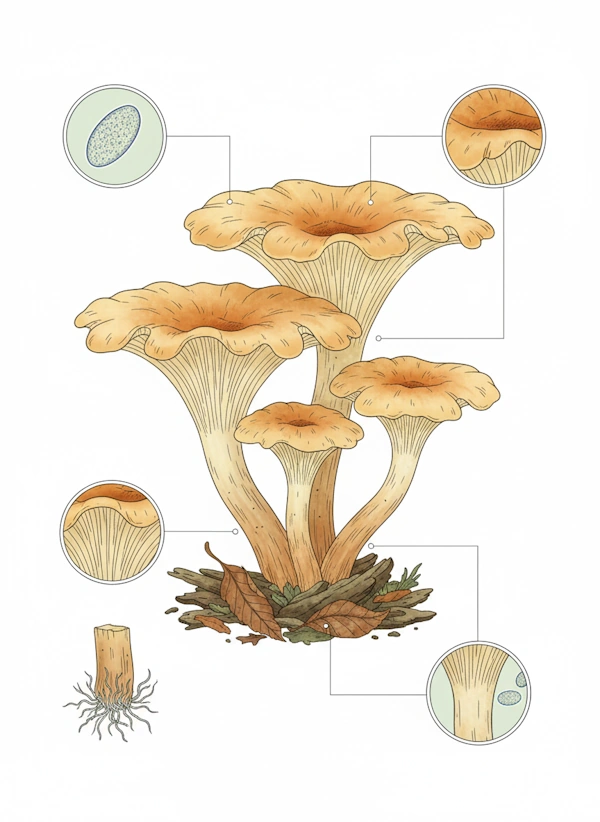
Learning to identify Paralepista flaccida requires paying attention to several distinctive features that work together to create its unique profile. Each part of the mushroom tells part of the story, from the funnel-shaped cap down to the microscopic details of its spores.
The Cap
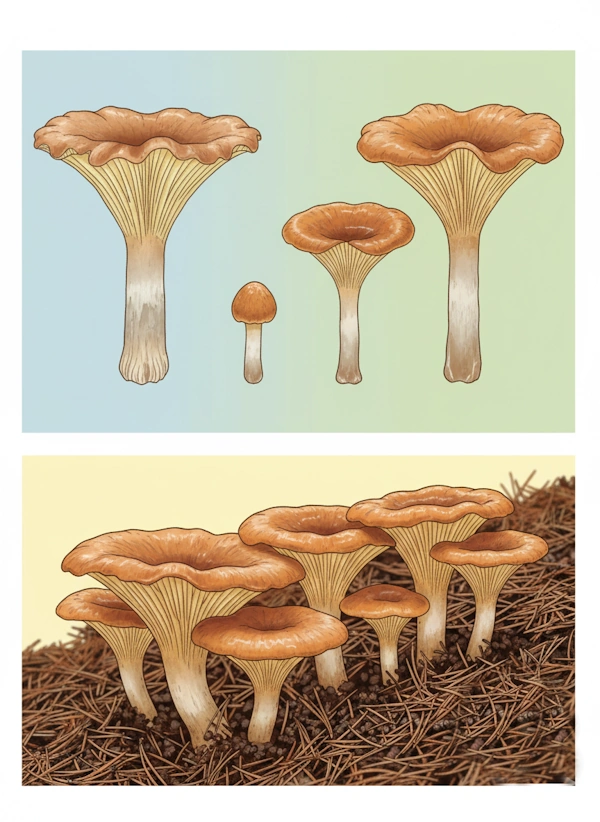
The cap typically measures 4 to 10 centimeters across, starting life convex with the edges rolled inward, but developing into that characteristic funnel or goblet shape as it matures. Sometimes the edges develop wavy undulations or low points that make it look even more like a jug or pitcher with a pouring spout. The surface is smooth and hygrophanous—a technical term meaning it changes color as it dries, looking darker when wet and lighter when dry. Fresh specimens display shades of tawny, orange-brown, buff, or reddish-brown, with var. flaccida showing a matt, silky texture and var. inversa appearing shinier and smoother.
The Gills
The gills underneath the cap are deeply decurrent, meaning they run well down the length of the stem rather than stopping at the top. They’re crowded together—you might count 50 to 70 individual gills reaching from the cap edge to where they meet the stem. Young specimens have white or off-white gills that gradually shift to pale tawny or yellowish tones with age.
The Stem
The stem itself is modest, standing just 3 to 5 centimeters tall and about half a centimeter to a centimeter thick. It’s covered in fine longitudinal fibers that give it a slightly fuzzy appearance, especially toward the base where a woolly mat of mycelium often clings. The stem color is typically paler than the cap, showing yellowish or buff tones. Unlike some mushrooms, there’s no ring around the stem and no cup-shaped volva at the base.
Flesh, Odor, and Taste
When you cut through a tawny funnel, the flesh reveals itself as quite thin—just 1 to 3 millimeters thick—and ranging from whitish to pale cream in color. The texture lives up to the “flaccida” name, being soft and pliable rather than firm. The odor is one of the more pleasant aspects of this mushroom: a sweet, slightly fruity or peppery scent that some find quite appealing. The taste, when raw, isn’t particularly distinctive, though cooked specimens reportedly have a slightly acidic or citrus-like flavor that most people find unappealing.
Spores and Microscopic Features
Under a microscope, the spores appear broadly elliptical to almost round, measuring 4 to 5 micrometers by 3.5 to 4 micrometers, with minutely warty surfaces. They don’t react to iodine staining, a characteristic described as inamyloid. If you make a spore print by placing a cap on paper overnight, you’ll see a creamy-white deposit. These microscopic details matter most to specialists, but the spore print color is something any careful forager can check, and it’s an important confirmation step when identifying any mushroom.
Similar species and dangerous lookalikes
One of the main reasons experts recommend against eating the tawny funnel is the risk of confusing it with other species, some of which are genuinely dangerous. Several edible mushrooms share its general appearance but differ in key details. The common funnel, Infundibulicybe gibba, has a similar funnel shape and pale coloring but features thinner flesh, less crowded gills, and smooth, teardrop-shaped spores rather than the warty spores of Paralepista flaccida. Most foragers consider the common funnel superior eating, which adds insult to injury for our tawny friend. Paralepista gilva, a yellower relative, can be distinguished by its brighter color and the presence of dark spots on the cap, and it’s also considered edible. The goblet funnel, Clitocybe cyathiformis, is larger overall with thicker, more substantial flesh and generally fruits later in the season—it too is edible.
The real danger lies with members of the genus Paralepistopsis, particularly Paralepistopsis amoenolens, sometimes called the malodorous clitocybe. This poisonous species can look remarkably similar to the tawny funnel in terms of size, shape, and general brown coloration. The crucial difference is the smell:
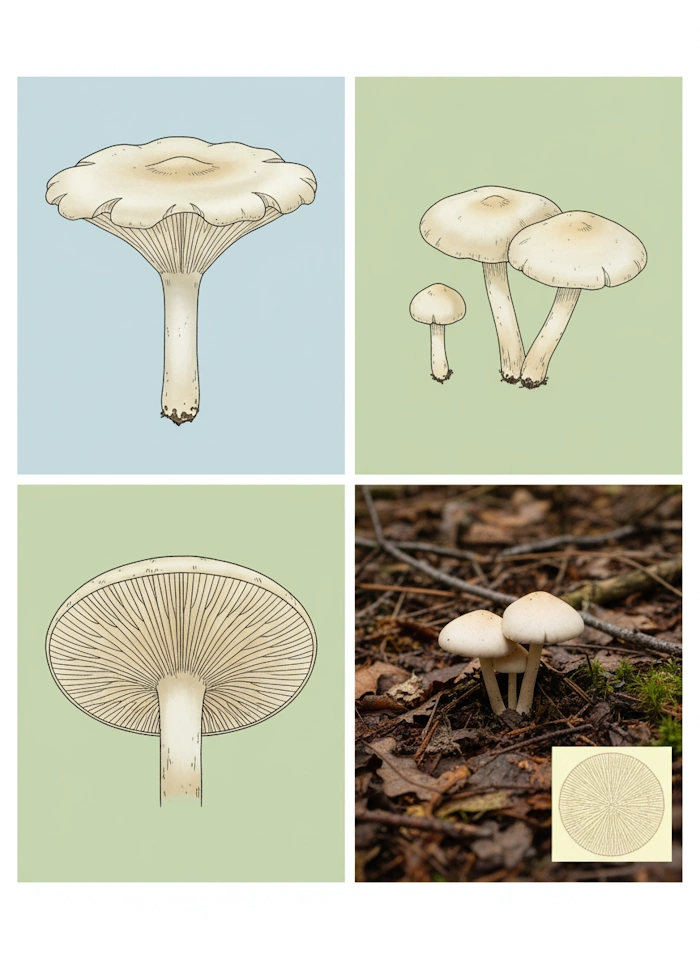
Paralepistopsis amoenolens has a strong, distinctly unpleasant odor, in stark contrast to the pleasant, sweet scent of Paralepista flaccida. The gills and spores also differ—smooth rather than warty—but smell remains the most immediately obvious distinguishing feature. Unfortunately, if you make a mistake and eat this poisonous lookalike, you’ll experience what’s called acromelalgia syndrome: severe burning pain, swelling, and redness in your hands and feet that can persist for weeks or even months after a single meal.
Another dangerous species, Paralepistopsis acromelalga, causes similar symptoms.
Within 15 minutes to 2 hours of eating it, victims first experience gastrointestinal distress—nausea, vomiting, stomach cramps, and diarrhea. Then, hours or days later, the characteristic pain syndrome develops: intense burning sensations in the extremities accompanied by redness and swelling. There’s no specific antidote, and treatment consists only of supportive care while you wait for symptoms to gradually resolve. This makes any confusion between the tawny funnel and its toxic cousins potentially very serious indeed.
The lesson here is clear: never rely on a single identifying feature. Check the cap shape and color, examine the gills carefully, smell the mushroom, note the habitat, look for fairy rings, and ideally make a spore print to confirm the creamy-white color and warty texture. Cap color can vary significantly depending on moisture content, so don’t trust appearance alone. When in doubt, leave it out—there are plenty of easier-to-identify edible mushrooms that don’t come with such confusing lookalikes.
Should you eat it?
This question generates surprisingly varied answers depending on which mushroom guide you consult. Technically speaking, Paralepista flaccida is not poisonous in the way that an Amanita or the Paralepistopsis species are poisonous. It won’t kill you, and it won’t cause severe pain syndromes. Some authorities, including French mycologist Marcel Bon, have even described it as “good.” However, the overwhelming consensus among modern mycologists and experienced foragers leans heavily toward “not worth eating” or “avoid altogether.”
The primary culinary issue is flavor. Most people who’ve tried it report that the taste is disappointing at best—slightly acidic, with citrus-like notes that aren’t particularly pleasant. The flesh is thin and insubstantial, meaning you’d need to collect a large number to make a worthwhile meal. When superior edible mushrooms grow in the same habitats and are easier to identify, why bother with something that delivers so little gastronomic reward?
Beyond poor taste, there are health concerns to consider. Some individuals report mild gastrointestinal upset after eating tawny funnels: nausea, stomach cramps, or diarrhea. These reactions might result from individual sensitivity, improper cooking, or eating too much at once. The mushroom produces several chemical compounds that serve as defenses against insects and other predators. Clitolactone, a chlorinated lactone, works as an antifeedant against slugs. Clitocine, a nitro nucleoside, has insecticidal properties. While these compounds aren’t acutely toxic to humans at the levels present in the mushroom, they could potentially contribute to digestive discomfort in sensitive individuals. Some research has also found 2,6-diaminopurine in these mushrooms, a compound showing promise in genetic therapy research, though this has no bearing on edibility concerns.
The most compelling reason to avoid eating Paralepista flaccida, however, is the risk of misidentification. As discussed in the previous section, the consequences of confusing this mushroom with Paralepistopsis amoenolens or P. acromelalga are severe and long-lasting. Even experienced foragers can make mistakes, especially in marginal lighting conditions or when examining young specimens. The minimal culinary value of the tawny funnel simply doesn’t justify the identification challenges and potential health risks.
If someone does eat this mushroom and experiences adverse effects, the symptoms are typically self-limiting and non-severe, resolving with basic supportive care like staying hydrated and getting rest. This is in stark contrast to the poisonous lookalikes, which cause symptoms requiring medical attention and offering no specific treatment beyond waiting for the syndrome to pass. The bottom line: while you could theoretically eat Paralepista flaccida without dying, there are so many good reasons not to—poor flavor, potential stomach upset, dangerous lookalikes, and abundant superior alternatives—that it simply makes no sense to collect it for the table.
Its role in the forest
While the tawny funnel may not be worth eating, it plays a valuable role in woodland ecosystems. As a saprotrophic fungus, it specializes in breaking down dead organic matter, particularly leaf litter, fallen needles, and decaying wood fragments. In deciduous woods, var. flaccida helps decompose the autumn carpet of oak and beech leaves, while in coniferous forests, var. inversa tackles the slower-to-decay pine and spruce needles. This decomposition work is essential for nutrient cycling—the mushroom’s mycelium secretes enzymes that break down complex organic compounds, releasing nitrogen, phosphorus, and other nutrients back into the soil where plants can access them.
The extensive mycelial networks these mushrooms form underground connect various patches of decomposing material, efficiently redistributing nutrients across the forest floor. The fairy rings they create aren’t just visually striking—they represent the expanding frontier of this nutrient recycling operation. As the mycelium exhausts the organic matter in the center, it pushes outward where fresh resources remain, fruiting along this advancing edge. Some fairy rings persist for decades, slowly growing larger each year and serving as indicators of long-term ecological stability.
The chemical defenses these mushrooms produce—particularly clitolactone and clitocine—protect the fruiting bodies from excessive predation by slugs and insects. This allows more spores to mature and disperse, ensuring the next generation of mycelium can colonize new patches of forest floor. While humans might view these compounds as nuisances that make the mushroom unpalatable, they’re elegant evolutionary solutions to the challenge of producing delicate fruiting bodies in environments full of hungry invertebrates.
Beyond their direct ecological function, tawny funnels contribute to forest biodiversity by creating microhabitats and supporting food webs. Even if slugs avoid eating them due to chemical defenses, many organisms interact with the mycelium below ground, and the fruiting bodies eventually decompose themselves, feeding other decomposers in turn. They’re threads in the complex tapestry of forest life, unremarkable perhaps, but essential to the system’s overall health.
Scientific Interest and Cultural Connections
From a research perspective, Paralepista flaccida has contributed significantly to our understanding of fungal taxonomy. The resolution of the flaccida-inversa question through DNA analysis exemplifies how molecular methods have transformed mycology, solving classification puzzles that morphological examination alone couldn’t unravel. The species serves as a reference point in genetic databases and continues to feature in studies of fungal evolution, particularly within the diverse family Tricholomataceae.
The chemical compounds found in this mushroom have attracted scientific attention beyond mycology. Clitolactone’s antifeedant properties interest researchers developing natural pest control methods, while the discovery of 2,6-diaminopurine has opened avenues in genetic therapy research. Though these investigations haven’t made the tawny funnel economically important, they demonstrate how even humble woodland mushrooms can contribute to pharmaceutical and agricultural science.
Ecologically, the species serves as a useful subject for studying decomposition rates, fairy ring dynamics, and fungal succession in forest ecosystems. Researchers tracking how forests respond to climate change sometimes monitor fungi like Paralepista flaccida as indicators, noting shifts in fruiting times or changes in distribution patterns that might signal broader environmental transformations.
Culturally, the fairy rings these mushrooms create have inspired folklore across Europe for centuries. Various traditions held that these circles marked places where fairies danced, where portals to otherworlds opened, or where supernatural events occurred. Some agricultural societies viewed them with suspicion, warning children not to play within the rings. While modern science explains them as simple fungal growth patterns, the visual impact of a perfect circle of mushrooms appearing overnight retains something of its ancient mystique. These circles connected the practical world of forest resources with the imaginative realm of folk belief, showing how even organisms we now understand scientifically once served as bridges to the mysterious and unknown.
A mushroom best left alone
Paralepista flaccida occupies an interesting position in the mushroom world—common enough to be familiar to regular woodland walkers, distinctive enough to be recognizable with careful observation, yet neither particularly useful nor notably dangerous in itself. Its main claim to fame might be negative: it’s a mushroom you should learn to identify so you can leave it alone.
For naturalists and mushroom enthusiasts, it offers value as an identification exercise and ecological indicator. Those circular troops appearing under oaks each autumn tell you something about the health of that woodland soil and the vigor of the decomposer community working beneath your feet. The distinction between the two varieties provides a gentle lesson in how organisms adapt to different environmental conditions while remaining fundamentally the same species. The mushroom’s taxonomic journey from Agaricus to Clitocybe to Lepista to Paralepista illustrates the evolving nature of biological classification.
For foragers, the lesson is simpler and more practical: despite any field guide calling it edible, this is one to skip. The combination of poor flavor, thin flesh, potential digestive upset, and dangerous lookalikes creates a risk-reward ratio that simply doesn’t make sense. Woodland walks offer far better options—chanterelles, boletes, hedgehog mushrooms, and many others—that provide superior eating without the identification hazards.
The tawny funnel reminds us that not every mushroom needs to be useful to humans to be valuable. Its role in forest nutrient cycling, its contribution to scientific understanding, and even its aesthetic appeal in those folkloric fairy rings all matter regardless of whether anyone ever puts it in a cooking pot. Some mushrooms are meant to be observed and appreciated rather than collected and consumed. Paralepista flaccida, the humble tawny funnel, is decidedly one of those—a small but persistent presence in Northern Hemisphere woodlands, doing its quiet work of breaking down yesterday’s leaves to nourish tomorrow’s trees.
Sources
- Vizzini, A. (2012). Phylogenetic and taxonomic studies in Clitocybe s.l. and establishment of Paralepista gen. nov.
- Sowerby, J. (1799). Coloured Figures of English Fungi or Mushrooms. Original description as Agaricus flaccidus.