What is Flagella? Amazing facts and functions
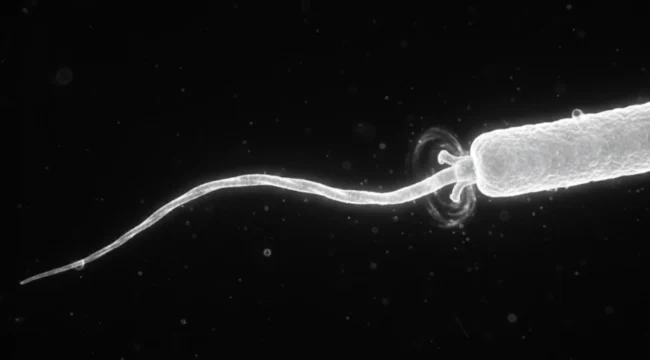
Imagine a microscopic world where cells zip around like tiny boats, powered by whip-like structures that act as both engines and rudders. These structures are called flagella, and they’re far more than just simple tails. Found in bacteria, algae, sperm cells, and more, flagella are marvels of natural engineering—tools for movement, sensors of the environment, and even keys to understanding diseases.
What are flagella, anyway?
Flagella (singular: flagellum) are long, slender appendages that stick out from certain cells, helping them move through their surroundings. Picture a bacterium twirling through water or a sperm cell racing toward an egg—these feats are powered by flagella. But movement isn’t their only trick. In some organisms, flagella act like antennae, picking up signals like light or chemicals, guiding the cell toward food or safety.
So, are flagella a universal feature across all life? Not quite. They’re found in both simple organisms like bacteria and more complex ones like animals and plants (well, their cells, anyway). But here’s the twist: bacterial flagella and eukaryotic (think animal, plant, fungal cells) flagella are wildly different in design. It’s like comparing a spinning propeller to a flexing oar—same job, different blueprints.
Bacterial flagella: the spinning wonders
Let’s start with bacteria, where flagella steal the spotlight. These flagella are built from a protein called flagellin, forming a helical filament that looks like a corkscrew. Anchored to the bacterial cell wall, this filament is connected to a mind-blowing feature: a rotary motor.
Yes, bacteria have their own nanoscale engines! This motor is embedded in the cell membrane and powered by the flow of protons (or sometimes sodium ions) across it. The energy from this ion movement creates torque, spinning the flagellum like a boat propeller.
But how does this spinning translate to movement? When the motor turns the flagellum counterclockwise, the bacterium swims smoothly forward. Switch it to clockwise, and the bacterium tumbles chaotically, reorienting itself. This isn’t random chaos—it’s a strategy called chemotaxis. Bacteria use it to chase nutrients or flee toxins. Imagine you’re blindfolded, following the smell of pizza: if the scent gets stronger, you keep walking straight; if it fades, you spin around and try a new direction. That’s chemotaxis in a nutshell.
Question to ponder: If you were a bacterium, would you rather have one super-fast flagellum or a bunch of smaller ones working together? Why?
Eukaryotic flagella: the waving masters
Now, let’s zoom into eukaryotic flagella, found in cells like sperm or certain algae. Unlike their bacterial cousins, these flagella don’t spin—they wave. Their structure is a masterpiece: a bundle of microtubules arranged in a “9+2” pattern—nine pairs circling two central ones, all wrapped in the cell membrane. This setup is powered by ATP, the cell’s energy molecule, not proton flow.
Here’s how it works: motor proteins called dynein arms link the outer microtubule pairs. When activated, these arms pull the microtubules past each other, bending the flagellum. By timing these pulls across different sides, the flagellum creates a rhythmic, wave-like motion. Think of it like a dancer’s arm gracefully rippling through the air, pushing the cell along.
But wait—haven’t we heard of something similar called cilia? Great catch! Cilia are like flagella’s shorter, more numerous siblings. Both share that “9+2” structure, but cilia tend to cover cells in droves, beating in sync to move fluids (like mucus in your lungs) or act as sensors. Flagella, meanwhile, are usually solo acts or come in small numbers, focused on propelling the whole cell.
Quick quiz: If flagella are the cell’s oars, what role would cilia play on a ship? Paddles? Sails? Something else?
What does flagella do?
Movement’s not the whole story. Flagella can double as sensory tools. In some algae, like Chlamydomonas, flagella detect light, steering the cell toward sunshine for photosynthesis. Others sense chemicals or temperature, acting like tiny environmental scouts. It’s as if these cells have built-in GPS, compass, and thermometer—all in one whippy package.
The evolutionary puzzle
Where did these incredible structures come from? Bacterial flagella might have started as simple protein export systems, evolving over eons into the rotary motors we see today. Eukaryotic flagella, meanwhile, likely branched off from the cell’s internal skeleton of microtubules, adapting into flexible movers and shakers. It’s a reminder that nature often remixes old tools into new inventions.
Flagella in health and tech
Flagella aren’t just cool science—they hit close to home. Many pathogens, like Vibrio cholerae (the cholera culprit), rely on flagella to invade our bodies. Understanding them could unlock new ways to fight infections. On the flip side, when flagella or cilia malfunction in humans—like in primary ciliary dyskinesia—it can cause breathing problems or infertility. Studying these structures might lead to life-changing treatments.
And tech? The bacterial flagellar motor inspires engineers dreaming of nanomachines—tiny devices for medicine or industry. Nature’s had millions of years to perfect this design; why not borrow her blueprints?
Let’s summarize: questions and answers
What is flagella function?
Flagella are nature’s answer to cellular mobility—they’re like the propellers or oars of the microscopic world. Their primary job is to help cells move, whether it’s a bacterium swimming toward food, a sperm cell racing to its target, or an alga gliding toward sunlight. But they’re not one-trick ponies! In many organisms, flagella moonlight as sensory tools, picking up cues like light, chemicals, or temperature changes to guide the cell’s journey—a bit like a ship’s radar and engine rolled into one.
For example, bacteria use flagella to perform chemotaxis, zigzagging toward nutrients or away from toxins. In eukaryotic cells, like those of algae, flagella might steer the cell toward optimal conditions for photosynthesis. So, their function boils down to movement and sensing—pretty critical for survival in a world where you’re too small to walk!
What is flagella structure?
Flagella come in two main flavors—bacterial and eukaryotic—and their structures are as different as a windmill and a whip. Let’s break them down:
Bacterial flagella:
- Basal Body: Anchors the flagellum to the cell membrane and cytoplasm. It includes several rings that act as bearings for the flagellum’s rotation.
- Hook: A flexible segment connecting the basal body to the filament, acting as a universal joint.
- Filament: The long, helical structure made of flagellin protein, which rotates to propel the cell.
These are built like a high-tech spinning top. The core is a long, helical filament made of flagellin protein, acting as the propeller blade. It’s attached to a hook (a flexible joint) and anchored by a basal body—a complex motor embedded in the cell membrane. This motor has rings, a rod, and a stator, powered by proton flow (think of it as a tiny hydroelectric dam). The whole setup spins, sometimes at hundreds of revolutions per second!
Eukaryotic flagella:
- Axoneme: The core structure consisting of nine pairs of microtubules surrounding two central pairs, known as the “nine-plus-two” arrangement.
- Basal Body: Anchors the flagellum to the cell.
These are more like flexible oars. They’re built from microtubules—protein tubes arranged in a “9+2” pattern: nine pairs circling two central ones, all encased in the cell membrane. Motor proteins called dynein slide these microtubules past each other using ATP energy, creating a bending, wave-like motion. It’s less about spinning and more about rhythmic flexing.
Both are masterpieces of nanoscale engineering, tailored to their cell’s needs. Which design do you think is more elegant?
What is peritrichous flagella?
“Peritrichous” sounds fancy, but it just means “all around.” Peritrichous flagella are bacterial flagella scattered across the entire surface of the cell—like a hedgehog with spinning spines. This setup lets bacteria, like Escherichia coli, move efficiently by coordinating their flagella into a bundle that propels them forward when spinning counterclockwise.
If they switch to clockwise, the bundle unravels, and the bacterium tumbles to change direction.
Compare this to other arrangements:
- monotrichous (one flagellum at one end),
- lophotrichous (a tuft at one end),
- or amphitrichous (one at each end).
Peritrichous bacteria are the multitaskers—more flagella mean more power and flexibility. Imagine a boat with oars all over versus one at the back—which would you pick for a race?
Is flagella prokaryotic or eukaryotic?
Here’s the twist: flagella aren’t exclusive to one group—they exist in both prokaryotes (bacteria and archaea) and eukaryotes (plants, animals, fungi, protists). But they’re not the same beast! Prokaryotic flagella (mostly bacterial) spin like propellers and are simpler, protein-based structures. Eukaryotic flagella wave like oars and are more complex, microtubule-based machines.
So, the answer is both, but context matters. Archaea have flagella too, but they’re a distinct version—similar to bacterial ones but with unique proteins. It’s like asking if wings belong to birds or insects—different designs, same goal!
Do plant cells have flagella?
Most plant cells? Nope, no flagella. Your average leaf or root cell is locked in place by a rigid cell wall, so flagella would be overkill—they’re not swimming anywhere! But here’s the exception: some plant reproductive cells, like the sperm of certain “lower” plants (think mosses, ferns, and some algae), do have flagella.
For instance, in ferns, the male gametes (sperm) use flagella to swim through water to reach the egg during fertilization. These flagella are eukaryotic, with that classic “9+2” setup. Higher plants (like flowering ones) ditched this strategy, relying on pollen instead. So, while most plant cells don’t have flagella, some plants keep them in their family tree for special occasions!
Wrapping up
Flagella are tiny wonders with big roles: propelling cells, sensing the world, and even shaping health and technology. From the spinning motors of bacteria to the waving elegance of eukaryotic cells, they show how diverse and clever life can be at the microscopic level.
Sources and materials we used to write this article:
- https://en.wikipedia.org/wiki/Flagellum
- https://www.britannica.com/science/flagellum
- https://byjus.com/biology/flagella/
- https://microbenotes.com/flagella/
- https://bio.libretexts.org/Bookshelves/Microbiology/Microbiology_(Kaiser)/Unit_1:_Introduction_to_Microbiology_and_Prokaryotic_Cell_Anatomy/2:_The_Prokaryotic_Cell_-_Bacteria/2.5:_Structures_Outside_the_Cell_Wall/2.5B:_Flagella
- https://www.ncbi.nlm.nih.gov/books/NBK6250/
- https://study.com/learn/lesson/video/flagella-function-structure.html