Why is the sky blue?
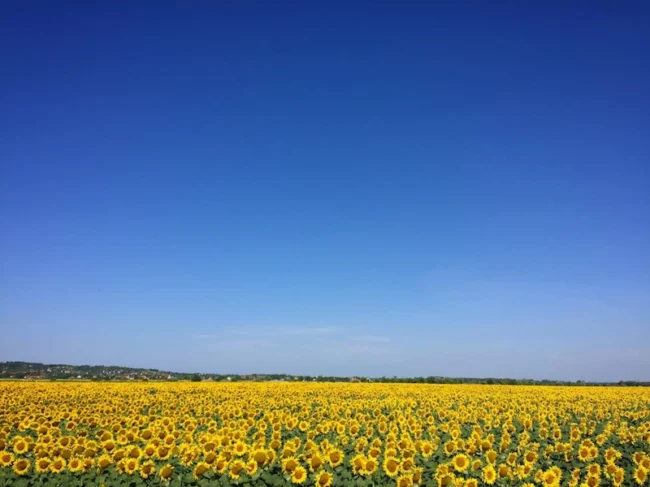
Looking up at a clear day, we’re greeted by an expansive dome of blue stretching from horizon to horizon. This seemingly simple phenomenon has captivated human curiosity for millennia, inspiring everything from ancient mythology to modern scientific inquiry. The answer lies in the fascinating interplay between sunlight, tiny particles in our atmosphere, and the fundamental properties of light itself.
The nature of light: more than meets the eye
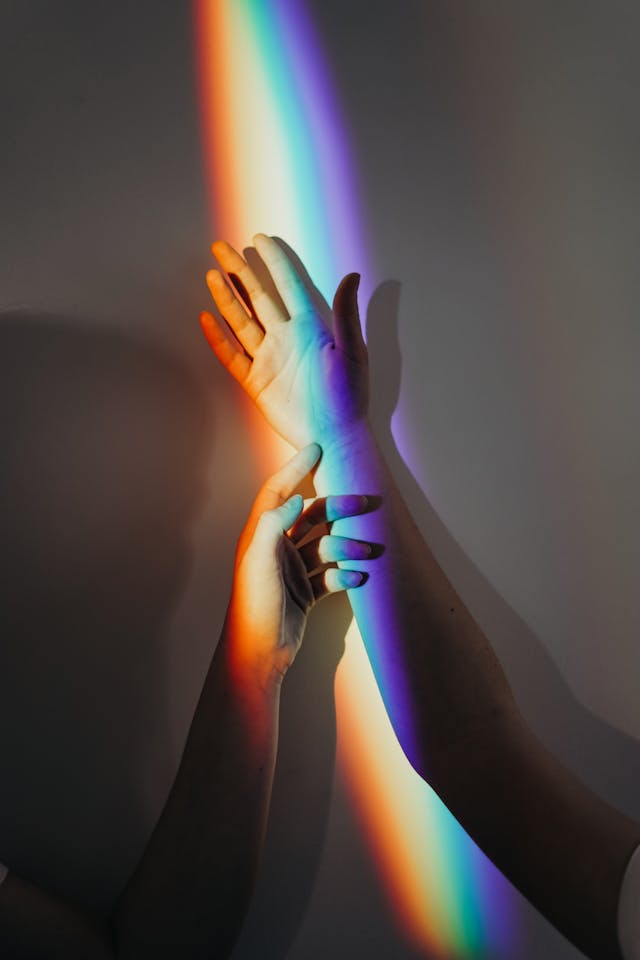
To understand why the sky appears blue, we must first grasp what light actually is. Sunlight appears white to our eyes, but it’s actually composed of all colors of the visible spectrum—the same rainbow we see when light passes through a prism or water droplets after rain. Each color corresponds to a different wavelength of electromagnetic radiation, with violet and blue having the shortest wavelengths (around 380-450 nanometers) and red having the longest (around 620-750 nanometers).
When this full spectrum of sunlight enters Earth’s atmosphere, it encounters countless tiny particles—primarily nitrogen and oxygen molecules that make up about 99% of our air. These molecules are much smaller than the wavelength of visible light, typically measuring just a few angstroms (10⁻¹⁰ meters) across. This size relationship is crucial to what happens next.
Rayleigh scattering: The master of sky colors
The blue color of our sky results from a phenomenon called Rayleigh scattering, named after British physicist Lord Rayleigh who first described it mathematically in the 1870s. When sunlight collides with these tiny atmospheric molecules, the light gets scattered in all directions. However, this scattering isn’t uniform across all colors.

Rayleigh scattering has a strong wavelength dependence—it’s inversely proportional to the fourth power of the wavelength. This means shorter wavelengths (blues and violets) are scattered roughly 5-6 times more than longer wavelengths (reds and oranges). Picture throwing different sized balls at a forest of thin trees: the smaller balls (shorter wavelengths) would ricochet and bounce around much more dramatically than the larger ones.
Why blue instead of violet?
Given that violet light has an even shorter wavelength than blue, you might wonder why the sky doesn’t appear purple. The answer involves both physics and biology. While violet light is indeed scattered more than blue light, several factors tip the balance toward blue:
First, the sun produces less violet light than blue light to begin with. Second, some of the violet light is absorbed by the upper atmosphere, particularly by ozone. Most importantly, human eyes are less sensitive to violet wavelengths compared to blue. Our visual system is optimized for the wavelengths where the sun’s output is strongest, and blue light falls right in this sweet spot of both abundant scattering and peak eye sensitivity.
How thick is the atmosphere?
Our atmosphere extends roughly 10,000 kilometers above Earth’s surface, though most of the air that affects sky color is concentrated in the lowest layer, the troposphere, which extends up to about 12 kilometers high. This layer contains about 80% of the atmosphere’s mass and virtually all of its water vapor and weather phenomena.
Air molecule density drops sharply as altitude increases. At sea level, there are approximately 2.5 × 10¹⁹ molecules per cubic centimeter, but this number drops dramatically as you ascend. This density gradient explains why the sky appears deeper blue when viewed from mountain tops—there are fewer molecules above you to scatter the light, reducing the overall scattering effect and making the blue more saturated.
Beyond blue: the spectrum of sky colors
The sky’s color story doesn’t end with blue. During sunrise and sunset, we’re treated to brilliant displays of oranges, reds, and pinks. This dramatic shift occurs because sunlight must travel through much more atmosphere when the sun is near the horizon—sometimes up to 40 times more air than when it’s directly overhead.

This extended journey through the atmosphere removes most of the blue light through scattering, leaving the longer wavelengths (reds and oranges) to dominate what reaches our eyes. The remaining sunlight often illuminates clouds and particles from below, creating the spectacular warm hues we associate with dawn and dusk.
Pollution and particles: when the sky changes
Not all atmospheric particles are tiny gas molecules. Larger particles like dust, pollen, smoke, and pollution can significantly alter the sky’s appearance through a different process called Mie scattering. Unlike Rayleigh scattering, Mie scattering affects all wavelengths more equally, which tends to wash out the blue color and create hazier, whiter skies.
This is why urban areas often have less vibrant blue skies than rural locations, and why the air appears clearer after rain—precipitation literally washes larger particles from the atmosphere. Volcanic eruptions can also dramatically affect sky colors by injecting massive amounts of particles into the stratosphere, sometimes creating unusual red or orange skies for months afterward.
Other worlds, other skies
The principles of light scattering apply throughout the universe, but different atmospheric compositions create dramatically different sky colors on other planets. Mars, with its thin atmosphere rich in iron oxide dust, displays butterscotch-colored skies during the day and striking blue sunsets—essentially the reverse of Earth’s color palette.
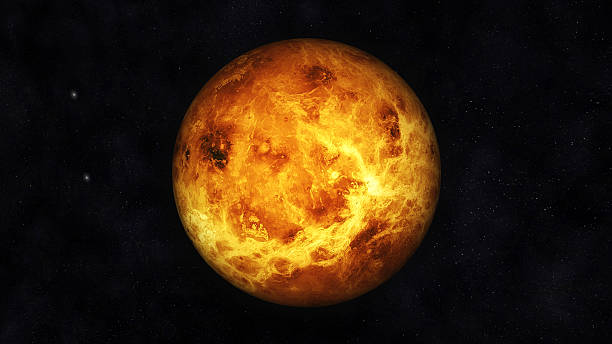
Venus, shrouded in dense clouds of sulfuric acid, would show an orange sky if you could see through its opaque atmosphere. Meanwhile, worlds without atmospheres, like our moon, display black skies even during their daytime because there are no particles to scatter light.
The deeper significance
The blue sky is more than just a beautiful backdrop—it’s a daily reminder of the invisible molecular dance occurring above our heads. Every blue photon that reaches our eyes has bounced off countless air molecules, each collision governed by the same quantum mechanical principles that rule the subatomic world.
This scattering process also plays crucial roles in Earth’s climate system, affecting how solar energy is distributed through the atmosphere and ultimately influencing weather patterns and global temperature. The same physics that paints our sky blue helps regulate the energy balance that makes life on Earth possible.
The next time you look up at a blue sky, remember that you’re witnessing one of nature’s most elegant physics demonstrations. Billions of tiny molecules are constantly intercepting sunlight and redirecting blue wavelengths in all directions, creating the azure dome that has inspired human wonder throughout history. This simple question—why is the sky blue?—opens a window into fundamental concepts of physics, from the wave nature of light to the structure of our atmosphere, reminding us that even the most familiar phenomena often have the most extraordinary explanations.
In our universe of infinite complexity, perhaps there’s something beautifully appropriate about the fact that the color of our sky emerges from one of physics’ most fundamental interactions: the collision between light and matter, played out on a scale both microscopic and magnificent, painting our world in shades of scientific wonder.
Sources
- Sheposh, R. (2024). Rayleigh scattering. EBSCO Research Starters. Available at: https://www.ebsco.com/research-starters/chemistry/rayleigh-scattering
- Baird, C.S. (2013). Why is the sky blue? Science Questions with Surprising Answers. Available at: https://www.wtamu.edu/~cbaird/sq/2013/03/28/why-is-the-sky-blue/
- HyperPhysics. (n.d.). Blue Sky and Rayleigh Scattering. Georgia State University Department of Physics and Astronomy. Available at: http://hyperphysics.phy-astr.gsu.edu/hbase/atmos/blusky.html
- ACP. (2023). Revisiting the question “Why is the sky blue?” Atmospheric Chemistry and Physics, 23, pp.14829–14845. Available at: https://acp.copernicus.org/articles/23/14829/2023/
- Monson, S. (n.d.). Utah State University Research Week Paper. Available at: https://digitalcommons.usu.edu/cgi/viewcontent.cgi?article=2897&context=researchweek.
- Wikipedia. (2024). Rayleigh scattering. Wikipedia, the Free Encyclopedia. Available at: https://en.wikipedia.org/wiki/Rayleigh_scattering.
- ScienceDirect (n.d.). Rayleigh Scattering – an overview. ScienceDirect Topics. Available at: https://www.sciencedirect.com/topics/chemistry/rayleigh-scattering.
- McGill OSS. (2020). McGill Office for Science and Society. Available at: https://www.mcgill.ca/oss/article/environment-general-science-you-asked/why-sky-blue-or-better-yet-why-ocean-blue.
- Spectroscopy Online. (2013). Why Is the Sky Blue? Spectroscopy Online. Available at: https://www.spectroscopyonline.com/view/why-sky-blue.