Earth: The Only World We Know That Lives
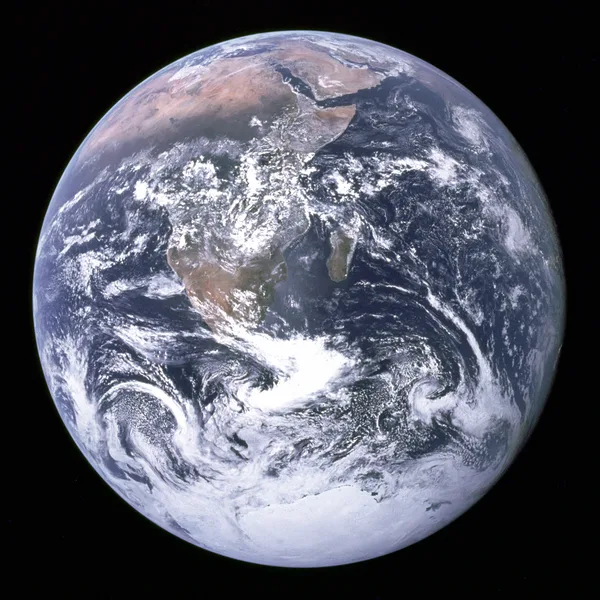
Of the eight planets tracing their paths around the Sun, only one has ever been confirmed to host life, liquid oceans on its surface, a breathable oxygen-rich atmosphere, and a climate stable enough to sustain that life across billions of years. That planet is the one beneath your feet right now. Earth is so familiar that its strangeness is easy to overlook, yet viewed with the same curiosity we might apply to a distant exoplanet, it becomes clear just how many improbable conditions had to align to produce a world like ours: a planet with plate tectonics that recycle its crust, a molten iron core generating a protective magnetic shield, a large moon that stabilizes its tilt, and an atmosphere thin enough to let sunlight through yet thick enough to keep the planet from freezing solid.
Earth did not arrive at this state by accident alone. It is the product of 4.5 billion years of violent formation, catastrophic collisions, chemical evolution, and biological transformation so profound that life itself reshaped the planet’s atmosphere and rock record. Understanding Earth as a planet — not just as home, but as one specific outcome among countless possible planetary histories — reveals how remarkable, and how fragile, its balance of conditions actually is.
A Name with Humble Origins
Unlike every other planet in the solar system, Earth’s name does not derive from Greek or Roman mythology. Instead, it comes from Old English and Germanic words simply meaning “the ground” or “the soil” — a far more utilitarian origin than Mercury the messenger, Venus the goddess of beauty, or Mars the god of war. This linguistic modesty reflects an interesting truth: until relatively recently in human history, most cultures had no concept of Earth as one planet among many, since it seemed to be the stable, unmoving stage on which the rest of the cosmos performed.
It was not until the sixteenth century, with the work of astronomers such as Nicolaus Copernicus, that the idea of Earth as a planet orbiting the Sun alongside its neighbors gained wide scientific acceptance, definitively overturning millennia of Earth-centered cosmological models.
Orbital Characteristics: A Remarkably Stable Home
Distance and the Habitable Zone
Earth orbits the Sun at an average distance of about 150 million kilometers, a distance so fundamental to astronomy that it defines the astronomical unit (AU), the standard measurement used throughout the solar system. This distance places Earth squarely within the Sun’s habitable zone, the range of orbital distances where temperatures allow liquid water to exist stably on a planet’s surface — neither so close that oceans boil away, as on Venus, nor so far that they freeze solid.
A Nearly Circular Path
Earth’s orbit deviates from a perfect circle by only about 1.7%, making it a nearly circular ellipse. This orbital stability, unlike the pronounced eccentricity of Mercury’s path, means Earth’s distance from the Sun varies only modestly throughout the year, between about 147 million kilometers at perihelion in early January and 152 million kilometers at aphelion in early July.
Axial Tilt and the Seasons
Earth’s axis is tilted approximately 23.4 degrees relative to its orbital plane, and this tilt, not variation in distance from the Sun, is the true cause of the seasons. As Earth orbits the Sun, this consistent tilt means different hemispheres receive more direct sunlight at different times of year, producing the familiar cycle of summer, autumn, winter, and spring. Remarkably, this tilt is thought to be stabilized by the gravitational influence of the Moon, preventing the chaotic wobbling that computer simulations suggest would otherwise occur over long timescales, a wobble that could produce climate swings severe enough to threaten complex life.
Physical Characteristics
| Property | Value |
|---|---|
| Diameter | 12,742 km |
| Mass | 5.97 × 10²⁴ kg |
| Average density | 5.51 g/cm³ (densest planet in the solar system) |
| Surface gravity | 9.8 m/s² |
| Average distance from Sun | 149.6 million km (1 AU) |
| Orbital period (year) | 365.25 days |
| Rotation period (day) | 23 hours, 56 minutes |
| Axial tilt | 23.4° |
| Known moons | 1 (the Moon) |
| Average surface temperature | 15°C |
| Surface composition | 71% ocean, 29% land |
A Layered, Restless Interior
Core, Mantle, and Crust
Beneath its surface, Earth is organized into distinct layers, each shaped by density and heat. At the center lies a solid inner core of iron and nickel, roughly the size of the Moon, subjected to pressures so extreme that despite temperatures rivaling the surface of the Sun, the metal remains solid. Surrounding it is a liquid outer core of molten iron and nickel, whose churning, convective flow generates Earth’s magnetic field through a process called the geodynamo. Above this lies the mantle, a thick layer of hot, slowly flowing silicate rock that makes up the majority of Earth’s volume, and finally the thin, brittle crust on which oceans, continents, and all known life exist.
Plate Tectonics: A Planetary Rarity
Earth’s crust is broken into large, rigid plates that float atop the slowly churning mantle beneath, drifting at speeds comparable to the growth rate of human fingernails. This system of plate tectonics is, as far as current evidence shows, unique among the rocky planets of our solar system, and its consequences for Earth’s habitability are difficult to overstate. Tectonic activity drives volcanic eruptions that release gases shaping the atmosphere, builds and destroys mountain ranges, and continuously recycles carbon between the atmosphere, oceans, and rock through subduction — a natural thermostat that has helped stabilize Earth’s climate across geological time by regulating atmospheric carbon dioxide levels over millions of years.
Venus and Mars, by contrast, appear to lack active plate tectonics of this kind, and many scientists suspect this absence played a central role in their failure to sustain long-term climate stability and surface habitability.
A Protective Magnetic Field
The convective churning of Earth’s liquid outer core generates a global magnetic field extending far into space, forming a protective bubble called the magnetosphere. This field deflects the vast majority of charged particles streaming from the Sun as solar wind, protecting Earth’s atmosphere from the kind of gradual stripping away that appears to have significantly thinned the Martian atmosphere over billions of years. When solar particles do interact with this magnetic shield near the poles, they produce the shimmering displays known as auroras, visible as the aurora borealis in the north and aurora australis in the south.
The Atmosphere: A Delicately Balanced Mixture
Composition
Earth’s atmosphere is composed of roughly 78% nitrogen, 21% oxygen, and just under 1% argon, with trace amounts of carbon dioxide, water vapor, and other gases. This composition is highly unusual by planetary standards; the abundance of free molecular oxygen, in particular, is not a simple consequence of geology but a direct product of billions of years of photosynthetic life steadily transforming the atmosphere.
The Great Oxidation Event
For roughly the first two billion years of Earth’s history, its atmosphere contained essentially no free oxygen. That changed with the rise of cyanobacteria, simple photosynthetic microorganisms that began releasing oxygen as a metabolic byproduct on a massive scale. Around 2.4 billion years ago, oxygen levels rose sharply in what geologists call the Great Oxidation Event, a transformation so significant that it likely triggered a severe global cooling episode, since the new oxygen reacted with atmospheric methane, a potent greenhouse gas, and stripped much of it away. This event also proved catastrophic for the anaerobic organisms that had dominated Earth until then, for whom oxygen was a toxic pollutant, making it arguably the first mass extinction event in Earth’s history, driven not by asteroid or volcano but by biology itself reshaping the planet’s chemistry.
Layers of the Atmosphere
Earth’s atmosphere is organized into distinct layers, each with its own characteristics:
- Troposphere: Extending roughly 8 to 14 kilometers above the surface, this lowest layer contains almost all of Earth’s weather and about 80% of atmospheric mass.
- Stratosphere: Reaching up to about 50 kilometers, this layer contains the ozone layer, which absorbs the majority of the Sun’s harmful ultraviolet radiation.
- Mesosphere: Extending to roughly 85 kilometers, this layer is where most meteors burn up upon atmospheric entry.
- Thermosphere: Reaching several hundred kilometers into space, this layer, despite extremely high particle temperatures, contains air so thin that it would feel intensely cold to the touch, and is home to the International Space Station and most low-Earth-orbit satellites.
- Exosphere: The outermost, gradually thinning layer that eventually merges into the vacuum of space.
Water: The Defining Feature
An Ocean World
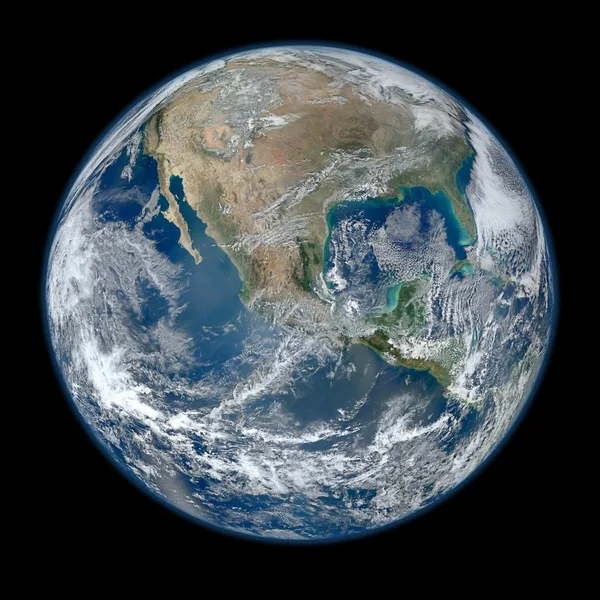
Roughly 71% of Earth’s surface is covered by liquid water, giving rise to the description of Earth as a “blue marble” when viewed from space. The vast majority of this water — about 96.5% — resides in the interconnected global ocean, with the remainder distributed among ice caps, glaciers, groundwater, lakes, rivers, and atmospheric vapor.
Where Earth’s Water Came From
The origin of Earth’s water remains an active area of research, with several contributing hypotheses under consideration. Some water may have been present in the material that originally formed Earth, incorporated into minerals within the planet’s rocky building blocks. Later bombardment by water-rich asteroids and comets during the early solar system’s chaotic period likely delivered additional quantities. Isotopic analysis comparing the ratio of hydrogen to its heavier isotope deuterium in Earth’s oceans against various asteroid and comet populations has helped narrow down which sources contributed most significantly, with evidence increasingly favoring carbon-rich asteroids from the outer asteroid belt as a major source.
The Ocean as Climate Regulator
Beyond providing habitat for life, Earth’s oceans play an essential role in regulating global climate. Water’s high heat capacity allows oceans to absorb and store vast quantities of solar energy, moderating temperature extremes and distributing heat around the globe through massive circulating currents such as the Gulf Stream. Oceans also absorb roughly a quarter of human-emitted carbon dioxide, acting as a significant, if imperfect, buffer against the pace of atmospheric warming.
The Moon: An Unusually Large Companion
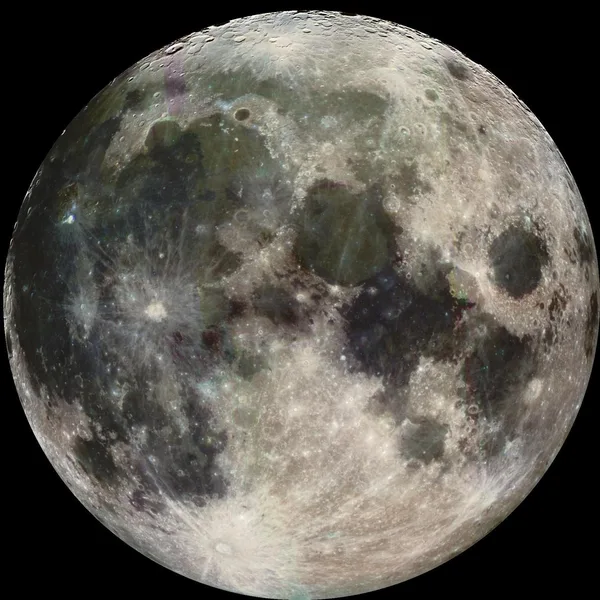
Earth’s single natural satellite, the Moon, is unusually large relative to its host planet compared to nearly every other moon-planet pairing in the solar system, measuring more than a quarter of Earth’s diameter. The leading explanation for its formation is the giant-impact hypothesis, which proposes that a Mars-sized protoplanet, sometimes named Theia, collided with the young Earth roughly 4.5 billion years ago. Debris flung into orbit from this cataclysmic impact is thought to have coalesced relatively quickly into the Moon we see today.
This oversized companion delivers benefits well beyond nighttime illumination and romantic symbolism. As previously noted, the Moon’s gravity helps stabilize Earth’s axial tilt over long timescales, preventing the kind of chaotic tilt variations that appear to affect Mars, whose smaller moons provide no comparable stabilizing influence. The Moon’s gravitational pull is also responsible for Earth’s ocean tides, and some researchers propose that the mixing and cycling caused by tidal action in shallow ancient seas may have played a role in the emergence and early evolution of life.
Life: The Feature That Sets Earth Apart
Origins Still Being Investigated
Despite decades of dedicated research, the precise mechanism by which non-living chemistry first gave rise to living organisms on early Earth remains unresolved, representing one of the most significant open questions in all of science. Evidence from ancient rock formations suggests life may have existed as early as 3.7 to 4.1 billion years ago, remarkably soon after Earth’s surface had cooled enough to support liquid water at all, hinting that the transition from chemistry to biology may not require as much time as once assumed.
Life’s Feedback Loop with the Planet
Perhaps the most significant lesson from studying Earth as a planet is recognizing how profoundly life and geology have shaped one another in a continuous feedback loop. Photosynthetic organisms transformed the atmosphere from one dominated by methane and carbon dioxide into one rich in oxygen. Marine organisms building calcium carbonate shells over hundreds of millions of years locked away enormous quantities of atmospheric carbon into limestone deposits. Forests and other land plants, once they evolved, altered global weathering rates, rainfall patterns, and soil formation. Earth today, in other words, is not simply a rock that happens to host life — it is a planet whose very geology and atmospheric chemistry have been substantially rewritten by the organisms living on it.
Earth in Context: Comparing the Rocky Planets
| Feature | Mercury | Venus | Earth | Mars |
|---|---|---|---|---|
| Distance from Sun | 57.9 million km | 108.2 million km | 149.6 million km | 227.9 million km |
| Diameter | 4,879 km | 12,104 km | 12,742 km | 6,779 km |
| Active plate tectonics | No | No (debated) | Yes | No |
| Global magnetic field | Weak but present | None | Strong | None (remnant only) |
| Liquid surface water | None | None | 71% of surface | None (frozen/subsurface only) |
| Known moons | 0 | 0 | 1 | 2 |
| Confirmed life | No | No | Yes | No |
Why Earth Still Rewards Study
It is easy to assume there is little left to discover about a planet we have inhabited for our entire history as a species, but Earth continues to surprise the scientists who study it most closely. New techniques in seismology are still refining our picture of the planet’s interior, revealing unexpected structures deep within the mantle. Climate scientists continue to untangle the complex feedback loops governing global temperature, ice sheet stability, and ocean circulation, work made urgent by the pace of human-driven change. Astrobiologists studying Earth’s most extreme environments, from deep-sea hydrothermal vents to subglacial lakes, are refining our understanding of just how far the boundaries of habitability can stretch, directly informing the search for life on other worlds.
Above all, Earth’s history teaches a lesson made vivid by comparison with its planetary neighbors: habitability is not a fixed inheritance but an ongoing, dynamic balance, sustained by an intricate interplay of orbital geometry, internal heat, magnetic shielding, tectonic recycling, and the transformative presence of life itself. Study Earth long enough, and it becomes clear that the world beneath our feet is not the baseline against which strange planets are measured — it may be the strangest, most improbable planet of all.
References
- NASA Science (n.d.) Earth overview. Available at: https://science.nasa.gov/earth/ (Accessed: 3 August 2026).
- NASA Earth Observatory (n.d.) Earth Observatory. Available at: https://earthobservatory.nasa.gov/ (Accessed: 3 August 2026).
- NASA Solar System Exploration (n.d.) Earth: in depth. Available at: https://solarsystem.nasa.gov/planets/earth/in-depth/ (Accessed: 3 August 2026).
- NOAA (n.d.) Climate and Earth systems. Available at: https://www.noaa.gov/climate (Accessed: 3 August 2026).
- USGS (n.d.) Plate tectonics and earthquakes. Available at: https://www.usgs.gov/programs/earthquake-hazards (Accessed: 3 August 2026).
- NASA Science (n.d.) Earth magnetic field. Available at: https://science.nasa.gov/earth/earth-atmosphere/earths-magnetosphere/ (Accessed: 3 August 2026).