Bacterial Physiology: Growth and Reproduction of Bacteria
Introduction: The Invisible Math of Life
If you put a single gold coin in a magic box, and every 20 minutes it doubled, how rich would you be in 24 hours?
- 20 minutes: 2 coins.
- 40 minutes: 4 coins.
- 1 hour: 8 coins.
- 24 hours: You would have 4,700,000,000,000,000,000,000 coins.
This isn’t magic. This is Bacterial Reproduction.
Bacteria are the ultimate survivors. They don’t have complex bodies or brains, but they have speed. In this lesson, we will explore the engines of bacterial growth, how they eat rocks and sugar for breakfast, and why they eventually stop growing before they eat the entire Earth.
[INTERACTIVE TOOL: THE PETRI DISH SIMULATOR]
Virtual Petri Dish Lab
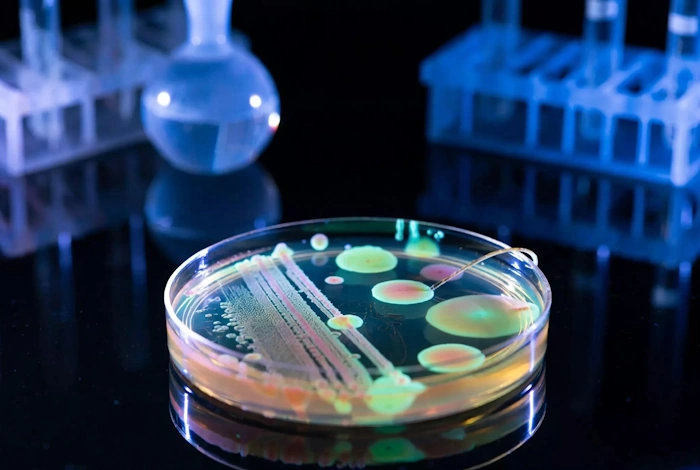
Microbial Binary Fission SimulationExperiment: Add food (Glucose) and set the temperature. Watch the colony grow. What happens if you make it too hot? What happens when the food runs out?
Part 1: How Bacteria Multiplies (Grades 7-9)
In the human world, “Growth” means getting taller. In the bacterial world, Growth means getting bigger, but Reproduction means making more copies.
The Xerox Machine: Binary Fission
Bacteria don’t have babies, they cannot have them like we do. Instead they clone themselves. This process is called Transverse Binary Fission.
- Parent Cell: A single bacterium gets ready to divide.
- DNA Copying: It copies its single loop of DNA.
- The Split: A wall (septum) grows down the middle.
- Daughter Cells: The cell splits into two identical “daughters.”
Teacher’s Note: The 20-Minute Rule
Under perfect conditions (warmth + lots of food), bacteria like E. coli can divide every 20 minutes. This is why a simple infection can make you sick so fast!
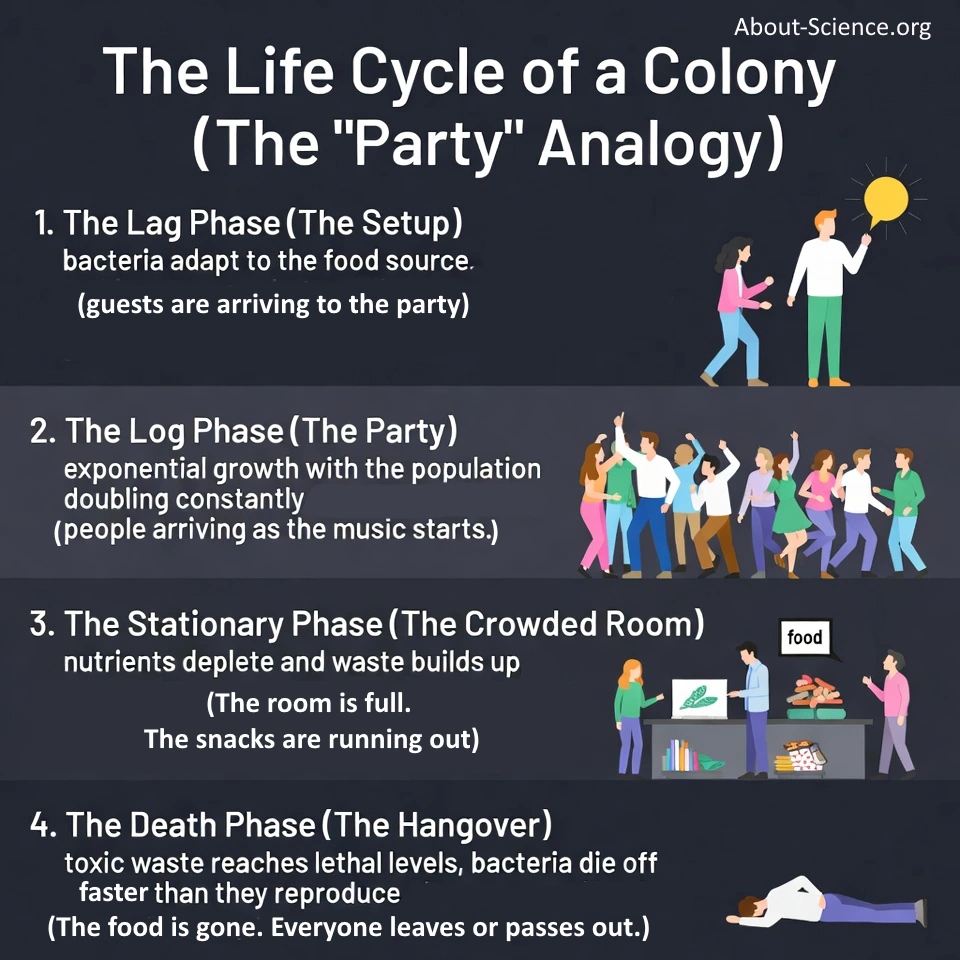
The Life Cycle of a Colony (The “Party” Analogy)
When bacteria land in a new environment (like a Petri dish or a bowl of soup), they follow a strict pattern of life. Imagine a House Party:
1. The Lag Phase (The Setup):
The guests arrive. Nobody is dancing yet. They are checking out the snacks and getting comfortable.
- Science: Bacteria are adapting to the food source. They are making enzymes but not dividing yet.
2. The Log Phase (The Party):
The music starts. Everyone is dancing. More people arrive.
- Science: This is Exponential Growth. The population doubles at a constant rate (2, 4, 8, 16…). This is when bacteria are healthiest.
3. The Stationary Phase (The Crowded Room):
The room is full. The snacks are running out. For every person entering, someone leaves.
- Science: Nutrients are depleting. Waste (toxins) is building up. The number of new cells is the same as the number of dying cells.
4. The Death Phase (The Hangover):
The food is gone. The room smells bad. Everyone leaves or passes out.
- Science: Toxic waste accumulates to lethal levels. The bacteria die off faster than they reproduce.
Interesting Fact: The Dangers of Bacterial Die-Off in Medicine
Imagine you’re a doctor treating a patient with a serious bacterial infection, like syphilis, Lyme disease, or even certain types of sepsis. You prescribe antibiotics, which work by killing off the bacteria—much like suddenly crashing the “party” in this analogy and forcing everyone out at once. But here’s the catch: when too many bacteria die rapidly, they burst open and release a flood of toxins (like endotoxins from their cell walls) into the patient’s bloodstream. This can trigger an intense immune response, causing symptoms to temporarily worsen instead of improve.
This phenomenon is called the Jarisch-Herxheimer reaction (often just “Herx” for short). It’s like the death phase happening all at once, but in a human body. The patient might suddenly experience high fever, chills, muscle aches, headache, rapid heart rate, or even a drop in blood pressure. In severe cases, especially if the bacterial load is high, it can lead to shock or organ stress, making it dangerous—sometimes requiring hospitalization or supportive care like fluids and anti-inflammatory meds to manage the “toxin storm.”
Why does this matter? It teaches us that antibiotics aren’t always a straightforward fix; timing and dosing are crucial. For example, in syphilis treatment with penicillin, doctors warn patients about this reaction and monitor them closely. It’s a reminder that the body’s response to dying bacteria can be as hazardous as the infection itself, emphasizing the need for careful medical oversight. Cool, right? It shows how microbiology directly impacts real-world health decisions.
Part 2: How They Eat (Nutrition)
Bacteria can eat almost anything—from sugar to sulfur to nuclear waste.
To survive, they need a “Balanced Diet” of Organogenic Elements: Carbon, Oxygen, Hydrogen, and Nitrogen.
Classification by Diet
Scientists group bacteria based on where they get their Carbon (Body mass) and Energy (Fuel).
1. The Carbon Source:
- Autotrophs (Self-Feeders): They build their bodies from thin air (CO₂). (e.g., Cyanobacteria).
- Heterotrophs (Other-Feeders): They need to eat organic stuff (sugar, protein, fats) that someone else built. Most pathogens (germs) are heterotrophs.
2. The Energy Source:
- Phototrophs: They run on Solar Power (Sunlight).
- Chemotrophs: They run on Chemical Energy (breaking bonds).
How do they eat without a mouth?
Bacteria don’t have mouths. They absorb nutrients through their skin (membrane).
- Passive Transport: Small molecules (Water, Oxygen) float right through. No energy needed.
- Active Transport: The bacteria uses energy (ATP) to pump food inside, even if it is crowded.
- Exoenzymes (The “Vomit” Strategy): If a food particle (like a protein) is too big to fit through the wall, the bacteria spits enzymes out. These enzymes digest the food outside the body, turning it into soup, which the bacteria then absorbs.
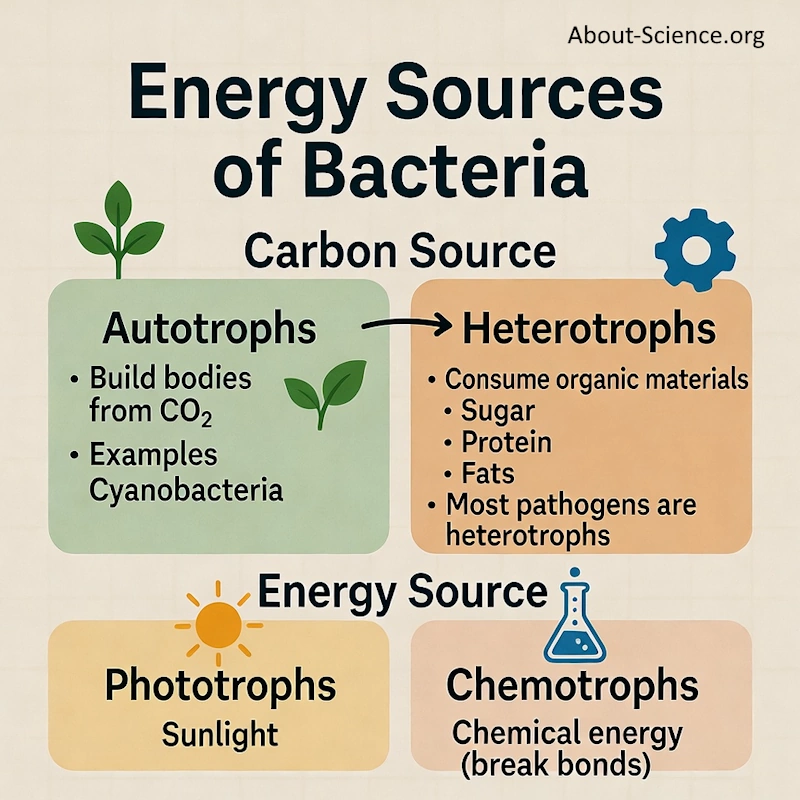
Take a look at this diagram – it’s like a roadmap for how bacteria fuel up and build themselves! At the top, we’ve got the carbon source, which is basically their “building blocks.” Autotrophs are the self-starters; they pull carbon dioxide (CO2) right out of the air and turn it into their body parts through processes like photosynthesis. Think of them as the plant-like bacteria. On the other side, heterotrophs are the consumers—they munch on ready-made organic stuff like sugars, proteins, or fats from other organisms. Fun fact: most disease-causing bacteria, or pathogens, fall into this group because they rely on hosts like us for their meals.
Now, down below, the energy source is how they power all that activity. Phototrophs harness sunlight, just like solar panels, to generate energy. Chemotrophs, though, get their kick from chemical reactions, breaking bonds in molecules to release energy—no sun needed!
Let’s spice it up with some interesting examples. Cyanobacteria, those ancient blue-green algae in ponds, are photoautotrophs—they use sunlight for energy and CO2 for carbon, and they’re the heroes who oxygenated Earth’s atmosphere billions of years ago!
Escherichia coli (E. coli), which lives in your intestines (mostly harmless, but some strains cause food poisoning), is a chemoheterotroph—it breaks down chemicals for energy and gobbles up organic nutrients.
For something wild, check out Thiobacillus in deep-sea vents or hot springs; these chemotrophs thrive in extreme heat, using sulfur compounds for energy instead of oxygen—total survivors in places where nothing else can live! This stuff shows how diverse bacteria are, powering everything from ecosystems to our own gut health.
Part 3: Deep Dive — Metabolism (Grades 10-12)
Metabolism is the sum of all chemical reactions in the cell. It acts like a seesaw between building up and breaking down.
- Catabolism (Destruction): Breaking molecules down to release energy.
- Anabolism (Construction): Using energy to build cell parts.
The Oxygen Problem
Not all bacteria breathe air. In fact, oxygen is poisonous to many of them.
- Aerobes: Need Oxygen to survive (Like us). They use the Krebs Cycle and Electron Transport Chain to make massive amounts of energy.
- Obligate Anaerobes: Oxygen kills them. They live in deep soil or your intestines. They rely on Fermentation.
- Facultative Anaerobes: The “Switch Hitters.” If oxygen is there, they breathe it. If not, they switch to fermentation. E. coli is a master of this.
Fermentation (Energy without Air)
When oxygen isn’t available, bacteria break down sugar incompletely.
- Lactic Acid Fermentation: Used by Lactobacillus to turn milk into Yogurt.
- Alcoholic Fermentation: Used by Yeast to turn sugar into Ethanol (Beer/Wine).
- Propionic Fermentation: Creates the gas bubbles (holes) in Swiss Cheese.
Enzymatic Profiles (Fingerprinting)
Every bacterial species has a unique set of enzymes.
- Constitutive Enzymes: Always ON. (Essential for life).
- Inducible Enzymes: Only turn ON when food is present. (Efficient).
Doctors use this to identify germs.
Example: If a bacteria turns red on “Endo Agar,” it means it has the enzyme to digest Lactose. If it stays colorless, it doesn’t. This helps doctors tell Salmonella apart from E. coli.
Part 4: The Genetics of Division
How does the cell pinpoint its center?
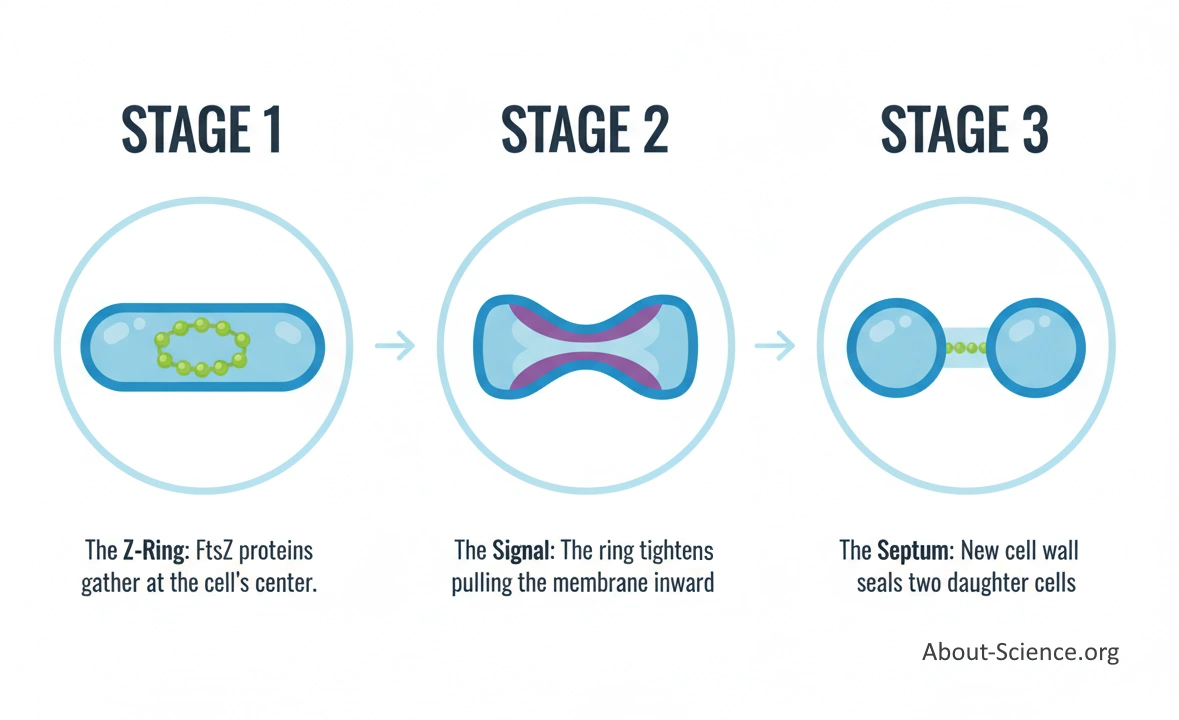
In the 20th century, we thought it was random. Now we know it is a precision machine controlled by the FtsZ Protein.
- The Z-Ring: FtsZ proteins gather at the exact center of the cell and form a ring.
- The Signal: This ring acts like a drawstring on a bag. It tightens, pulling the cell membrane inward.
- The Septum: New cell wall material is built behind the tightening ring, eventually sealing the two daughter cells apart.
How do scientists use this knowledge:
This mechanism is the target for new antibiotics. If we can create a drug that breaks the FtsZ ring, the bacteria can’t divide, and the infection stops.
Teacher’s Note: Continuous Culture
In the lab, bacteria eventually die when food runs out (Death Phase). However, in industry, we use a machine called a Chemostat. It constantly drains waste and adds fresh food. This keeps the bacteria in the Log Phase (Party Mode) forever! This is how we mass-produce Insulin and Antibiotics.
Summary of Key Terms
- Binary Fission: The process of one cell splitting into two.
- Generation Time: The duration required for a population to double in size.
- Aerobe: Needs oxygen.
- Anaerobe: Killed by oxygen.
- Exoenzyme: An enzyme released outside the cell to digest food.
- Catabolism: Breaking down molecules for energy.
🎓 Quiz: Bacterial Physiology
1. Bacteria divides – what the process is called?
- A) Mitosis
- B) Binary Fission
- C) Meiosis
- D) Fertilization
👉 Click to check answer
It is a simple cloning process where one cell splits into two.
2. In which growth phase are bacteria multiplying the fastest?
- A) Lag Phase
- B) Log (Exponential) Phase
- C) Stationary Phase
- D) Death Phase
👉 Click to check answer
This is when the population doubles at regular intervals (The Party Phase).
3. What is an “Obligate Anaerobe”?
- A) A bacteria that needs oxygen
- B) A bacteria that can switch between oxygen and no oxygen
- C) A bacteria that is killed by oxygen
- D) A bacteria that eats sunlight
👉 Click to check answer
They lack the enzymes to detoxify oxygen, so they must live in airless environments.
4. How do bacteria digest food that is too big to fit inside them?
- A) They bite it
- B) They use Endoenzymes
- C) They use Exoenzymes
- D) They ignore it
👉 Click to check answer
They release enzymes outside the cell to digest the food externally before absorbing it.
5. What is “Catabolism”?
- A) Building complex molecules
- B) Breaking down molecules to release energy
- C) Cell division
- D) DNA replication
👉 Click to check answer
It is the destructive part of metabolism (like burning fuel).
Sources & References
Core Microbiology Textbooks
- Madigan, M. T., et al. (2021). Brock Biology of Microorganisms (16th ed.). Pearson. (Detailed coverage of binary fission, growth phases, nutrition, and metabolism, including E. coli generation time.)
Bacterial Growth and Phases
- Zwietering, M. H., et al. (1990). “Modeling of the Bacterial Growth Curve.” Applied and Environmental Microbiology, 56(6), 1875-1881. (Lag, log, stationary, death phases.)
- Monod, J. (1949). “The Growth of Bacterial Cultures.” Annual Review of Microbiology, 3, 371-394. (Exponential growth and generation time.)
Binary Fission and Cell Division
- Lutkenhaus, J., & Addinall, S. G. (1997). “Bacterial Cell Division and the Z Ring.” Annual Review of Biochemistry, 66, 93-116. (FtsZ protein and septum formation.)
Nutrition, Metabolism, and Fermentation
- Gottschalk, G. (1986). Bacterial Metabolism (2nd ed.). Springer. (Autotrophs/heterotrophs, aerobes/anaerobes, fermentation pathways.)
- Prescott, L. M., Harley, J. P., & Klein, D. A. (2005). Microbiology (6th ed.). McGraw-Hill. (Exoenzymes, active transport, enzymatic profiles.)