What Is Quantum Physics?
Welcome to the fascinating world of quantum physics, where completely different, amazing, and sometimes paradoxical laws operate.
The science that studies the behavior of light particles (photons), electrons, atoms, and other tiny objects is called quantum physics. In this article, we will explain in simple terms the main ideas, the history of discoveries, and the prospects of this discipline.
Key Points About Quantum Physics
We’ve compiled key facts that will help you navigate the world of quantum physics:
- In the microworld, it’s impossible to determine exactly where a particle is located and how fast it’s moving. One can only calculate the probability of detecting it in a particular place or state.
- Energy (for example, of light or heat) is absorbed and emitted not as a continuous stream, but in small indivisible portions—quanta.
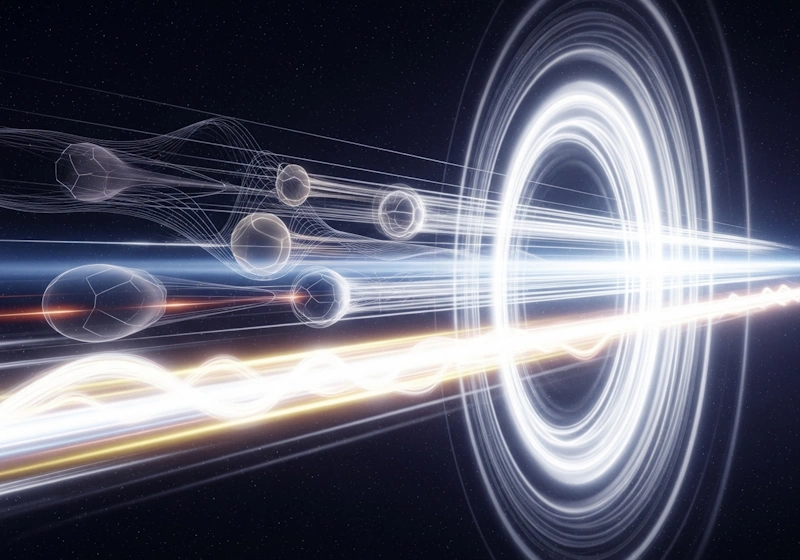
- Micro-objects behave both as particles (small spheres) and as waves (propagation of oscillations) depending on how we “ask” them (set up the experiment).
- Two or more particles can be connected (“entangled”) so closely that changing the state of one instantly affects the state of another, even if they are separated by enormous distances. Einstein gave a dramatic name – “spooky action at a distance.”
- It’s impossible to measure with absolute precision a pair of interrelated quantities simultaneously, for example, the position of particles and their momentum. The more precisely we determine one property, the less certain we can be about the other. This is a fundamental property of nature, not an imperfection of instruments.
- A quantum system (for example, an electron or qubit in a quantum computer) can exist in several states simultaneously, as if “smeared” between them. Measurement “collapses” this state into one specific state.
[INTERACTIVE TOOL: THE SCALE OF THE UNIVERSE]
Scale of the Universe
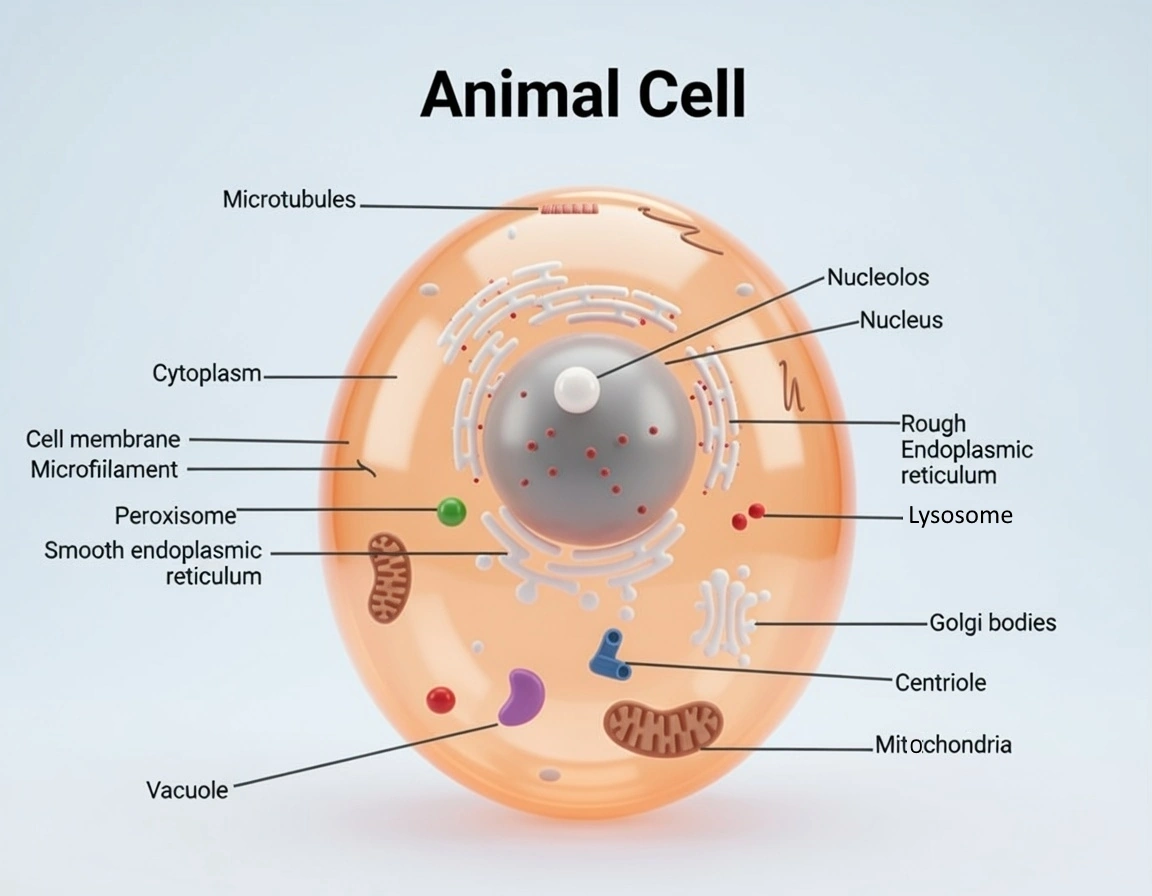
Activity: Zoom in from a coffee bean… to a dust mite… to a cell… all the way down to an Atom. See where “Classical Physics” stops and “Quantum Physics” begins.
Main Principles of Quantum Physics
Quantum physics is built on pillars that radically differ from classical representations.
- Wave function (Ψ—”psi”) is the foundation of the mathematical concept. This is not a physical wave, but a complex object describing the state of a quantum system (for example, an electron in an atom). The square of the modulus of the wave function (|Ψ|²) determines the probability of finding a particle at a specific point in space or in a specific state. Imagine a “cloud” of probability where the particle can be located.
- Schrödinger’s equation is the fundamental equation of motion in quantum physics. It explains the evolution of the wave function through time. By solving it, physicists can predict the behavior of quantum systems.
- Quantization. In many systems (like an electron in an atom), certain physical quantities (energy, angular momentum) can take only strictly defined, discrete values, not any values as in the macroworld. An electron in orbit can have only certain energy levels.
- Pauli’s principle states that two identical particles with half-integer spin (fermions, for example, electrons) cannot be in the same quantum state. This principle explains the structure of electron shells of atoms and, consequently, all of chemistry.

Who Discovered Quantum Physics and How
The path of quantum physics is a story of brilliant discoveries and bold ideas that revolutionized science.
- In 1900, Max Planck, striving to explain the radiation of heated bodies, introduced the idea that energy is emitted not continuously, but in portions—quanta. This event is considered the birth of quantum physics.
- In 1905, Albert Einstein applied Planck’s idea to light, explaining the photoelectric effect. For this, Einstein received the Nobel Prize.
Diagram of Einstein’s photoelectric effect Diagram of Einstein’s photoelectric effect. Source: Isaac Physics
- In 1913, Niels Bohr created the first quantum model of the hydrogen atom. He postulated that electrons rotate only in strictly defined “allowed” orbits without radiating energy. The transition between orbits is accompanied by emission or absorption of a photon with energy equal to the difference in orbital energies.
- In 1924, Louis de Broglie made an assumption: if light (a wave) has particle properties, then particles (electrons) should have wave properties. The scientist proposed a formula for the wavelength of a particle: λ = h / p (where p is the particle’s momentum).
- 1925-1926: Werner Heisenberg developed the first complete mathematical formulation of quantum theory. Erwin Schrödinger, in turn, proposed an alternative approach—”wave mechanics,” based on his famous equation describing the evolution of the wave function.
- 1927: Werner Heisenberg formulated the uncertainty principle, and Niels Bohr developed the Copenhagen interpretation: the wave function describes probabilities, and the act of measurement “collapses” it into a specific state.
Superposition, Entanglement, and Other Quantum Phenomena
Quantum physics is full of amazing phenomena, which we will briefly describe below.
There is a concept of quantum superposition. This is the ability of a quantum system (for example, an electron, photon, or qubit) to exist simultaneously in several states. Imagine a coin spinning in the air—it’s simultaneously both “heads” and “tails.” Only when measured, when the coin falls, does it “choose” one state. The famous thought experiment of Schrödinger’s cat illustrates this strangeness.
Another concept is quantum entanglement. If two particles are born together or interact in a special way, they can become “entangled.” Their quantum states become interdependent, described by a single wave function. Measuring the state of one particle instantly determines the state of the other, no matter how far apart they are.
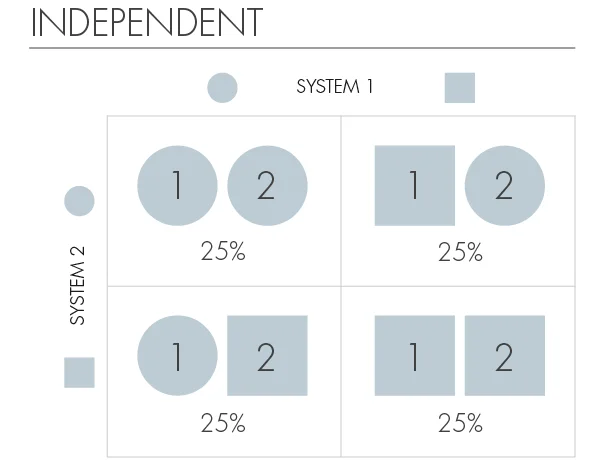
Additionally, there is such a concept as quantum tunneling. A particle is capable of “seeping” through an energy barrier, even if its energy by classical standards is insufficient for this. Imagine a ball that can suddenly appear on the other side of a wall without flying over it. This phenomenon is critically important for the operation of solar panels, radioactive decay of nuclei, and scanning tunneling microscopes (allowing us to “see” atoms).
Finally, quantum coherence. This is the property of quantum systems to preserve their quantum properties (like superposition and entanglement) without the destructive influence of the environment. Maintaining coherence is a key task for creating quantum computers.
Modern Research and Prospects of Quantum Physics
Quantum physics is actively developing and has excellent prospects.
Quantum Computing
Actively uses qubits (quantum bits), which, thanks to superposition and entanglement, can perform parallel computations for specific tasks much faster than classical computers.
For instance, in 2019, Google’s Sycamore processor (53 qubits) demonstrated “quantum supremacy,” solving a problem in minutes that would have taken the best supercomputer thousands of years. In 2023, a modified Sycamore (70 qubits) performed a calculation in 6.5 seconds that would have required the Frontier supercomputer approximately 47 years. Today, there’s a race to create scalable and error-resistant quantum computers (IBM, Google, IonQ, Quantinuum, Rigetti, and others).
Quantum Cryptography and Communication
The principles of quantum physics (impossibility of copying an unknown quantum state, entanglement) are applied to create theoretically absolutely secure communication channels. Any eavesdropping attempt can be immediately detected. One such example is quantum key distribution technology. It allows two parties to securely transmit a secret key, guaranteeing that no one intercepts it during transmission.
Quantum Sensors
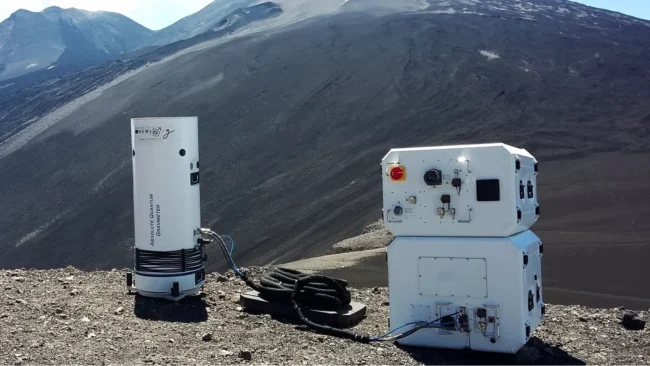
Quantum states are incredibly sensitive to external fields (magnetic, gravitational). This allows the creation of ultra-precise sensors for medicine (early disease diagnosis), geological exploration, navigation (without GPS), and study of fundamental constants.
Quantum Simulation
Quantum computers will be able to model complex quantum systems (molecules, new materials) that are inaccessible to classical machines. This will accelerate the development of drugs, superconductors, new catalysts, and materials with desired properties.
Questions and Answers
Here are answers to common questions about quantum physics.
What are the differences between classical and quantum physics?
In classical physics, it’s sufficient to know the initial conditions to predict the state of a system at another moment in time. In the macroworld, this approach doesn’t work, due to which it’s impossible to simultaneously know the coordinate, momentum, and force because of Heisenberg’s uncertainty principle.
What sciences must one master to learn quantum physics?
For quantum physics and computations, one needs knowledge in linear algebra, mathematical analysis, understanding of differential equations, mechanics, and a number of other disciplines.
What fundamental problems of humanity can quantum physics solve?
Quantum physics already significantly reduces the time needed to perform complex mathematical calculations. It helps create potentially completely secure communication channels and finds embodiment in quantum cryptography. Quantum gravimeters help obtain more accurate data when studying gravitational forces and better understand the nature of various phenomena.
🎓 Quiz: Introduction to Quantum Physics
1. What is the fundamental “packet” of energy called?
- A) A Proton
- B) A Quanta
- C) A Volt
- D) A Joule
👉 Click to check answer
Max Planck discovered that energy is absorbed and emitted in small, indivisible portions.
2. What describes the “Identity Crisis” of particles?
- A) Wave-Particle Duality
- B) The Theory of Relativity
- C) The Doppler Effect
- D) Newton’s Laws
👉 Click to check answer
Micro-objects behave as both particles and waves depending on the experiment.
3. What is “Quantum Entanglement”?
- A) When particles collide and explode
- B) When particles pass through a wall
- C) When particles are connected and affect each other instantly
- D) When particles stop moving
👉 Click to check answer
Einstein called this “spooky action at a distance.”
4. Which phenomenon allows a particle to pass through a barrier?
- A) Superposition
- B) Quantum Tunneling
- C) Coherence
- D) Polarization
👉 Click to check answer
This is critical for the sun to shine and for flash memory to work.
5. What is a “Qubit”?
- A) A unit of heat
- B) A type of battery
- C) A quantum bit used in computers
- D) A measurement of gravity
👉 Click to check answer
Unlike a regular bit (0 or 1), a Qubit can exist in superposition.
Sources & References
- Planck, M. (1901). On the Law of Distribution of Energy in the Normal Spectrum. Annalen der Physik.
- Einstein, A. (1905). On a Heuristic Point of View Concerning the Production and Transformation of Light. Annalen der Physik.
- Bohr, N. (1913). On the Constitution of Atoms and Molecules. Philosophical Magazine, Series 6, 26: 1–25.
- Heisenberg, W. (1927). Über den anschaulichen Inhalt der quantentheoretischen Kinematik und Mechanik. Zeitschrift für Physik.
- Schrödinger, E. (1926). An Undulatory Theory of the Mechanics of Atoms and Molecules. Physical Review, 28(6): 1049–1070.
- de Broglie, L. (1924). Recherches sur la théorie des quanta. Doctoral Dissertation, Sorbonne.